It's been five years since the Rockefeller Foundation launched the 100 Resilient Cities initiative. A new analysis by the Urban Institute evaluates the accomplishments of 100 Resilient Cities so far.



The Urban Institute recently published a midterm evaluation of the 100 Resilient Cities program. The analysis aims at an independent review, though the report was achieved with financial support from The Rockefeller Foundation.
"The report, completed by the Urban Institute, finds that 100RC’s unique approach is leading to wider adoption of holistic resilience planning practices and the 'de-siloing' of city operations to tackle social, economic, and physical challenges of the 21st century," according to the "Institutionalizing Urban Resilience" report website.
"Moreover, the analysis found 100RC is among the first global urban initiatives to employ a consistent set of tools, supports, and resources across so many diverse cities for which no alternative exists," reads the text of the report summary.
[The report was released in December, so the news is a bit old by Planetizen standards. The continued relevance of the conversation about resilience required a place for this report in the news feed, however tardy our notice.]
FULL STORY: Institutionalizing Urban Resilience

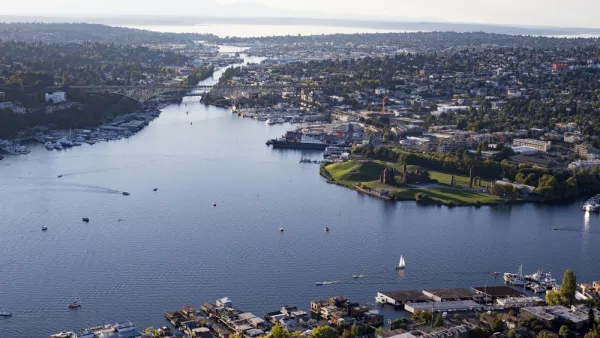
Op-Ed: Seattle Resilience Roadmap Feels 'Retrospective'
Natalie Bicknell notes several deficiencies in the roadmap that resulted from Seattle's participation in the Rockefeller Foundation's now-defunct 100 Resilient Cities program.
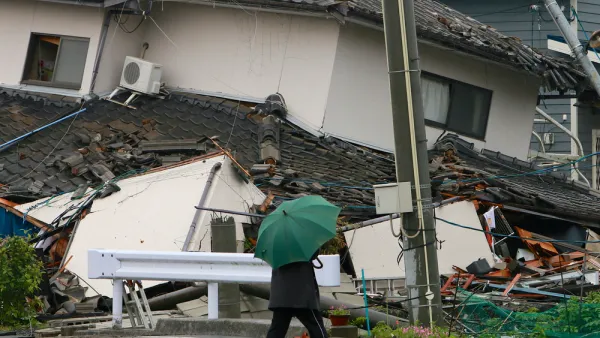
Planning for Structural Safety in an Era of Environmental Risks
Resilience to the impacts of climate change and other forms of natural disaster will require new levels of safety in the built environment.
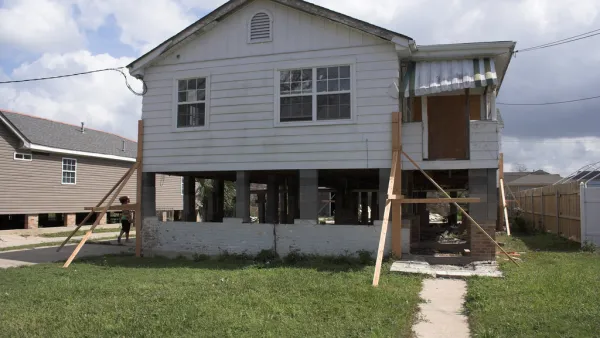
Adapting Building Codes to Natural Disasters Saves Billions
New research shows that modern building codes have prevented around $27 billion in damage from natural disasters between 2000 and 2016, yet many cities still operate under decades-old regulations.

The state-sanctioned urbicide of Austin
People don’t kill cities. Freeways do.

US to reduce Colorado River water deliveries to Mexico
A new Colorado Treaty amendment reduces Mexico’s Colorado River water allocation by 250,000 acre feet.

New Jersey’s second-largest city bans standalone data centers
Jersey City will continue to allow co-location facilities, such as those meant for research institutions that store their own data.

Amtrak not solely to blame for New Jersey commuter rail's unreliability, report finds
A new study from the Garden State Initiative found that NJ Transit’s budget grew 20% across a 4 year period, but reliability declined significantly over the same period.

EPA erases limits on planet-warming pollution from power plants
Under Monday’s plan, power plants would still have some limits on how much mercury, arsenic and other contaminants they can emit.

Phoenix announces new on-demand transit service, more frequent RAPID buses
Both new services will launch in October, and are part of Phoenix's Project Effective Access Solutions for Easing Congestion.

FREE Course: Walkable City 1: Why Walkability?
After describing his path towards focusing on walkability as the essence of good planning, Jeff Speck marches through his five principal reasons for making more walkable places.
Reinventing Malls: Planning Alchemy—Turning Gray Fields Into Gold
The course focuses on the opportunities and imperatives that shape reinvention of mall sites.

Eagle County Government
Harvard University Graduate School of Design
Nashville Planning Department
The Architects Foundation
University of Cincinnati Online
The Pocatello Development Authority
The Urban Renewal Agency of the City of Pocatello
Journal of the American Planning Association