Lamenting the gutting of historic buildings and leaving them a shell of their former selves.


Knute Berger wonders if Seattle's beauty is only skin deep in a recent post for Crosscut. According to Berger, "[e]fforts to preserve local 'character' while accommodating massive development have seen a revival of what’s called 'façadism' where old building exteriors are used as a kind of ground-level wrapping on new structures. Façadism is not a new phenomenon, but it’s booming in Seattle these days."
Berger points to the façadism trend as especially prevalent along the Pike-Pine corridor and in South Lake Union. Berger quotes Eugenia Woo, director of preservation for Historic Seattle, who states that "[f]açadism is NOT preservation." [Emphasis from the original.] Yet, according to Berger's analysis, the regulations written into the Pike-Pine Conservation Overlay District actively encourage façadism.
The article includes more detail about the politics surrounding preservation in Seattle and some examples of developments along the spectrum of façadism to preservation.
Read the full story: Seattle’s facadism fetish makes fools of history & progress

Housing is the top priority of Seattle’s sole new councilmember
Jenks campaigned on building 1,000 new units of affordable housing.
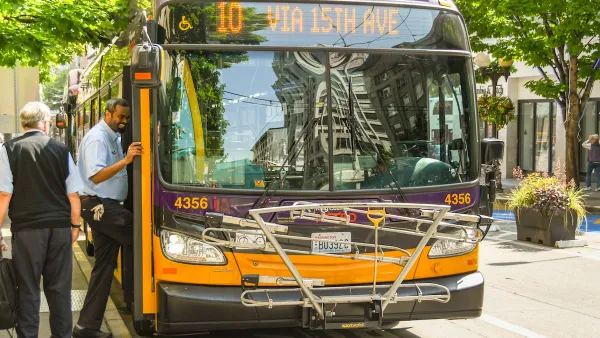
Seattle passes record-breaking transit services expansion
Proposition 1 will double the city’s transit tax to add 95,000 more bus trips and preserve 180,000 bus trips annually.
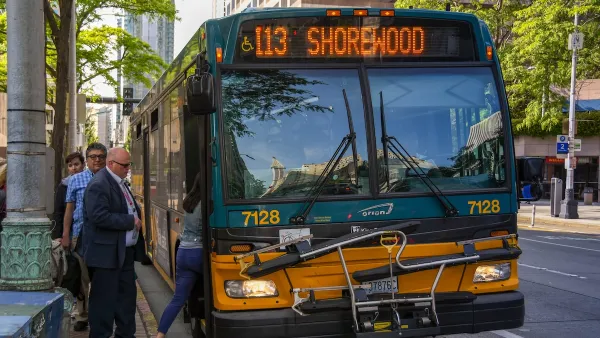
275,000 bus trips are at stake on Seattle's ballot
If passed, the Seattle Transit Measure would trigger a 0.3% sales tax and raise an average of $138 million per year to maintain and expand Seattle’s bus services.

Planetizen Federal Action Tracker
A weekly monitor of how Trump’s orders and actions are impacting planners and planning in America.

Eastern Nebraska is running out of electricity
Data centers and electrification are straining eastern Nebraska’s grid, throttling economic development.

Study reveals best places in the U.S. for cycling, walking
New research from Streetlight Data examines bicycle and pedestrian miles per capita in the 100 largest U.S. cities by population.

Developers reveal $10 billion stadium plan as ‘Hail Mary’ to keep Bears in Chicago
The plan would also boast a public park, high- and mid-rise buildings and a youth sports complex.

As Texas embraces carbon storage, a Black community questions the risks
Texas now issues permits for companies to store carbon dioxide underground. East Texas residents fear safety risks, and skeptics doubt the climate benefits.

New BLM proposal would slash public comment periods, environmental protections
The proposed rewrite would also strip legal leverage from Tribal nations and state governments.

FREE Course: Walkable City 1: Why Walkability?
After describing his path towards focusing on walkability as the essence of good planning, Jeff Speck marches through his five principal reasons for making more walkable places.
Reinventing Malls: Planning Alchemy—Turning Gray Fields Into Gold
The course focuses on the opportunities and imperatives that shape reinvention of mall sites.

City of Rosemead
Rutgers University, Edward J. Bloustein School of Planning and Public Policy
One Hundred Miles
University of Michigan School for Environment and Sustainability (SEAS)
Hunter College, City University of New York (CUNY)
The Architects Foundation
City of Cambridge
The Pocatello Development Authority
The Urban Renewal Agency of the City of Pocatello