The St. Paul City Council approved a bike plan on March 18, 2014 that will more than double the amount of bike pathways and connections in the city. The plan will advance the goals established by the city's 2008 Comprehensive Plan.


The St. Paul City Council approved its long-awaited bike plan [pdf] this week, reports Peter Callaghan. "Approved on a 6-0 vote, the plan identifies routes that would see the current network of 153 miles of paths and shared bike lanes grow to 346 miles. While the plan includes some shared lanes, it emphasizes off-street paths and separated lanes," writes Callaghan.
"St. Paul city planner Reuben Collins said the goal of the bike plan is to have every resident of the city within a quarter mile of a formal trail. But it also addresses issues such as bike storage, signalization, zoning changes and wayfinding. And it calls for the completion of the century-old vision of the Grand Round — a 27-mile scenic parkway for cars and bikes that would connect the Mississippi River, Como Lake and Lake Phalen."
Callaghan also notes that the bike plan includes one big ticket item that could make bike aficionados in other cities envious: an oval bike loop around downtown. That component of the plan has provoked resistance from downtown business interests concerned about losing parking spaces—150 parking spaces according to the plan's estimates. Those concerns led the council to "[put] off decisions on the details of the loop until a consultant could be hired and a resident task-force could meet," according to Callaghan.
FULL STORY: St. Paul approves bike plan, punts on parking decision

Bicycle Plan Leads to Parking Policy Questions in St. Paul
St. Paul is in the community engagement stage of a bike planning process expected to culminate early next year. Among the bike plan's proposals, none have sparked as much controversy as a downtown loop that would remove street parking.
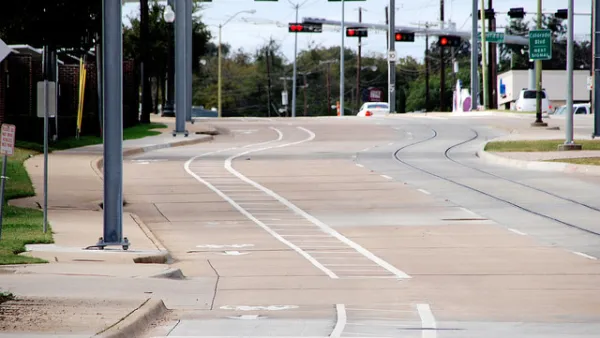
Dallas Makes First-Ever Annual Commitment to its Bike Lane Program
Dallas is making new commitments to alternative transportation options—the latest example is found in a budget expenditure for several bike lane projects.
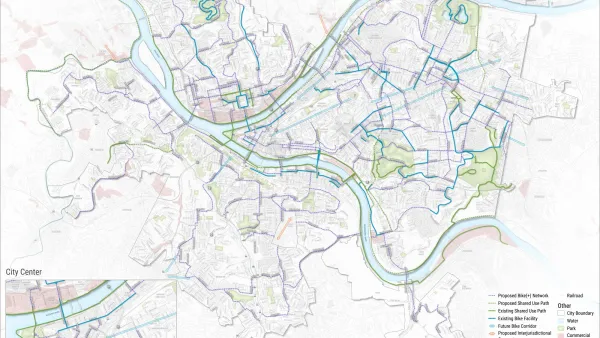
Hundreds of Miles of New Bike Lanes Coming to Pittsburgh
Checking in with the Bike(+) Plan in Pittsburgh.

Planetizen Federal Action Tracker
A weekly monitor of how Trump’s orders and actions are impacting planners and planning in America.

The state-sanctioned urbicide of Austin
People don’t kill cities. Freeways do.

US to reduce Colorado River water deliveries to Mexico
A new Colorado Treaty amendment reduces Mexico’s Colorado River water allocation by 250,000 acre feet.

5 New England states march closer to 800 megawatt wind energy project
Securing federal approval for the project may be complicated under the Trump administration, which has historically been hostile towards domestic wind power.

Baltimore to break ground on $50 million Transit Priority Project
The project will bring faster bus trips, safer streets and better bike connections to Baltimore.

Airbnb launches $250 million 'last-dollar financing' housing accelerator, makes first investment in Austin
The company will put $6.4 million towards affordable housing development in Texas’ capital.

FREE Course: Walkable City 1: Why Walkability?
After describing his path towards focusing on walkability as the essence of good planning, Jeff Speck marches through his five principal reasons for making more walkable places.
Reinventing Malls: Planning Alchemy—Turning Gray Fields Into Gold
The course focuses on the opportunities and imperatives that shape reinvention of mall sites.

Eagle County Government
Harvard University Graduate School of Design
Nashville Planning Department
The Architects Foundation
University of Cincinnati Online
The Pocatello Development Authority
The Urban Renewal Agency of the City of Pocatello
Journal of the American Planning Association