MIT's You Are Here mapping and data visualization project has produced a map of income levels, as tracked by the routes of the Metro subway system in Washington D.C.


Ana Swanson shares news of a new mapping project by MIT's You Are Here that uses the subway system of Washington D.C. to map to create a visualization of median household incomes. "The graphic draws on census data on earnings within a radius of half a mile around subway stations. It graphs both the median household income for each stop and the overall average for the line," according to Swanson.
After breaking down the details of each station's income levels, Swanson provides the following analysis: "Looking at the graphs [of individual lines], you can see that these higher average incomes result because of a sharp discrepancy in income between Washington’s eastern and western halves."
The original You Are Here post explains that the project was inspired by the "Inequality and New York's Subway" feature by The New Yorker.
Swanson reports that You Are Here is reaching into new territory with the project: "This is the first project from You Are Here’s new open-source library, which allows census data for any city to be visualized over a transit network."
Read the full story: How median income varies by subway line in Washington, D.C.

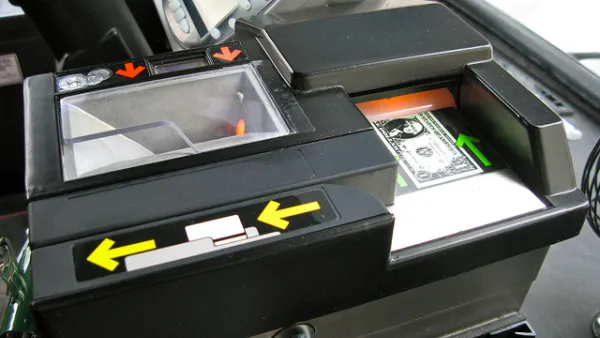
Cash-Free Transit: Convenient or Unjust?
Washington, D.C.'s Metro is trying a cashless bus pilot that will last until December.

L.A. Metro CEO Challenges Trump on Infrastructure Funding
President Trump’s most recent transportation budget is projected to cut transportation spending by 13 percent, potentially undercutting many of Los Angeles' ambitious projects to continue the build-out of a full public transportation system.

D.C. Metro Approves Fare Hike, Service Cuts
For months, transit advocates have dreaded the decision to raise fares and cut service throughout the D.C. Metro system. That day arrived last week. Changes take effect on July 1.

Planetizen Federal Action Tracker
A weekly monitor of how Trump’s orders and actions are impacting planners and planning in America.

Amtrak, CN end decades-long dispute with eight-year agreement
The new operating agreement establishes an updated framework for the companies to work together, including processes to resolve disputes.

Northwest rail fans eager for Sept. 30 debut of Amtrak’s Airo fleet
Get ready for that new train smell and more seats. But they won’t go faster or run more frequently on the Cascades route in Washington and Oregon.

Brightline Florida files for bankruptcy
The transit company is over $5 billion in debt.

St. Louis Metro to test if single-car trains can reduce operating costs, maintain rider satisfaction
The pilot program will run from October to spring 2027, and begin with one single-car train operating on Metrolink’s Red and Blue lines.

Pennsylvania is building data centers in abandoned mines
Housing data centers in mines provides an alternative to destroying local forests and may spare residents from data centers’ noise and air pollution.

FREE Course: Walkable City 1: Why Walkability?
After describing his path towards focusing on walkability as the essence of good planning, Jeff Speck marches through his five principal reasons for making more walkable places.
Reinventing Malls: Planning Alchemy—Turning Gray Fields Into Gold
The course focuses on the opportunities and imperatives that shape reinvention of mall sites.

City of Thousand Oaks
City of Wisconsin Rapids
Harvard University Graduate School of Design
The Architects Foundation
University of Cincinnati Online
The Pocatello Development Authority
The Urban Renewal Agency of the City of Pocatello