Successful Chicago urban agriculture projects on rooftop, in edible lawn, and at a school reviewed by resilience consultant Dave Hampton.


From its start a decade ago, Urban Habitat Chicago (UHC) has worked to show that food-producing landscapes are not just for those living in rural areas. City-dwellers can become more self-sufficient via imaginative and varied approaches to urban agriculture, according to Dave Hampton, an architect and a resilience consultant with the firm re:ground llc.
Hampton helped found UHC 10 years ago to promote sustainable practices in cities. He writes that with more people calling urban areas home, cities could be thought of as ‘natural’ environments as well.
Chicago-based UHC has spearheaded several projects that bring agriculture to city life, including an edible lawn outside the bungalow home of two of the organization’s board members.
“The edible lawn is easily cut, and could pass as a conventional lawn. However, upon closer look, an understated beauty abounds: flowering radish, dandelion, arugula, lettuce, and other edible plants that could be treated almost as edible-ornamentals.”
UHC also helped promote sustainability with its creation of a rooftop garden at True Nature Foods, an organics co-op at the site of a former muffler shop and, originally, a World War II-era “victory garden.”
The rooftop garden gave the space a new purpose, according to Hampton.
“The underutilized ‘fifth façade’ of a building… would, like the edible lawn, be instead put to work to produce food. In the process, the project also became a living laboratory.”
A third project–the Northside College Preparatory High School Productive Master Plan and Teaching Farm–has been six years in the making, with phases including the Joy Garden, the Malcolm Wells Memorial Garden, and community agricultural areas.
All of the projects are designed to bring communities closer to their environment, writes Hampton.
“My hopes are that we as a society will support those organizations that are capable of identifying basic needs, able to develop inspiring solutions in concert with users and communities, and help them forge meaningful connections with their environments.”
Read the full story: Urban Habitat Chicago Redux: 10 years of productive urban landscapes (part 1 of 3)

Urban Farming Addressing Hunger (and More) in Pittsburgh
Urban farming provides opportunities to increase food security in addition to other benefits.
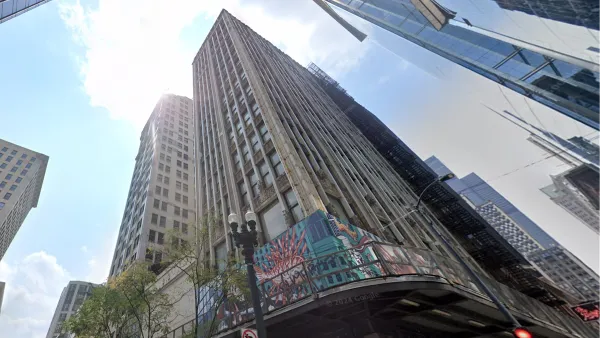
Chicago Towers Recommended for Adaptive Reuse
Once slated for demolition, two historic buildings owned by the federal government will be restored for new uses.
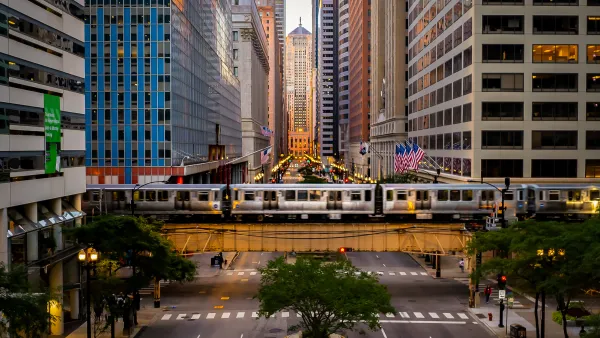
Chicago to Turn High-Rise Offices into Housing
Four commercial buildings in the Chicago Loop have been approved for redevelopment into housing in a bid to revitalize the city’s downtown post-pandemic.

Planetizen Federal Action Tracker
A weekly monitor of how Trump’s orders and actions are impacting planners and planning in America.

California plans to bury El Niño’s downpour
If the state plays its cards right, it may be able to store a billion acre-feet of El Niño’s water in aquifers.

Desperate measures: Advocates weigh draining Lake Powell to fill Colorado River
Draining the reservoir could reduce evaporation losses by a couple hundred thousand acre-feet.

Mamdani’s pied-à-terre tax survives legal challenge
A panel of judges found that the plaintiffs failed to demonstrate injury as a result of New York City's implementation of the tax.

Eastern Nebraska is running out of electricity
Data centers and electrification are straining eastern Nebraska’s grid, throttling economic development.

Seattle passes record-breaking transit services expansion
Proposition 1 will double the city’s transit tax to add 95,000 more bus trips and preserve 180,000 bus trips annually.

FREE Course: Walkable City 1: Why Walkability?
After describing his path towards focusing on walkability as the essence of good planning, Jeff Speck marches through his five principal reasons for making more walkable places.
Reinventing Malls: Planning Alchemy—Turning Gray Fields Into Gold
The course focuses on the opportunities and imperatives that shape reinvention of mall sites.

City of Rosemead
Rutgers University, Edward J. Bloustein School of Planning and Public Policy
One Hundred Miles
University of Michigan School for Environment and Sustainability (SEAS)
Hunter College, City University of New York (CUNY)
The Architects Foundation
City of Cambridge
Montrose County
The Pocatello Development Authority