The Broken Sidewalk blog provides details about an ongoing plan to transform Louisville's low volume streets into "Neighborways."


Broken Sidewalk blogger SushiK describes the thinking behind the "Neighborways" plan thusly: "Louisville, like a lot of cities, has many options besides expressways and arterials, including secondary connector streets, low-traffic alleys, and quieter neighborhood streets which can provide a lower-stress transportation experience. If you can connect these secondary-street routes and provide innovative infrastructure improvements to calm traffic further, a new network of bike routes can take shape, a concept typically called a 'bike boulevard' in many cities."
The city’s bike department, Bike Louisville, is well under way with the first phase of the Neighborways plan—to add sharrows to 100 miles of streets in the city. Moreover, "Phase II was recently approved by Metro Council, and will begin soon with a focus on creating wayfinding signage so system users can find their way through the network and connect to important “nodes” or destinations along the way."
And for an early proof-of-concept, one of "Louisville’s first Neighborways to come online is a route that connects the University of Louisville with the Highlands by avoiding busy Eastern Parkway."
Read the full story: Bike Louisville implementing Neighborways, a city-wide bike boulevard system

Portland to Evaluate Neighborhood Greenway Program
Portland will launch an effort to evaluate and improve its influential neighborhood greenway system of bike friendly residential corridors.
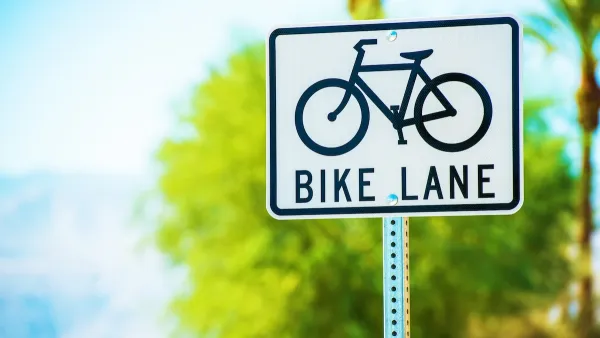
Houston Mayor Promises Dedicated Austin Street Bike Lane After Public Backlash
Although the one-way bike lane won’t be protected by physical barriers, the proposal is an improvement over the mayor’s initial plan to only include sharrows on the Austin Street project.
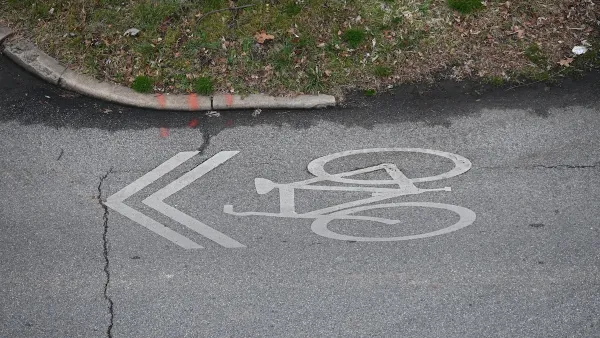
Sharrows Are Ineffective, Potentially Counterproductive
Research shows there’s no substitute for protected bike lanes, and sharrows may make roads more dangerous for cyclists.

Amtrak, CN end decades-long dispute with eight-year agreement
The new operating agreement establishes an updated framework for the companies to work together, including processes to resolve disputes.

Judges permit Denver to divert 77,000 acre feet from the Colorado River for reservoir expansion
Overuse and climate change have caused the Colorado River’s water levels to plummet.
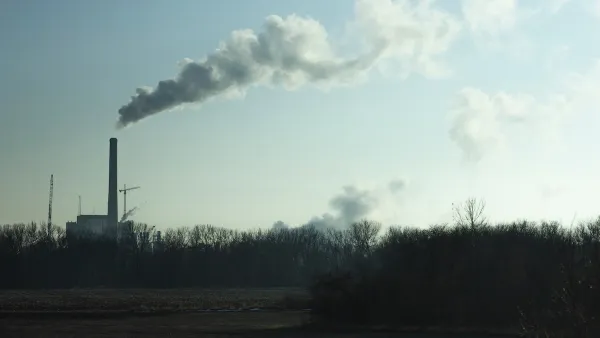
Nation's most wind-powered state turns to coal as data centers increase energy demand
For the first time in decades, Iowa has increased its generation of coal power.

Boston has spent millions making the Green Line more accessible — and there’s no end in sight
While the city has invested millions into expanding and adding platforms to the Green Line to make it more accessible, new train cars set to arrive next year will be too tall for disabled passengers to board without raising the current platforms.

Idaho may see an 18% drop in federal surface transit funding — the largest estimated cut in the US
Transit systems in rural communities are much more reliant on federal funding to provide their services.

How ‘post-disaster gentrification’ alters neighborhoods after natural calamities
After hurricanes, fires or other calamities, the original residents of a community are often replaced by younger, wealthier residents.

FREE Course: Walkable City 1: Why Walkability?
After describing his path towards focusing on walkability as the essence of good planning, Jeff Speck marches through his five principal reasons for making more walkable places.
Reinventing Malls: Planning Alchemy—Turning Gray Fields Into Gold
The course focuses on the opportunities and imperatives that shape reinvention of mall sites.

City of Wisconsin Rapids
Harvard University Graduate School of Design
KFH Group Inc.
The Architects Foundation
University of Cincinnati Online
The Pocatello Development Authority
The Urban Renewal Agency of the City of Pocatello