A new service provides transit users live, real-time displays of all transportation options within proximity to various locations in downtown Seattle, Washington.


As discussed on the Seattle Transit Blog by Frank Chiachiere, the Seattle Department of Transportation has teamed up with TransitScreen to provide readable multi-modal information to transit riders. The screens contain easy to read information on bus and rail arrival times, and bike-share and carshare location and availability, so that riders can make informed decisions as to their travel mode choice.
Following the lead of a number of other North American cities such as Washington D.C., San Francisco, Salt Lake City, and San Diego, Seattle has been working hard to implement new technologies making riding transit easier to understand and more transparent.
However, as Chiachiere points out, Seattle still does not have a standardized wayfinding method to pinpoint transit locations, like Vignelli’s 1970 standards manual for New York’s MTA, making the new implementation of TransitScreen perhaps preemptive.
Read the full story: TransitScreen Launches Downtown
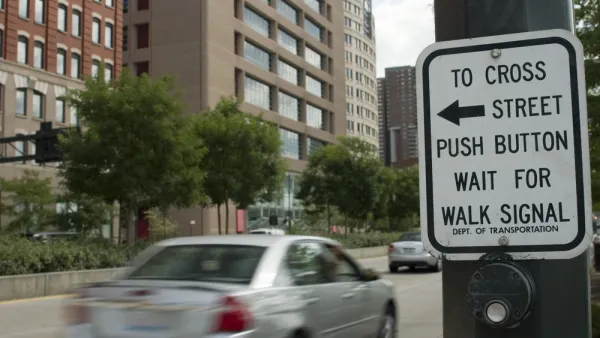
Seattle Recalculates Walk Signal Timing to Make Crossings Safer for Pedestrians
The new formulas for calculating the length of walk signals are designed to give people more time to safely cross the street.
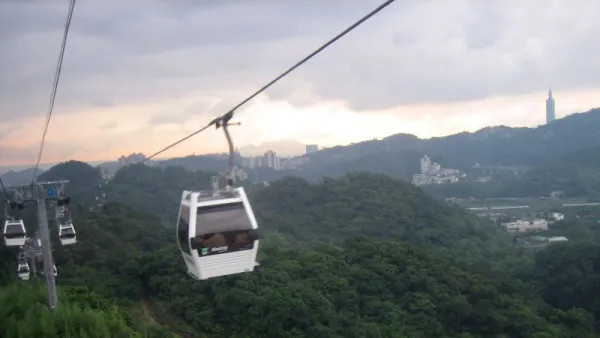
Seattle Neighborhood Groups Propose Aerial Gondola to Replace Light Rail Expansion
Impatient with the city's light rail expansion plans, some residents are looking to aerial gondolas as a new mode of public transit.
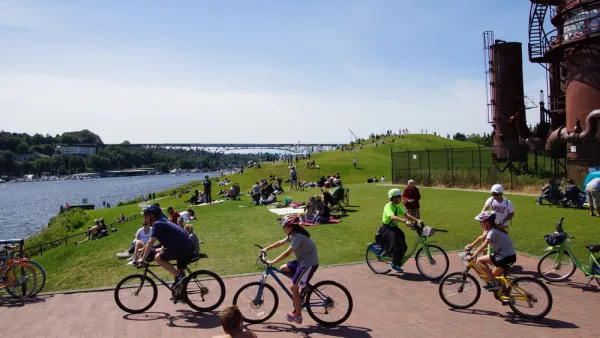
Seattle Plans to Connect Bike Network by 2020
Downtown Seattle has many disconnected bike lanes, so to make sure there are more safe routes for bikers, the city council passed a resolution that sets out a timeline to connect them.

Desperate measures: Advocates weigh draining Lake Powell to fill Colorado River
Draining the reservoir could reduce evaporation losses by a couple hundred thousand acre-feet.

Eastern Nebraska is running out of electricity
Data centers and electrification are straining eastern Nebraska’s grid, throttling economic development.
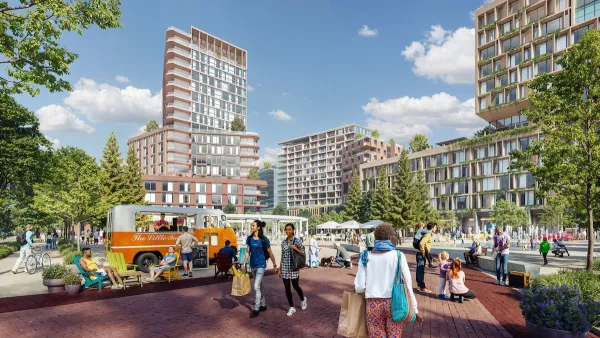
Malls are becoming the midtowns of the future
Mall and office park redevelopments are a generational opportunity to create new nodes of urbanity.

NYC breaks ground on anti-flooding infrastructure project
New York City's new system will reduce stormwater flows to local sewers by 90%.

One Kentucky town’s secret to affordable housing
The Smoketown Community Land Trust has already built seven affordable homes for community members.

Houston gains petal-shaped cooling infrastructure to make streets more ‘delightful’
The city has installed the pavilions along 15 blocks in Houston.

FREE Course: Walkable City 1: Why Walkability?
After describing his path towards focusing on walkability as the essence of good planning, Jeff Speck marches through his five principal reasons for making more walkable places.
Reinventing Malls: Planning Alchemy—Turning Gray Fields Into Gold
The course focuses on the opportunities and imperatives that shape reinvention of mall sites.

City of Rosemead
Rutgers University, Edward J. Bloustein School of Planning and Public Policy
One Hundred Miles
University of Michigan School for Environment and Sustainability (SEAS)
Hunter College, City University of New York (CUNY)
The Architects Foundation
City of Cambridge
Montrose County
The Pocatello Development Authority