The Washington Post provides all the details, renderings, history, commentary, and more that one could want about Amtrak's proposed $7 billion investment in Daniel Burnham's historic Union Station.


According to Steven Pearlstein, "the proposed expansion and redevelopment of Union Station, which could do for Washington what Grand Central Terminal did for New York a century ago — create a new commercial epicenter for the city and provide the transportation anchor for a regional economy, stretching from Richmond to Baltimore."
Amtrak announced the plans back in July 2012. In total, the public and private investment proposed reach $10 billion, which Pearlstein says "would represent the region’s most important development initiative since the construction of Metro’s subway system."
The article is a massive, graphic- and visual-laden feature, and should be considered mandatory reading for anyone interested in transit infrastructure and transit oriented development—or, for that matter, Daniel Burnham's Beaux Arts building as it exists today.
Read the full story: Reimagining Union Station
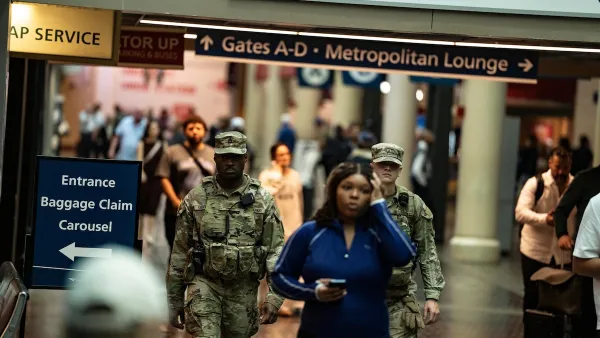
Trump Plans Takeover of DC's Union Station
USDOT says it will take over management duties for the commercial spaces managed by Amtrak since last year and address the building’s infrastructure needs.
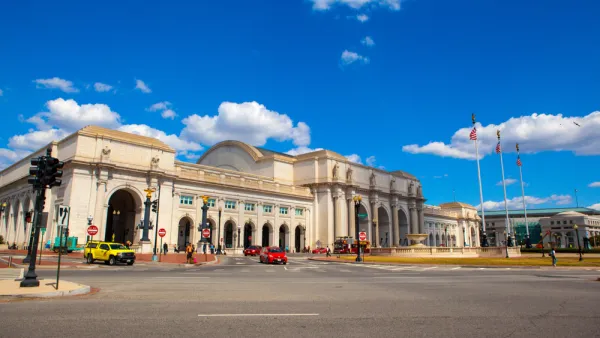
Union Station Redesign Gets a Placemaking Do Over
Criticisms of a draft plan to revamp D.C.'s Union Station have described the proposal as far too concerned with car storage.
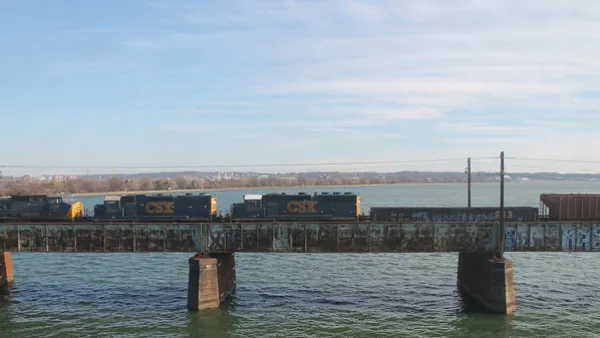
Key Virginia Rail Bridge Project Completes Environmental Review
A $1.9 billion project to add a second set of rail tracks to the Long Bridge that connects Virginia to D.C. is ready to move forward with a recently completed Environmental Impact Statement.

Planetizen Federal Action Tracker
A weekly monitor of how Trump’s orders and actions are impacting planners and planning in America.

Eastern Nebraska is running out of electricity
Data centers and electrification are straining eastern Nebraska’s grid, throttling economic development.

Study reveals best places in the U.S. for cycling, walking
New research from Streetlight Data examines bicycle and pedestrian miles per capita in the 100 largest U.S. cities by population.

DSA members accuse Mamdani of 'abandoning values' over housing redevelopment
New York City's mayor plans to replace about 2,000 units of public housing with private, mixed-income housing.

All sides of BRT debate unhappy with CDOT’s most recent move
The Colorado Department of Transportation is no longer considering center-running bus lanes for Colorado Boulevard.

Massachusetts bogs generate both power, and cranberries
Putting solar panels above farmland is one way Massachusetts is advancing toward its goal of net-zero carbon emissions by 2050.

FREE Course: Walkable City 1: Why Walkability?
After describing his path towards focusing on walkability as the essence of good planning, Jeff Speck marches through his five principal reasons for making more walkable places.
Reinventing Malls: Planning Alchemy—Turning Gray Fields Into Gold
The course focuses on the opportunities and imperatives that shape reinvention of mall sites.

City of Rosemead
Rutgers University, Edward J. Bloustein School of Planning and Public Policy
One Hundred Miles
University of Michigan School for Environment and Sustainability (SEAS)
Hunter College, City University of New York (CUNY)
The Architects Foundation
City of Cambridge
The Pocatello Development Authority
The Urban Renewal Agency of the City of Pocatello