Compared to 2013, few states are increasing transportation spending through tax increases. Only New Hampshire and Rhode Island saw limited gas tax increases, though both were accompanied by road or bridge toll eliminations. Missouri could be next.


Clearly 2014 is shaping up to be no 2013 when it comes to states increasing user fees, particularly the state gas tax, to pay for much-needed transportation improvements. Last year, "(l)egislators in Pennsylvania and Virginia reached breakthroughs after years of failed attempts to shore up infrastructure funding. Maryland, Massachusetts, Ohio, Vermont and Wyoming also passed significant transportation funding measures," writes Daniel C. Vock, Governing’s transportation and infrastructure reporter.
Of course, it doesn't help that 2014 is an election year, which may have contributed to the unsuccessful efforts by "(g)overnors in Delaware, Michigan and Washington."
In August, Missouri voters will decide on a 10-year, three-quarter-cent general sales tax increase to fund transportation projects, though that would not constitute a user fee. Utah's legislature is considering increasing the 24.5 cents per gallon tax, not raised in almost 17 years.
Vock describes the limited scope of the two successful, though modest state gas tax increases, both accompanied by road or bridge toll eliminations.
- New Hampshire: The 18-cent gas tax, unchanged since 1991, will increase by 4.2 cents on July 1, but that increase is temporary.
- "The amount of the tax hike was determined by adjusting for inflation over the last decade. But the law won't adjust for inflation in the future. In fact, the gas tax hike will expire once bonds supported by the new revenue -- which will pay for widening of Interstate 93 -- are retired."
- In addition, tolls will be eliminated from "a single turnpike interchange in southern New Hampshire."
- Rhode Island: A 10-cent toll elimination on the Sakonnet River Bridge "that brought howls from local residents was the catalyst" for the legislature to increase the state gas tax by a mere one-cent, though it will adjust for inflation.
With a looming cut-off of federal transportation reimbursements to states in late July or August if Congress can not agree to "patch" the Highway Trust Fund, which did not get off to a propitious start on June 26, states will likely have to take steps to slow down or halt current transportation projects and refrain from starting new ones unless they have secured alternative funding sources - like increasing state gas taxes.
It's a nasty loop when both state legislatures and Congress can't agree to raise revenue to fund state infrastructure.
Read the full story: Road Funding Bills Get Cold Shoulders at Statehouses

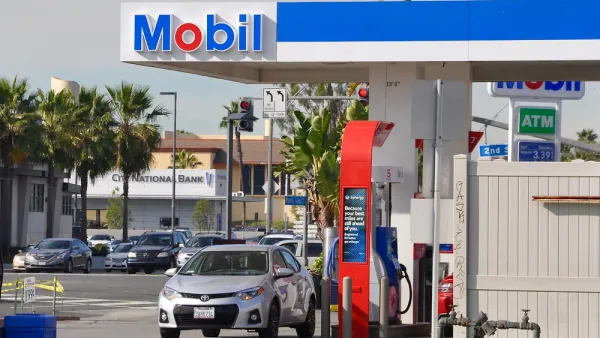
Democrats Balk at Gov. Newsom's Gas Tax Holiday
Saving motorists 3 cents a gallon may be a slam dunk for Republican leaders in the California legislature who opposed hiking the gas tax in the first place, but Democratic leaders are reluctant to tamper with a hard-fought legislative and ballot win.
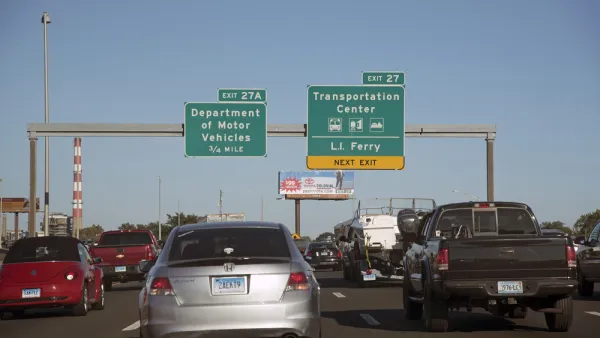
Bill to Toll Connecticut Interstates and Parkways Advances
A bill backed by Gov. Malloy that directs the Department of Transporation to prepare a plan to toll three interstates and two state parkways narrowly passed two legislative committees largely along party lines. It now advances to the full House.
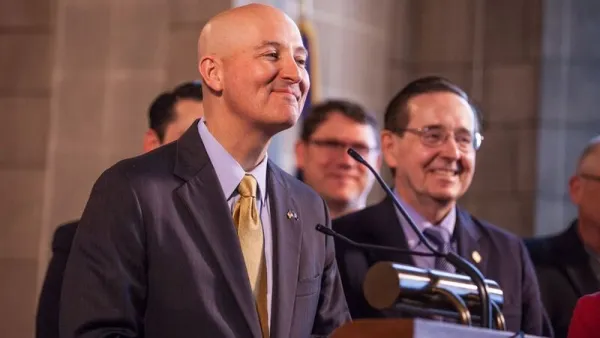
Governor Who Vetoed Gas Tax Increase Happy to Use New Revenue for Road Construction
Among the ten state legislatures, mostly Republican controlled, which passed gas tax increases last year, the one that stood out the most was Nebraska's because it had to override Gov. Pete Ricketts (R) veto of the six-cent gas tax hike bill.

Planetizen Federal Action Tracker
A weekly monitor of how Trump’s orders and actions are impacting planners and planning in America.

Amtrak, CN end decades-long dispute with eight-year agreement
The new operating agreement establishes an updated framework for the companies to work together, including processes to resolve disputes.

Judges permit Denver to divert 77,000 acre feet from the Colorado River for reservoir expansion
Overuse and climate change have caused the Colorado River’s water levels to plummet.

NYC DOT wants faster, more permanent street upgrades
The city is examining ways to build more concrete infrastructure without getting entangled in 'decades-long' projects.

'Something we’ve never seen before:' rising utility rates could strain city finances nationwide
Data centers, climate change and other factors have caused utility rates in the United States to increase by 38% since 2020.

Trump to overrule local leaders, lease millions of acres of America’s Pacific Island territories’ seafloors to mining companies
International law says that the Indigenous people of America’s territories have a right to prior and informed consent regarding projects that impact their countries.

FREE Course: Walkable City 1: Why Walkability?
After describing his path towards focusing on walkability as the essence of good planning, Jeff Speck marches through his five principal reasons for making more walkable places.
Reinventing Malls: Planning Alchemy—Turning Gray Fields Into Gold
The course focuses on the opportunities and imperatives that shape reinvention of mall sites.

Harvard University Graduate School of Design
KFH Group Inc.
Greater Baltimore Committee
The Architects Foundation
University of Cincinnati Online
The Pocatello Development Authority
The Urban Renewal Agency of the City of Pocatello