The New Hampshire Legislature recently approved a bill that would raise the gas tax in the state by 4.2 cents*. At that rate, the cost of the new tax to someone who drives 10,000 miles a year at 25 miles per gallon would total about $16 a year.


"A bill aimed at paying for major transportation projects through a 4.2-cent increase in the gas tax passed the House yesterday and will now go to Gov. Maggie Hassan’s desk," reports Kathleen Ronayne. Governor Hassan has already stated her intention to sign the law.
"On July 1, this bill will increase the gas tax from 18 to 22.2 cents, the first increase since 1991. The roughly $32 million in new annual revenue from the increase will be dedicated to state and local road and bridge repairs. The bill also removes the toll at Exit 12 in Merrimack on the Everett Turnpike and creates a commission to study whether the state Department of Transportation is operating efficiently…"
As for how the money raised will be split among the state's transportation infrastructure investments: "The bill sends 42 percent of the new revenue toward bonding for the widening of Interstate 93 from Salem to Manchester, Campbell said. Of the rest of the new money, 33 percent will go to municipalities for local road and bridge repairs, and 25 percent will go to repairs of secondary state roads in fiscal years 2015 and 2016. Under the bill, the 4-cent increase will be repealed in 20 years, or when bonding for the I-93 project is paid off."
An earlier bill, which failed in May 2013, would have raised the gas tax by 12 cents over three years.
*Updates 6-27-14: The introduction to this post has been corrected to reflect the gas tax increase in cents, not percent as originally stated.
Read the full story: N.H. House passes gas tax increase, sends to governor’s desk

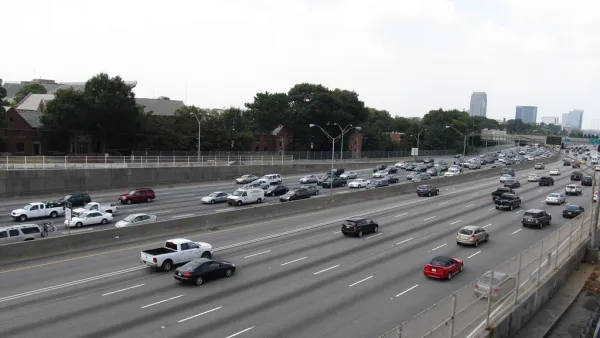
Why Don't State DOTs Believe in Induced Demand?
Despite evidence that widening roadways is only a temporary solution to congestion, a decades-long inertia leads states to continue pushing expansion projects against local opposition.
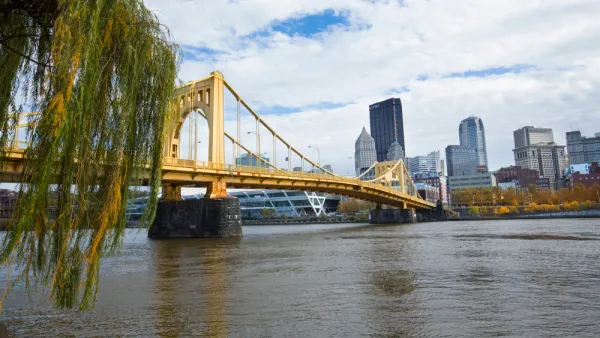
PennDOT Proposes Bridge Tolls to Fund Critical Repairs
With gas tax revenues projected to fall this fiscal year due to the pandemic, the Pennsylvania Department of Transportation argues it needs additional revenue to bridge its growing funding gap and repair crucial infrastructure.
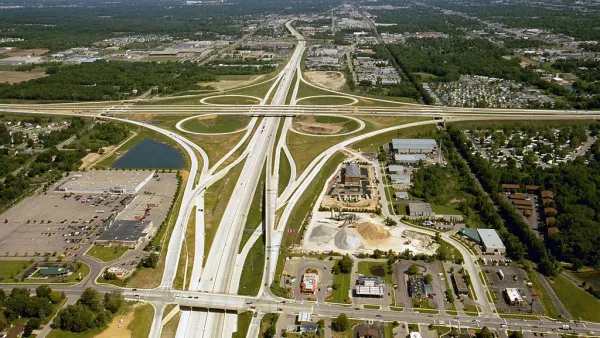
Where Gas Taxes Only Serve the Needs of More Sprawl
The gas tax, suburban highway spending cycle is both self-serving and self-destructive, according to this article.

Planetizen Federal Action Tracker
A weekly monitor of how Trump’s orders and actions are impacting planners and planning in America.

Amtrak, CN end decades-long dispute with eight-year agreement
The new operating agreement establishes an updated framework for the companies to work together, including processes to resolve disputes.

Judges permit Denver to divert 77,000 acre feet from the Colorado River for reservoir expansion
Overuse and climate change have caused the Colorado River’s water levels to plummet.

NYC DOT wants faster, more permanent street upgrades
The city is examining ways to build more concrete infrastructure without getting entangled in 'decades-long' projects.

'Something we’ve never seen before:' rising utility rates could strain city finances nationwide
Data centers, climate change and other factors have caused utility rates in the United States to increase by 38% since 2020.

Trump to overrule local leaders, lease millions of acres of America’s Pacific Island territories’ seafloors to mining companies
International law says that the Indigenous people of America’s territories have a right to prior and informed consent regarding projects that impact their countries.

FREE Course: Walkable City 1: Why Walkability?
After describing his path towards focusing on walkability as the essence of good planning, Jeff Speck marches through his five principal reasons for making more walkable places.
Reinventing Malls: Planning Alchemy—Turning Gray Fields Into Gold
The course focuses on the opportunities and imperatives that shape reinvention of mall sites.

Harvard University Graduate School of Design
KFH Group Inc.
Greater Baltimore Committee
The Architects Foundation
University of Cincinnati Online
The Pocatello Development Authority
The Urban Renewal Agency of the City of Pocatello