Data suggesting a dramatic shift toward the urban core are accruing in the Twin Cities metropolitan area. Suburbs have responded by creating walkable downtowns, but are struggling with declining school enrollment and other consequences.



Minneapolis-St Paul is amidst its own narrative of urbanization, as young families and are moving into the urban core, reports David Peterson. “Between 2011 and 2012, the number of households in Minneapolis and St. Paul with school-aged children is estimated to have shot up by nearly 7,000,” according to research analyst Jane Tigan of St. Paul’s Wilder Research, an arm of the Amherst H. Wilder Foundation.
New construction also suggests that the area's urban core is out-performing its periphery: “New year-end data from the Builders Association of the Twin Cities suggest that for the second straight year, residential construction in Minneapolis towered over that of any Twin Cities suburb — something that hasn’t happened in decades.”
Seniors, however, are staying put in the suburbs, at least so far: “In the suburbs…the number [of households] with seniors rose by nearly 15,000, as those with children flatlined — part of a massive demographic role reversal.”
Read the full story: In Twin Cities metro, more young people are moving to the urban core, while suburbs age

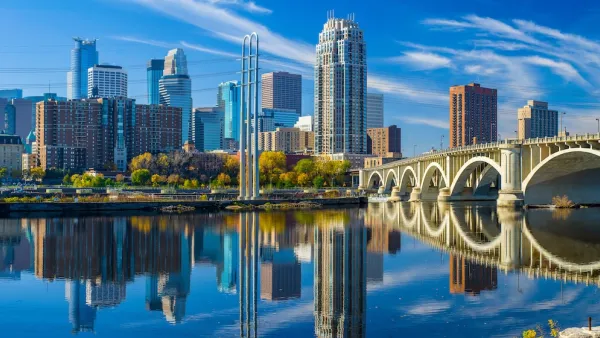
Looking Back on 60 Years of Land Development in the Twin Cities
In 1960, about 12 percent of the Twin Cities metro's land was already developed. By 2020, about 34 percent had been developed. Many factors influenced how the region has changed since 1960.

Twin Cities Suburbs Look to Improve Bike Facilities
Communities around Minneapolis and St. Paul are working to build more robust bike infrastructure networks.
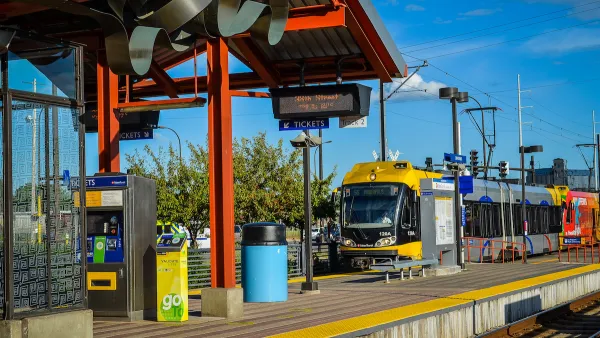
Twin Cities Trains Move to Fewer Cars, Higher Frequency
Headways will drop from 15 minutes to 12 minutes.

Planetizen Federal Action Tracker
A weekly monitor of how Trump’s orders and actions are impacting planners and planning in America.

Amtrak, CN end decades-long dispute with eight-year agreement
The new operating agreement establishes an updated framework for the companies to work together, including processes to resolve disputes.

Judges permit Denver to divert 77,000 acre feet from the Colorado River for reservoir expansion
Overuse and climate change have caused the Colorado River’s water levels to plummet.

NYC DOT wants faster, more permanent street upgrades
The city is examining ways to build more concrete infrastructure without getting entangled in 'decades-long' projects.

'Something we’ve never seen before:' rising utility rates could strain city finances nationwide
Data centers, climate change and other factors have caused utility rates in the United States to increase by 38% since 2020.

Trump to overrule local leaders, lease millions of acres of America’s Pacific Island territories’ seafloors to mining companies
International law says that the Indigenous people of America’s territories have a right to prior and informed consent regarding projects that impact their countries.

FREE Course: Walkable City 1: Why Walkability?
After describing his path towards focusing on walkability as the essence of good planning, Jeff Speck marches through his five principal reasons for making more walkable places.
Reinventing Malls: Planning Alchemy—Turning Gray Fields Into Gold
The course focuses on the opportunities and imperatives that shape reinvention of mall sites.


Harvard University Graduate School of Design
KFH Group Inc.
Greater Baltimore Committee
The Architects Foundation
University of Cincinnati Online
The Pocatello Development Authority
The Urban Renewal Agency of the City of Pocatello