Changing Demographics
What Planners Need to Know About Aging for Comprehensive Plans
Julia Wolfe, planning specialist for the Ramsey County Public Health, lays out some suggestions to plan for aging population.

Chicago Deeply Segregated, if Slightly Less So Than in the 1990s
A Chicagoan working at a downtown library noticed her black coworkers all tended to head home to the South Side after work while her white coworkers went north. She asked Chicago's Public Radio station (WBEZ) if the city was becoming more segregated.

Twin Cities Regional Forecast Foresees Steady Growth and Big Changes
The Metropolitan Council has released "The Twin Cities Regional Forecast to 2040: Steady Growth and Big Changes Ahead" to provide a foundation for coordinated planning by the Metropolitan Council and local governments.

Beer from Portlandia in the Land of the Rising Sun
Japanese cities and citizens look to Portland for inspiration.

Dispelling Four Myths of Houston's Growth and Affordability
A researcher at Rice University finds that proclamations of Houston’s affordability, gentrification, and growth are just myths.

Poverty Less Rural Than 50 Years Ago
It used to be that the nation's rural areas suffered from the highest poverty rates. Today, nearly half of the American poor live in mid-sized counties.
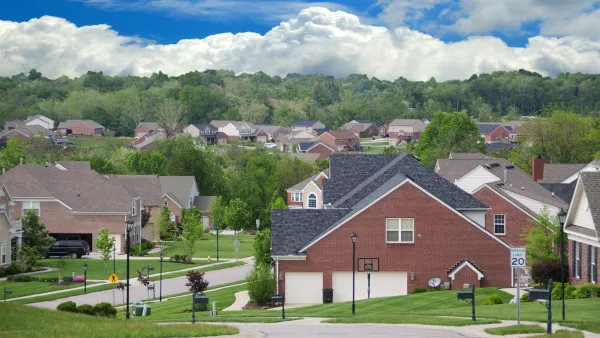
The Changing Face of Suburban America
As the nation becomes more racially diverse, so too do the suburbs.

The Changing Shape of American Cities
A newly released report shows the demographic transformation of American cities spatially from 1990 to 2012 by charting their neighborhoods based on distance to the center of the city.
Urban Churches Adapt to a Changing City
In Washington, D.C., residents, shops and restaurants come and go, often moving from neighborhood to neighborhood. But churches remain. They anchor the community as it changes, and often find themselves changing with it.
Growing Concentrations of Poverty in American Suburbs
Updating the initial "Re-Emergence of Concentrated Poverty" Brookings report, Elizabeth Kneebone shows where concentrations of poverty have taken root during the Great Recession and subsequently slow recovery period.
The Policy Implications of Families in Virginia Choosing to Stay in Cities
Data in Virginia shows that more young families are choosing to stay in urban areas to raise their children. This is causing a rapid increase in school enrollment and fueling the fastest growth Virginia's urban areas have experienced since the 1950s.

Families Choosing Twin Cities Urbanity Over Suburban Living
Data suggesting a dramatic shift toward the urban core are accruing in the Twin Cities metropolitan area. Suburbs have responded by creating walkable downtowns, but are struggling with declining school enrollment and other consequences.
Downturn Proves Resiliency of Smart Growth
In an interview with the San Diego Union-Tribune, Geoffrey Anderson and Bill Fulton reflect on the new normal for development across the country, which astonishingly to anyone looking back twenty years, has absorbed Smart Growth principles.

FREE Course: Walkable City 1: Why Walkability?
After describing his path towards focusing on walkability as the essence of good planning, Jeff Speck marches through his five principal reasons for making more walkable places.
Reinventing Malls: Planning Alchemy—Turning Gray Fields Into Gold
The course focuses on the opportunities and imperatives that shape reinvention of mall sites.

KFH Group Inc.
Greater Baltimore Committee
Eagle County Government
The Architects Foundation
University of Cincinnati Online
The Pocatello Development Authority
The Urban Renewal Agency of the City of Pocatello