An upcoming report by the Association of Bay Area Governments projects the city of San Francisco to add a record-breaking number of residents by 2040. The SF Examiner is running a week-long series exploring the impacts of the expected growth.


Whether they’re all “rich techies” or not, people are moving to San Francisco in droves. After a decade in which the city added 28,500 new residents, "20,600 folks wedged themselves into The City's superlatively expensive living space” between 2011-2012, reports Dan Schreiber. And by 2032, today's population of roughly 825,000 will grow to the milestone of a million residents. San Francisco will have grown in population by 35 percent between 2010 and 2040—"the fastest 30-year rate of increase in nearly a century."
"'The Bay Area job creation engine is the envy of the entire world,' said Gabriel Metcalf, executive director of SPUR, the region's most active urbanist think tank. 'But it has created its own set of problems for us -- problems that don't solve themselves.'"
The challenges that follow in the wake of the population boom are more numerous than the well-documented struggle to deliver and maintain affordable housing stock in the city. The Examiner's five-part series will analyze less conspicuous challenges that will follow the growing population: public transit, waste management, expanding city budgets, and inadequate school facilities are just some of the anticipated pressure points.
Read the full story: San Francisco at 1 million: City's population is booming once again
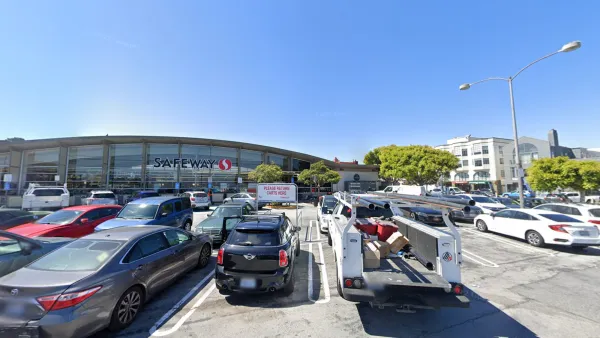
Debate over proposed 800-unit tower in San Francisco reveals generational divide in the housing crisis
Residents of the Marina District are up in arms over a proposed housing development above a Safeway store.
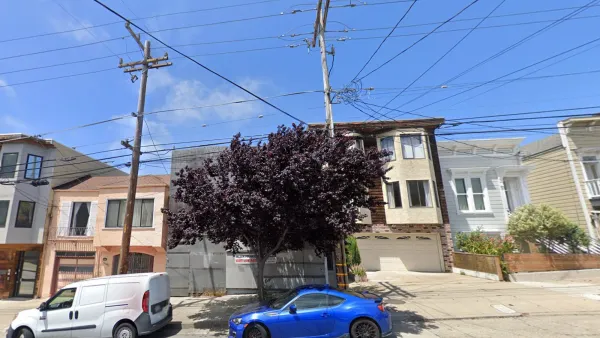
8-story tower is San Francisco's first project approved under new upzoning rules
Some neighbors call the project out of scale for the area, which has not grown beyond two- and three-story buildings in decades.
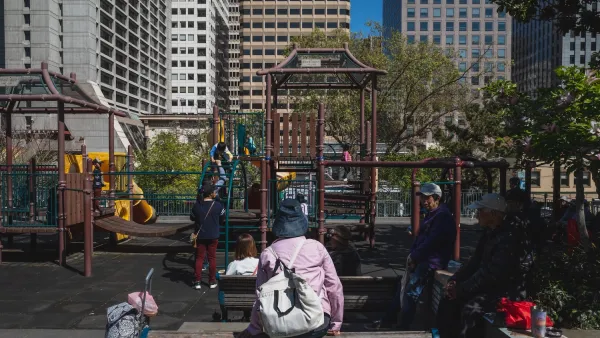
Report Shows San Francisco’s ‘Family Zoning’ Plan Would Produce Less Than Half of Needed Housing Units
The city’s economic analysis reveals that a rezoning proposal would yield from 8,504 to 14,646 units, well below the number required by the state.

Planetizen Federal Action Tracker
A weekly monitor of how Trump’s orders and actions are impacting planners and planning in America.

California plans to bury El Niño’s downpour
If the state plays its cards right, it may be able to store a billion acre-feet of El Niño’s water in aquifers.

Desperate measures: Advocates weigh draining Lake Powell to fill Colorado River
Draining the reservoir could reduce evaporation losses by a couple hundred thousand acre-feet.

Los Angeles just elected an urban planner as its mayor
Transportation analysts are optimistic that Raman will be more aggressive in addressing transit issues than Bass.

Mamdani’s pied-à-terre tax survives legal challenge
A panel of judges found that the plaintiffs failed to demonstrate injury as a result of New York City's implementation of the tax.

Eastern Nebraska is running out of electricity
Data centers and electrification are straining eastern Nebraska’s grid, throttling economic development.

FREE Course: Walkable City 1: Why Walkability?
After describing his path towards focusing on walkability as the essence of good planning, Jeff Speck marches through his five principal reasons for making more walkable places.
Reinventing Malls: Planning Alchemy—Turning Gray Fields Into Gold
The course focuses on the opportunities and imperatives that shape reinvention of mall sites.

City of Rosemead
Rutgers University, Edward J. Bloustein School of Planning and Public Policy
One Hundred Miles
University of Michigan School for Environment and Sustainability (SEAS)
Hunter College, City University of New York (CUNY)
The Architects Foundation
City of Cambridge
Montrose County
The Pocatello Development Authority