While many are focused on fixing the legacy assets of another era, a group of innovative billionaires are training their talents on transforming the "sleepy realm of transportation," observes Kevin Robillard. Can they overcome the inherent obstacles?


"Technology moguls are brimming with ideas for bringing flying robots, self-driving cars, people-moving tubes and space-traveling tourists to the sleepy realm of transportation, which hasn’t seen a major shakeup in decades," writes Robillard. "But the people who changed the way you shop, send money and search for information are finding it won’t be as easy to change the way you drive, ride and fly."
"They’re confronting a transportation sector where public investments are drying up, engineers complain about crumbling roads and bridges and it’s been ages since government initiatives created the likes of the Interstate Highway System. So the billionaires are trying to adapt their shared disrupt-or-die ethos to an industry marked by an obsession with safety, heavy regulations and a fear of failure."
"Can these big-thinking magnates fill transportation’s innovation void?"
Read the full story: Billionaires and transportation toys


Amazon-Owned Robotaxis to Begin Testing in LA
Los Angeles will become the sixth city where Zoox is testing its autonomous vehicle technology.

Opinion: Stop Trusting Elon Musk—on Tunnels, on Teslas, on Everything
Musk has leveraged social media intrigue and a hot streak on the market to become the standard bearer for autonomous vehicle technology. Trust Tesla at public peril, argues James Brasuell in this opinion piece.
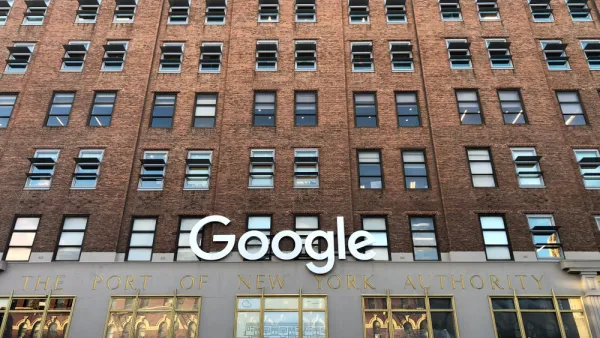
Big Tech Bets on the Big Apple
Amidst the uncertainty of the pandemic, the four biggest U.S. technology companies have leased or bought enough office space in New York City for 22,000 employees.

Planetizen Federal Action Tracker
A weekly monitor of how Trump’s orders and actions are impacting planners and planning in America.

Amtrak, CN end decades-long dispute with eight-year agreement
The new operating agreement establishes an updated framework for the companies to work together, including processes to resolve disputes.

Judges permit Denver to divert 77,000 acre feet from the Colorado River for reservoir expansion
Overuse and climate change have caused the Colorado River’s water levels to plummet.

Philadelphia to invest $2 billion into upgrading city airports as PHL places last in customer satisfaction
Modernizations to Philadelphia's airports will include baggage system upgrades and a new automated parking garage guidance system.

The LA housing policies making developers turn away from the city
Despite LA’s housing shortage, developers say the city’s "mansion-tax" and pandemic-era policies make it an unappealing place to build housing.

New density bill would require 7 California cities to establish regional transit hubs
The bill would also require major cities in California to permit high-rise residential buildings.

FREE Course: Walkable City 1: Why Walkability?
After describing his path towards focusing on walkability as the essence of good planning, Jeff Speck marches through his five principal reasons for making more walkable places.
Reinventing Malls: Planning Alchemy—Turning Gray Fields Into Gold
The course focuses on the opportunities and imperatives that shape reinvention of mall sites.

City of Wisconsin Rapids
Harvard University Graduate School of Design
KFH Group Inc.
The Architects Foundation
University of Cincinnati Online
The Pocatello Development Authority
The Urban Renewal Agency of the City of Pocatello