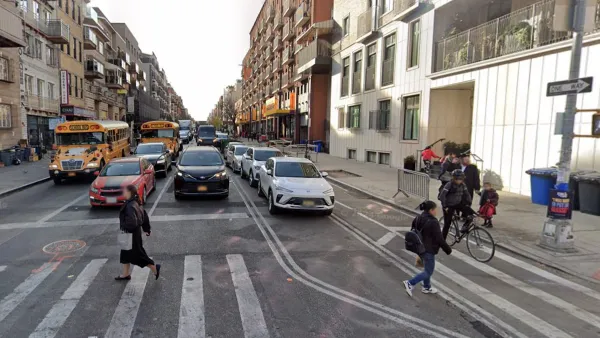
One of Brooklyn's busiest streets has been branded a "Bike-Friendly Business District", with cyclists offered discounts at participating stores. But without plans for a dedicated bike lane, cycling advocates are skeptical of the pronouncements.


"A stretch of Atlantic Avenue where bikes must contend with six lanes of car traffic without so much as a 'Share the road' sign has been designated the borough’s first Bike-Friendly Business District, giving cyclists discounts at dozens of stores, easy access to biking info, and more places to park along the busy commercial strip," reports Natalie Musumeci.
"The district is the result of a collaboration between the Atlantic Avenue Business Improvement District, a pro-business group, and the bike advocacy organization Transportation Alternatives, which says that despite the lack of a bike right-of-way, the traffic the commercial strip gets from side street cycling routes made the choice a no-brainer."
Read the full story: Veloasis: Car-crammed Atlantic Avenue goes bike-friendly but lanes won’t change

Judge Halts Brooklyn Bike Lane Removal
Lawyers must prove the city was not acting “arbitrarily, capriciously, and illegally” in ordering the hasty removal.
Prospect Park West Bike Lane On NPR
NPR's Joel Rose interviews Streetsblog founder and Brooklyn Prospect Park West bike lane advocate Aaron Naparstek, and bike lane opponents for this 3-minute, "All Things Considered" radio story on New York's most controversial bike lane.
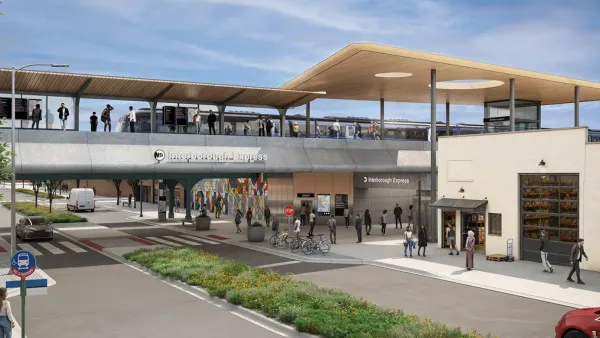
NYC releases new renderings for $5.5 billion Interborough Express
The slated stations will have a modern look, enhanced lighting and improved audio announcements.

Planetizen Federal Action Tracker
A weekly monitor of how Trump’s orders and actions are impacting planners and planning in America.

Amtrak, CN end decades-long dispute with eight-year agreement
The new operating agreement establishes an updated framework for the companies to work together, including processes to resolve disputes.

Judges permit Denver to divert 77,000 acre feet from the Colorado River for reservoir expansion
Overuse and climate change have caused the Colorado River’s water levels to plummet.

Northwest rail fans eager for Sept. 30 debut of Amtrak’s Airo fleet
Get ready for that new train smell and more seats. But they won’t go faster or run more frequently on the Cascades route in Washington and Oregon.

NYC DOT wants faster, more permanent street upgrades
The city is examining ways to build more concrete infrastructure without getting entangled in 'decades-long' projects.

'Something we’ve never seen before:' rising utility rates could strain city finances nationwide
Data centers, climate change and other factors have caused utility rates in the United States to increase by 38% since 2020.

FREE Course: Walkable City 1: Why Walkability?
After describing his path towards focusing on walkability as the essence of good planning, Jeff Speck marches through his five principal reasons for making more walkable places.
Reinventing Malls: Planning Alchemy—Turning Gray Fields Into Gold
The course focuses on the opportunities and imperatives that shape reinvention of mall sites.

Harvard University Graduate School of Design
KFH Group Inc.
Greater Baltimore Committee
The Architects Foundation
University of Cincinnati Online
The Pocatello Development Authority
The Urban Renewal Agency of the City of Pocatello