NPR's Joel Rose interviews Streetsblog founder and Brooklyn Prospect Park West bike lane advocate Aaron Naparstek, and bike lane opponents for this 3-minute, "All Things Considered" radio story on New York's most controversial bike lane.


"The bike lane on Prospect Park West is introducing a lot of new people to the idea that it's possible to use a bike in New York City for transportation to run an errand," Naperstek says. "This is what 21st century New York City looks like."
Indeed, the polls appear to support Naperstek, with 56% supporting and 39% opposed. But opponents are not conceding, and may have been encouraged by the fact that Hasidic Jews in were successful in getting a bike lane removed in Williamsburg, Brooklyn.
"We wanted a lane - the right kind of lane - that would keep everybody safe, that would keep the bikers safe," Lois Carswell, president of a group called Seniors for Safety says. "But we want it to be done the right way. And it has not been done the right way."
Read the full story: Park Or Ride: A Bike Lane Divides Brooklyn

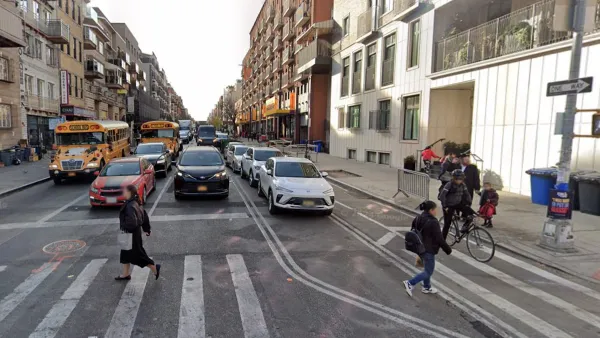
Judge Halts Brooklyn Bike Lane Removal
Lawyers must prove the city was not acting “arbitrarily, capriciously, and illegally” in ordering the hasty removal.
Brooklyn Brands Borough's First Bike-Friendly Business District
One of Brooklyn's busiest streets has been branded a "Bike-Friendly Business District", with cyclists offered discounts at participating stores. But without plans for a dedicated bike lane, cycling advocates are skeptical of the pronouncements.
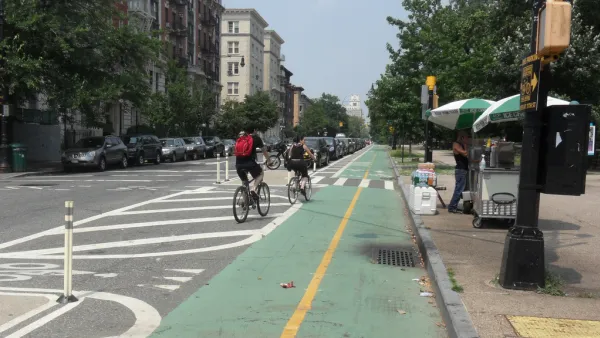
Got Protected Bike Lanes?
While Angie Schmitt doesn't ask this question in her article on the movement behind these lanes, she writes that cities without them "are being left behind". They're popular because they effectively address the #1 reason for not riding: safety

Planetizen Federal Action Tracker
A weekly monitor of how Trump’s orders and actions are impacting planners and planning in America.

Amtrak, CN end decades-long dispute with eight-year agreement
The new operating agreement establishes an updated framework for the companies to work together, including processes to resolve disputes.

Judges permit Denver to divert 77,000 acre feet from the Colorado River for reservoir expansion
Overuse and climate change have caused the Colorado River’s water levels to plummet.

NYC DOT wants faster, more permanent street upgrades
The city is examining ways to build more concrete infrastructure without getting entangled in 'decades-long' projects.

'Something we’ve never seen before:' rising utility rates could strain city finances nationwide
Data centers, climate change and other factors have caused utility rates in the United States to increase by 38% since 2020.

Trump to overrule local leaders, lease millions of acres of America’s Pacific Island territories’ seafloors to mining companies
International law says that the Indigenous people of America’s territories have a right to prior and informed consent regarding projects that impact their countries.

FREE Course: Walkable City 1: Why Walkability?
After describing his path towards focusing on walkability as the essence of good planning, Jeff Speck marches through his five principal reasons for making more walkable places.
Reinventing Malls: Planning Alchemy—Turning Gray Fields Into Gold
The course focuses on the opportunities and imperatives that shape reinvention of mall sites.

Harvard University Graduate School of Design
KFH Group Inc.
Greater Baltimore Committee
The Architects Foundation
University of Cincinnati Online
The Pocatello Development Authority
The Urban Renewal Agency of the City of Pocatello