Justin Gerdes discusses the variety of tactics the city of Copenhagen is utilizing in its march to become the world's first carbon-neutral capital by 2025.


Wind turbines, new transit lines, district heating and cooling networks, more efficient buildings, and expanding bicycle infrastruture are among the myriad ways that Copenhagen's leaders are pushing the city towards its ambitious plan for carbon-neutrality.
"'Copenhageners like the ambition, they like being part of the idea of going green for the whole city,' Copenhagen Lord Mayor Frank Jensen said in an interview with Yale Environment 360. 'Our focus as a city, as citizens, is all about livability.'"
"Nearly three-quarters of the emissions reductions identified in the 2025 plan will come by transitioning to less carbon-intensive ways of producing heat and electricity," explains Gerdes. "The goal is a diverse but complementary clean energy supply: biomass, wind, geothermal, and solar."
"What will all this cost? Direct city investment in the 2025 Climate Plan is estimated to be $472 million through 2025. Add private funds and total investment could hit $4.78 billion over the same period, Copenhagen officials say."
Read the full story: Copenhagen's ambitious push to be carbon-neutral by 2025
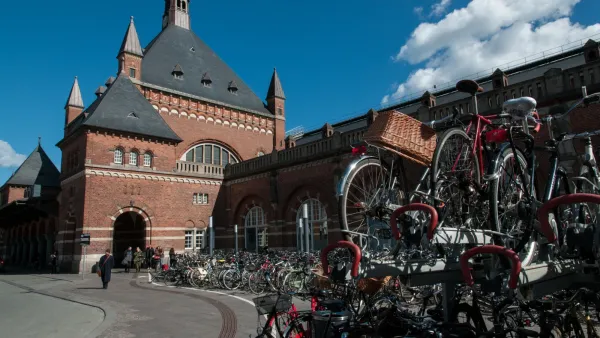
Copenhagen Strives to Be Carbon Neutral by 2025
The Danish capital has an ambitious goal to be the world’s greenest and most bike-friendly city, and it is taking big steps to make that happen soon.
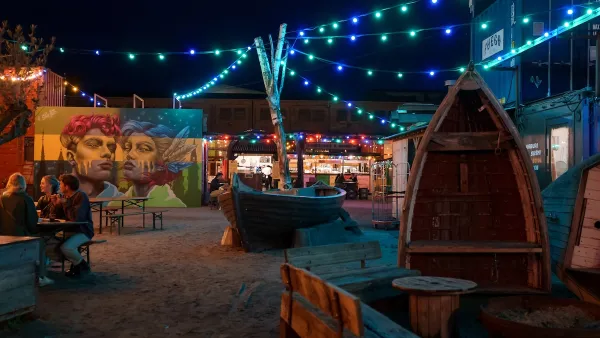
The coolest Copenhagen urban retrofit you’ve never heard of
In Denmark, a ship-building-site-turned-cultural-hub demonstrates the power of mixed-use spaces and organic planning.
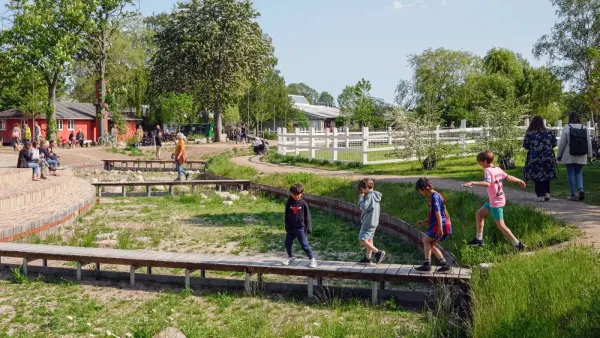
Copenhagen is losing its cool
In a city long designed to maximize light during dark Scandinavian winters, climate change is forcing the Danish capital to rethink its relationship with the sun.

Washington state to charge fee to drivers with fuel-efficient cars
Revenue from the fee will go towards supporting the state’s highways.

Illinois considers spending $1 billion in taxpayer money on data center
A quantum computing campus and data center are currently under construction in Chicago.

Trump to blast ‘hydrocarbon highway’ through ‘world’s longest art gallery’
Environmental and historic preservation groups are suing to stop the project.

NYC, state sue feds over mixed-immigration-status housing assistance rule
The state’s lawsuit argues that the rule change violates the Administrative Procedure Act.

Michigan to turn neighborhood into virtual power plant
Residents will soon be able to divert their excess energy to the grid in exchange for compensation.

Data center, mining project swarm to long-awaited Alaska railroad line
The state-owned railroad approved final plans for the spur line this week; the project is expected to cost $311 million, mostly funded by the federal government

FREE Course: Walkable City 1: Why Walkability?
After describing his path towards focusing on walkability as the essence of good planning, Jeff Speck marches through his five principal reasons for making more walkable places.
Reinventing Malls: Planning Alchemy—Turning Gray Fields Into Gold
The course focuses on the opportunities and imperatives that shape reinvention of mall sites.

City of Charlotte
City of Rosemead
Rutgers University, Edward J. Bloustein School of Planning and Public Policy
University of Michigan School for Environment and Sustainability (SEAS)
Hunter College, City University of New York (CUNY)
The Architects Foundation
University District Partnership