The Danish capital has an ambitious goal to be the world’s greenest and most bike-friendly city, and it is taking big steps to make that happen soon.


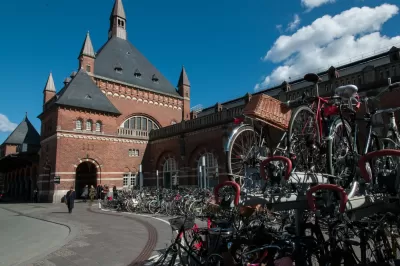
"Six years ago, the city of Copenhagen set the goal to become the first carbon-neutral capital in the world, shrinking energy use as it shifts to renewable energy and produces enough extra green power to offset other remaining emissions," writes Adele Peters.
The city is pursuing a variety of strategies and programs to reach that end by 2025. A focus on transportation is central to the plan, including urban planning and design that makes walking and access to transit priorities, a proposal to ban diesel vehicles from the city, and expansion of its already extensive bicycle network.
Peters reports that Copenhagen is also moving away from electricity to renewable energy. "To date, it has installed 62 massive wind turbines with a capacity of 158 megawatts; by 2025, it plans to have an installed capacity of 460 megawatts." The city is also planning longer-term strategies such as harnessing geothermal energy and increasing the energy efficiency of buildings.
FULL STORY: How Copenhagen plans to reach carbon-neutral status in just six years

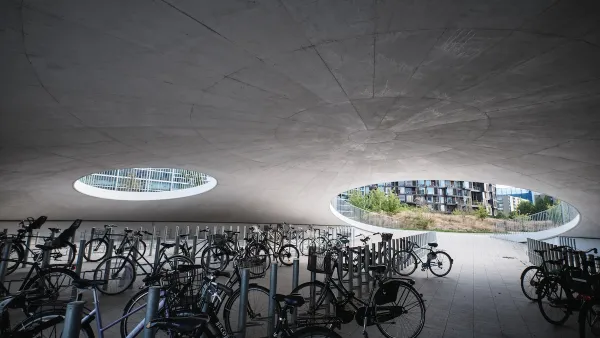
How Copenhagen Became a ‘Sponge City’
The Danish capital is implementing a massive, multi-pronged strategy to build resilience against flooding and shore up water supplies during drought periods.
Carbon Emissions Back on the Rise—Along With Cleaner Energy
Climate-friendly government policies and recent investments by energy companies are accelerating the growth of renewables.
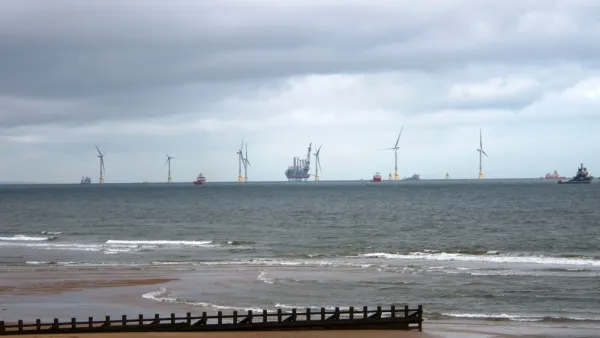
Majority of Power in the U.K. Generated by Wind for the First Time
Wind power generated 50.67 percent of the U.K.’s energy supply on one day in December, marking a major milestone in the history of renewable energy.

Planetizen Federal Action Tracker
A weekly monitor of how Trump’s orders and actions are impacting planners and planning in America.

The state-sanctioned urbicide of Austin
People don’t kill cities. Freeways do.

US to reduce Colorado River water deliveries to Mexico
A new Colorado Treaty amendment reduces Mexico’s Colorado River water allocation by 250,000 acre feet.

5 New England states march closer to 800 megawatt wind energy project
Securing federal approval for the project may be complicated under the Trump administration, which has historically been hostile towards domestic wind power.

Baltimore to break ground on $50 million Transit Priority Project
The project will bring faster bus trips, safer streets and better bike connections to Baltimore.

Airbnb launches $250 million 'last-dollar financing' housing accelerator, makes first investment in Austin
The company will put $6.4 million towards affordable housing development in Texas’ capital.

FREE Course: Walkable City 1: Why Walkability?
After describing his path towards focusing on walkability as the essence of good planning, Jeff Speck marches through his five principal reasons for making more walkable places.
Reinventing Malls: Planning Alchemy—Turning Gray Fields Into Gold
The course focuses on the opportunities and imperatives that shape reinvention of mall sites.

Eagle County Government
Harvard University Graduate School of Design
Nashville Planning Department
The Architects Foundation
University of Cincinnati Online
The Pocatello Development Authority
The Urban Renewal Agency of the City of Pocatello
Journal of the American Planning Association