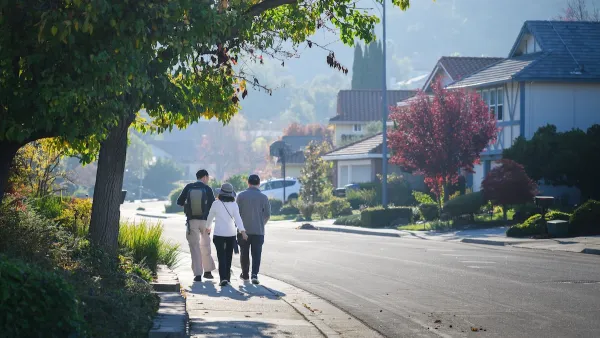
The DC metropolitan area has a largely suburban character inherited from an era when cars were the only conceivable form of transportation. Efforts to expand sidewalk infrastructure are meeting resistance, especially in University Hill.


Hyattsville, Md. is a city of three square miles and 17,700 residents. It has attracted $1.8 billion in investments with more than 1,200 new housing units since 2005. It has a vibrant town center and Metro access, recounts Luz Lazo.
However, pedestrians wanting to walk to public transit or amenities currently share the road with automobiles and bikers in some areas.
Efforts to build new sidewalks have met resistance, particularly in the University Hills neighborhood, home to 350 households and largely wed to its suburban character.
Opponents of the sidewalk plan, which could go into effect as early as next year, have signed petitions detailing their concerns, including the narrowing of streets, reduction in available parking space and cost to taxpayers. Some simply do not want the increased foot traffic outside their properties.
The District of Columbia experienced similar protests to its plan to build more than 200 miles of sidewalks, which went into effect in 2010.
Read the full story: Push for sidewalks in Htattsville faces resistance in one neighborhood
Will sprawl save California?
California residents will vote on Proposition 45 in November, which would make it easier to build large housing developments on the outskirts of the state’s cities.

The number of kids walking to school dropped from over 50% to 11% since the 1960s
Unsafe pedestrian infrastructure makes walking to school dangerous or impossible for a growing number of American students.
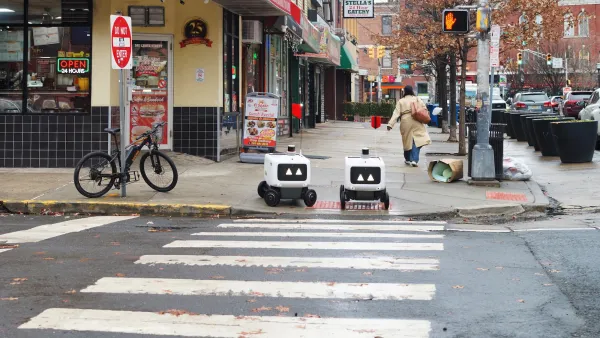
A robot army is assessing accessibility and mobility on Hoboken's streets
The city is deploying robotic scanners to identify gaps in the city's sidewalks, curb cuts and other mobility infrastructure.

Planetizen Federal Action Tracker
A weekly monitor of how Trump’s orders and actions are impacting planners and planning in America.

California plans to bury El Niño’s downpour
If the state plays its cards right, it may be able to store a billion acre-feet of El Niño’s water in aquifers.

Desperate measures: Advocates weigh draining Lake Powell to fill Colorado River
Draining the reservoir could reduce evaporation losses by a couple hundred thousand acre-feet.

In Texas, data centers are swallowing promised parkland
Residents who moved to Taylor, Texas for a rural community now have to contend with three data centers in their backyard.

How a Chicago-sized wind farm beat the odds and powered on
The project spanned five presidential administrations and a standoff with a U.S. military base.

MTA gives itself 30 days to transform pit into basketball court
The site has been under construction since 2022; the city originally estimated it would finish the court in 2024.

FREE Course: Walkable City 1: Why Walkability?
After describing his path towards focusing on walkability as the essence of good planning, Jeff Speck marches through his five principal reasons for making more walkable places.
Reinventing Malls: Planning Alchemy—Turning Gray Fields Into Gold
The course focuses on the opportunities and imperatives that shape reinvention of mall sites.

City of Rosemead
Rutgers University, Edward J. Bloustein School of Planning and Public Policy
One Hundred Miles
Hunter College, City University of New York (CUNY)
The Architects Foundation
University of Cincinnati Online
City of Cambridge
Montrose County
The Pocatello Development Authority