Wyoming has gone where few states have gone recently - defied conventional wisdom that the 'gas tax is dead' and shown that it is very much alive with the Senate increasing the state excise tax by 71% (10-cents). Gov. Matt Mead is expected to sign.


If Gov. Matt Mead signs the tax increase bill which earlier passed the Assembly and cleared the Senate on Feb. 14 on a "18-12 roll-call vote after a lively third debate", the state excise tax on gasoline will increase from 14 cents to 24 cents effective July 1. Joan Barron writes that "Mead has said he favors a tax hike as a means to create a steady revenue stream for highway and road repairs and construction."
Only Alaska has a lower state gas tax as shown by the Tax Foundation's Weekly Map: State Gasoline Tax Rates. In fact, the Tax Foundation highlighted the state's low tax in a brief paper accompanied by a graph of its tax rate from 1923 to 2010 in nominal and 2012 cents.
While most of the anticipated $71 million in new revenue for the 2014 fiscal year would go to state highways and county and city roads, state parks will also be the recipients of $1.2 million. It will cost families about $112 annually.
A major issue in the debate was who should pay for road upkeep - trucks vs. cars, industry vs residents?
The Wyoming Taxpayers Association, a major tax hike advocate, had been accused of having "been heavily lobbied for by a number of "commercial interests" during the debate on Feb. 14. Other tax supporters included the Wyoming Association of Municipalities and the Wyoming Association of County Commissioners.
Sen. Charles Scott, R-Casper "said the real problem is the trucking industry has not been paying its fair share since the repeal of the per-ton-mile tax. "I don't think we should raise the tax on people until we raise the tax on the industry that is causing the problem," he said.
Casper went on to blast the Wyoming Dept. of Transportation's " traffic circles as "inventions of the devil." In reality, they are roundabouts - WYDOT has sought to educate drivers on how to use them on their website.
Senate Republican Majority Floor Leader Phil Nicholas "said the regional nature of the gasoline market means that by having lower fuel taxes than its neighboring states, Wyoming has subsidized lower prices in the other states. He said the state hasn't seen its lower tax rate reflected in lower pump prices at Wyoming filling stations."
"We all have constituents who frankly believe that they should pay no taxes -- that the mining industry, oil and gas, and coal should pay for everything," Nicholas said.
Another state to keep an eye on is Vermont where "lawmakers are considering increasing the statewide education property tax by 5 cents and creating a new sales tax on gasoline" according to WCAX-TV.
Read the full story: Wyoming Legislature approves state fuel tax hike

Arcane State Board Votes to Give CA Nation's Highest Gas Tax
While state legislatures and governors are struggling whether to raise state gas, sales, or income taxes or user fees to fund transportation projects, an arcane state board of five elected members voted 3-2 to increase CA's gas tax by 3.5 cents.
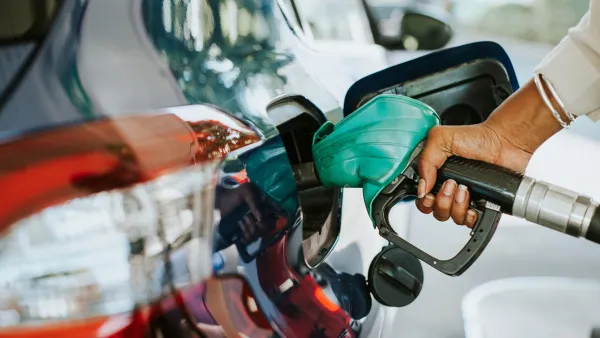
California Gasoline Tax Rises by 4 Cents
You might have missed it as legislators didn't vote on it—not this year, anyway—despite attempts by Republicans to suspend the increase.
Washington Governor Delays Progress on Mileage Fee, Again
For the second time in two years, Gov. Jay Inslee has dealt a legislative setback to transportation planning efforts to prepare for the 2035 ban on the sale of gas-tax paying light duty motor vehicles to reduce carbon emissions.

Planetizen Federal Action Tracker
A weekly monitor of how Trump’s orders and actions are impacting planners and planning in America.

Chicago breaks ground on $3 billion megadevelopment
The new neighborhood, titled Foundry Park, will one day host 3,700 residences.

This MA town is drowning in its own sewage — and residents like it that way
Susan Murcott, a waste water expert, said if Carlisle didn't address their leaking sewage, the problem could turn “deadly.”

Iowa taxpayers are paying thousands to clean manure out of their water
While the Clean Water Act makes states responsible for regulating factory farms that discharge pollutants, Iowa has turned a blind eye to the polluting farms.

Amtrak cuts ribbon on Seattle Airo maintenance facility
The $250 million, nearly 100,000-square-foot building can house an entire Cascades Airo trainset.

To power data centers, Google seeks autonomous control of thousands of homes’ electricity
The tech company has signed a deal to indirectly pay Mid-Atlantic residents to reduce their power demand when the grid is strained.

FREE Course: Walkable City 1: Why Walkability?
After describing his path towards focusing on walkability as the essence of good planning, Jeff Speck marches through his five principal reasons for making more walkable places.
Reinventing Malls: Planning Alchemy—Turning Gray Fields Into Gold
The course focuses on the opportunities and imperatives that shape reinvention of mall sites.

City of Rosemead
Rutgers University, Edward J. Bloustein School of Planning and Public Policy
One Hundred Miles
The Architects Foundation
University of Cincinnati Online
Montrose County
The Pocatello Development Authority
The Urban Renewal Agency of the City of Pocatello