For anyone who's tried to commute between the San Fernando Valley and L.A.'s Westside during rush hour, it's clear the existing options just don't work. LA County is now considering six options - from BRT to rail tunnels - to help ease congestion.


Although Los Angeles is currently spending more than $1 billion to widen the 405 Freeway by one carpool lane northbound through the Sepulveda Pass, it's clear that more creative solutions will be required to dramatically improve the commute between the Westside and the Valley. Eric Jaffe looks at six options [PDF] that the Los Angeles County Metropolitan Transportation Authority (Metro) presented Valley residents with last week.
The most modest option would stripe 8.5 miles of the 405 for rapid bus use during peak hours at a cost of $162 million. According to Jaffe, "[t]he project is very cost-efficient and creates a minimal environmental impact, but Metro officials worry it doesn't provide the reliable, long-term transit option the corridor needs."
The most outlandish option would be build 21-mile-long highway and transit tunnels from the Valley to Los Angeles International Airport at an estimated cost of $30-38 billion. "This 'ultimate build-out'," says Jaffe, "would certainly require a private partnership, but suitors are out there; at least six companies have already reached out to Metro with an interest in building a tunnel for the corridor."
"For now," writes "Metro has $1 billion allotted for the Sepulveda Pass Corridor project, thanks to a half-percent sales tax that voters approved in 2008. That money, however, would not be available until 2039."
Read the full story: 6 Ideas for L.A.'s Next Great Transit Project

L.A. Metro Report Examines How Women Travel
Findings from a new study about the mobility needs and concerns of women in Los Angeles will inform future initiatives and planning.
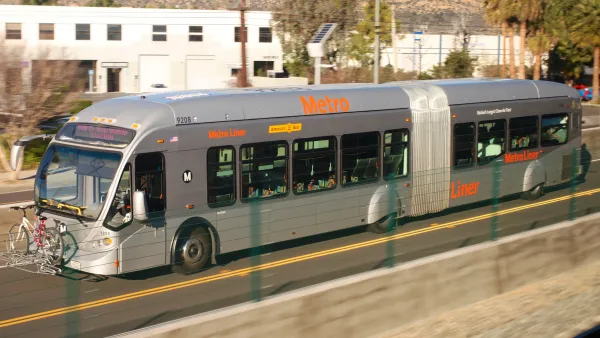
Thinking Outside of the Transit Box in L.A.
Metro is analyzing new geolocational data to look beyond conventional understandings of travel behavior.
Why Replace Successful BRT With Rail?
The Orange Line, a bus rapid transit line running through Los Angeles' San Fernando Valley, has been a success. To those calling for an expensive conversion to rail, several experts say, why bother?

Planetizen Federal Action Tracker
A weekly monitor of how Trump’s orders and actions are impacting planners and planning in America.

Eastern Nebraska is running out of electricity
Data centers and electrification are straining eastern Nebraska’s grid, throttling economic development.
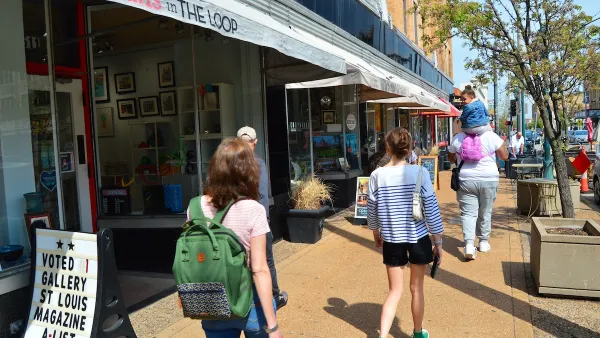
Move over, LA: St. Louis gears up for Olympics, invests millions in downtown redevelopment
The Missouri city will host the 2028 Olympic soccer group stage and knockout matches.

Dallas releases zoning code overhaul to officials
The drafted overhaul is over 400 pages long.

NYC renovations for dangerous, ‘mercilessly crammed’ street delayed until 2027
Construction was supposed to begin this fall.

San Diego’s Midway Rising project gets greenlight from city council
The project looks to become the largest affordable housing development in California's history.

FREE Course: Walkable City 1: Why Walkability?
After describing his path towards focusing on walkability as the essence of good planning, Jeff Speck marches through his five principal reasons for making more walkable places.
Reinventing Malls: Planning Alchemy—Turning Gray Fields Into Gold
The course focuses on the opportunities and imperatives that shape reinvention of mall sites.

City of Rosemead
Rutgers University, Edward J. Bloustein School of Planning and Public Policy
One Hundred Miles
University of Michigan School for Environment and Sustainability (SEAS)
Hunter College, City University of New York (CUNY)
The Architects Foundation
City of Cambridge
The Pocatello Development Authority
The Urban Renewal Agency of the City of Pocatello