The Crossrail train service being built in London will not only drastically decrease commuter travel times, it is also expected to catalyze the transformation of areas along its route, reports Graham Norwood.


London's Crossrail project has been in the works for several years now, but officials believe it will be worth the wait. The new rail line, slated to begin service in 2018, will "increase London's rail passenger capacity by 10 per cent, bringing another 1.5m people within a 45-minute commuting radius of central London and generating £42bn for the UK economy in its first 10 years of operation."
Norwood claims that the new rail service will not only bring additional revenue into already established neighborhoods like King's Cross and Soho, but will open wide the doors for new economic development in under-developed areas both within and outside the city proper. For example, in Farringdon, just north of the City, "There are many unused commercial buildings and sites that could be redeveloped. Before Crossrail there was little interest in exploiting this potential," says Andy Martin, senior partner at estate agent Strutt & Parker.
A Crossrail 2 is also in the works, which would connect Chelsea and Hackney, further expanding the definition of "prime central London."
Read the full story: London sprawling

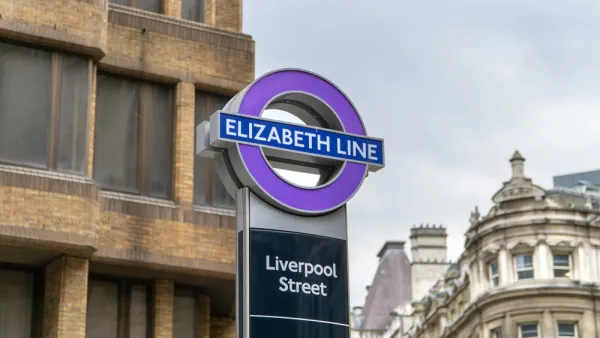
$22 Billion Elizabeth Line Finally Opens in London, With the Queen in Attendance
May 17, 2022 was a big day for transit in London.
Why New York's Transportation Infrastructure Costs So Much
It's been remarked upon before. Infrastructure in New York City is a cost nightmare compared to other global cities. Accountability is lacking, Josh Barro writes, but MTA also suffers from an "institutional lack of power."
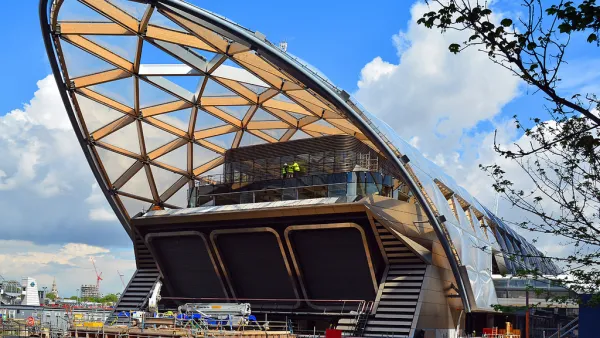
What Will Become of London's Transit Megaproject After Brexit?
London's Crossrail promises faster commutes and neighborhood revitalization in a global economic hub. But what if Brexit puts a damper on that future?

Planetizen Federal Action Tracker
A weekly monitor of how Trump’s orders and actions are impacting planners and planning in America.

Chicago breaks ground on $3 billion megadevelopment
The new neighborhood, titled Foundry Park, will one day host 3,700 residences.

This MA town is drowning in its own sewage — and residents like it that way
Susan Murcott, a waste water expert, said if Carlisle didn't address their leaking sewage, the problem could turn “deadly.”

Iowa taxpayers are paying thousands to clean manure out of their water
While the Clean Water Act makes states responsible for regulating factory farms that discharge pollutants, Iowa has turned a blind eye to the polluting farms.

Amtrak cuts ribbon on Seattle Airo maintenance facility
The $250 million, nearly 100,000-square-foot building can house an entire Cascades Airo trainset.

To power data centers, Google seeks autonomous control of thousands of homes’ electricity
The tech company has signed a deal to indirectly pay Mid-Atlantic residents to reduce their power demand when the grid is strained.

FREE Course: Walkable City 1: Why Walkability?
After describing his path towards focusing on walkability as the essence of good planning, Jeff Speck marches through his five principal reasons for making more walkable places.
Reinventing Malls: Planning Alchemy—Turning Gray Fields Into Gold
The course focuses on the opportunities and imperatives that shape reinvention of mall sites.

City of Rosemead
Rutgers University, Edward J. Bloustein School of Planning and Public Policy
One Hundred Miles
The Architects Foundation
University of Cincinnati Online
Montrose County
The Pocatello Development Authority
The Urban Renewal Agency of the City of Pocatello