When the Big One strikes the Bay Area you'll want to be on the new eastern span of the Bay Bridge, set to open next year. Its flexibility will allow it to ride the earthquake.


The New York Times ran a fascinating feature this week on the design elements that will allow the new eastern span of the Bay Bridge to essentially 'go with the flow' in a major earthquake. Be sure to check out the wonderful interactive feature accompanying the article.
Henry Fountain reports on the bridge's unique design features:
"That design includes a 525-foot-tall suspension bridge tower made up of four steel shafts that should sway in a major earthquake, up to about five feet at the top. But the brunt of the force would be absorbed by connecting plates between the shafts, called shear links.
The bridge's concrete piers are designed to sway as well, limiting damage to areas with extra steel reinforcing. And at joints along the entire span there are 60-foot sliding steel tubes, called hinge pipe beams, with sacrificial sections of weaker steel that should help spare the rest of the structure as it moves in a quake."
Read the full story: A Bridge Built to Sway When the Earth Shakes
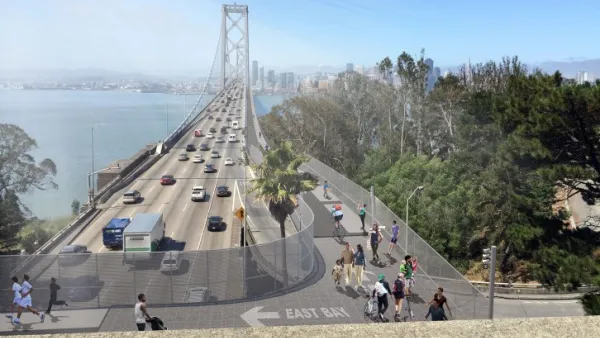
Planning Underway for New Bay Bridge Bike Path, and a Second Transbay BART Tube
In a distant and expensive future, there are two new ways to get across the San Francisco Bay without a car. One will have a much better view.
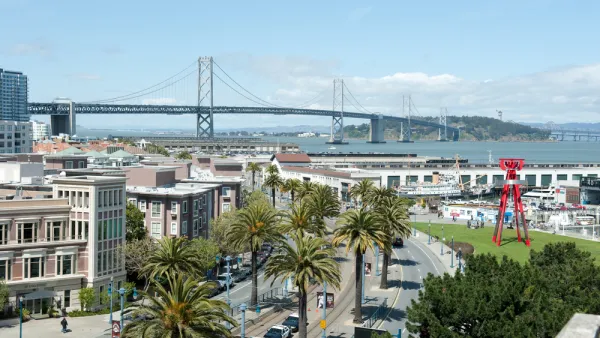
Powerful Political Voices Call for Another Bay Area Bridge
U.S. Senator Diane Feinstein is leading calls for the so-called Southern Crossing—a bridge that would connect San Francisco and the East Bay somewhere south of the Bay Bridge.
Dreaming of a Bike Path on the Western Span of the Bay Bridge
Arup released some very exciting renderings of a proposed pedestrian and bike path on one of the most picturesque and heavily-trafficked spans on the West Coast.

Eastern Nebraska is running out of electricity
Data centers and electrification are straining eastern Nebraska’s grid, throttling economic development.

Move over, LA: St. Louis gears up for Olympics, invests millions in downtown redevelopment
The Missouri city will host the 2028 Olympic soccer group stage and knockout matches.
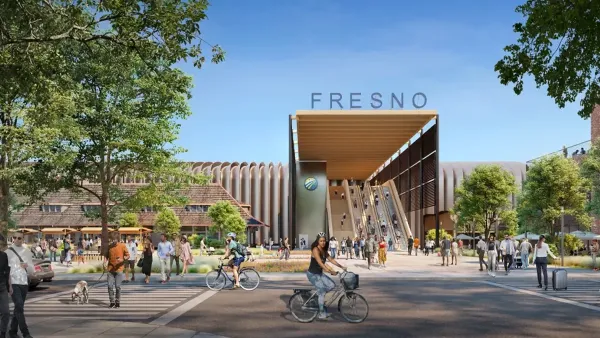
California High-Speed Rail Authority picks trainset manufacturer
The California High-Speed Rail Authority aims to start servicing passengers by 2033.

Dallas releases zoning code overhaul to officials
The drafted overhaul is over 400 pages long.

NYC renovations for dangerous, ‘mercilessly crammed’ street delayed until 2027
Construction was supposed to begin this fall.

San Diego’s Midway Rising project gets greenlight from city council
The project looks to become the largest affordable housing development in California's history.

FREE Course: Walkable City 1: Why Walkability?
After describing his path towards focusing on walkability as the essence of good planning, Jeff Speck marches through his five principal reasons for making more walkable places.
Reinventing Malls: Planning Alchemy—Turning Gray Fields Into Gold
The course focuses on the opportunities and imperatives that shape reinvention of mall sites.

City of Rosemead
Rutgers University, Edward J. Bloustein School of Planning and Public Policy
One Hundred Miles
University of Michigan School for Environment and Sustainability (SEAS)
Hunter College, City University of New York (CUNY)
The Architects Foundation
City of Cambridge
The Pocatello Development Authority
The Urban Renewal Agency of the City of Pocatello