Marc Santora pens a pity piece for the fate of the automobile in New York City. Whereas, once upon a time the car was doing the bullying, the 'once-exalted automobile is now under siege.'


It seems that recent efforts to encourage non-motorized and alternative forms of transportation in New York City (e.g. the addition of bike lines and pedestrian plazas), along with rampant redevelopment of parking garage sites, are conspiring to make the automobile feel unloved in Manhattan.
"Over the last three decades, the number of off-street parking spots in Manhattan has fallen by one-fifth - to 102,000 from 127,000, according to the city study."
According to Santora, "The scarcity of parking has made it a must-have for wealthy apartment buyers, who view a space much as they do a fireplace or a walk-in closet. A spot can cost well over $200,000, or, if rented, more than $1,000 a month. "
"The city plans to convene a series of public meetings in coming weeks to consider the state of parking in Manhattan and Brooklyn. Officials say they are exploring allowing developers to create larger parking lots in Manhattan neighborhoods that rely on commuters, like the theater district or areas around hospitals."
Read the full story: Can’t Park? Blame a Condo

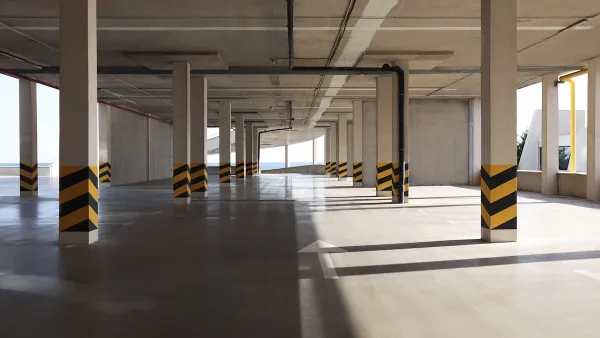
Retrofitting Parking Garages to Create New Housing
Underused parking garages and lots offer an opportunity to alleviate the housing crisis by retrofitting them with temporary and permanent housing options.
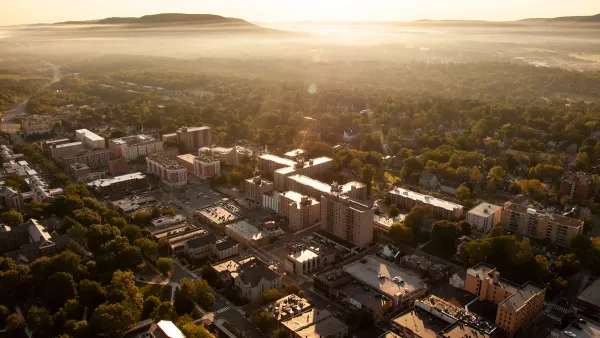
State College Nixes New Downtown Parking Garage After Public Uproar
The borough’s council voted to reverse its decision to demolish several legacy businesses to build a new parking garage.
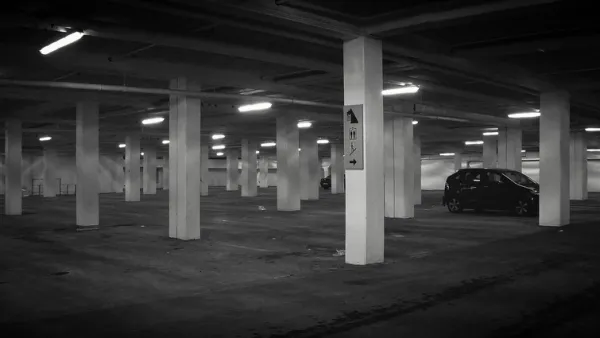
One Pandemic Real Estate Bet: Condos for Cars
The possibility of many more urban dwellers driving than ever before, even in transit-rich locations like New York City, is still very real.

Planetizen Federal Action Tracker
A weekly monitor of how Trump’s orders and actions are impacting planners and planning in America.

California plans to bury El Niño’s downpour
If the state plays its cards right, it may be able to store a billion acre-feet of El Niño’s water in aquifers.

Chicago breaks ground on $3 billion megadevelopment
The new neighborhood, titled Foundry Park, will one day host 3,700 residences.

California High-Speed Rail Authority CEO resigns after $600,000 scandal
Under Ian Choudri, the authority used taxpayer dollars to fund first class flights and trips to nightclubs.

Want to study the Missouri River? Soon, you may need unanimous approval from 10 states
Legislation would require 10 governors’ permission to study or build projects moving water outside the basin.

Desperate measures: Advocates weigh draining Lake Powell to fill Colorado River
Draining the reservoir could reduce evaporation losses by a couple hundred thousand acre-feet.

FREE Course: Walkable City 1: Why Walkability?
After describing his path towards focusing on walkability as the essence of good planning, Jeff Speck marches through his five principal reasons for making more walkable places.
Reinventing Malls: Planning Alchemy—Turning Gray Fields Into Gold
The course focuses on the opportunities and imperatives that shape reinvention of mall sites.

City of Rosemead
Rutgers University, Edward J. Bloustein School of Planning and Public Policy
One Hundred Miles
Hunter College, City University of New York (CUNY)
The Architects Foundation
University of Cincinnati Online
City of Cambridge
Montrose County
The Pocatello Development Authority