Kevin Lynch be damned, a new study by a team of German psychologists reaches some surprising conclusions regarding the ways in which our brains navigate the city.


Eric Jaffe writes about a recently published study in the journal Psychological Science by a team of psychologists at the Max Planck Institute for Biological Cybernetics in Tübingen, Germany, led by Julia Frankenstein. "Their results suggest that our mental maps rely less on local reference points or memory-based maps and more on geographical orientation."
Somewhat tweaking the hypothesis of Kevin Lynch's foundational text 'The Image of the City', "it's almost as if people use their experience to situate themselves in a city, then consult the north-pointing map of that same city in their minds to find their way..."
Which leaves one to wonder if the results are duplicatable in Southern Hemisphere.
Read the full story: How Our Brains Navigate the City
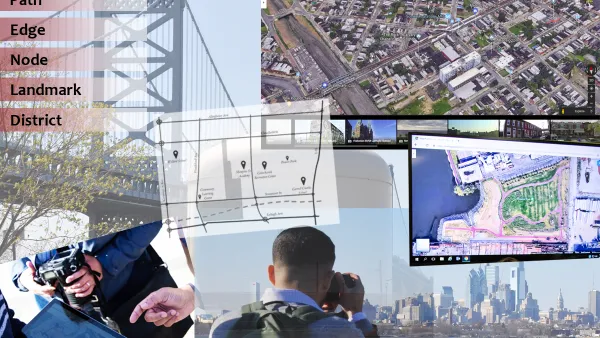
Analyzing Lynch's City Imageability in the Digital Age
Mahbubur Meenar of Rowan University writes about a recent article he co-authored in the Journal of Planning Education and Research

Using Neuroscience to Build Neighborhoods
The brain has a complex, ancient relationship with place. Mental maps are the manifestation of our brains' perception of place and wayfinding. These maps can have profound impacts on how residents appreciate, and improve, their neighborhoods.
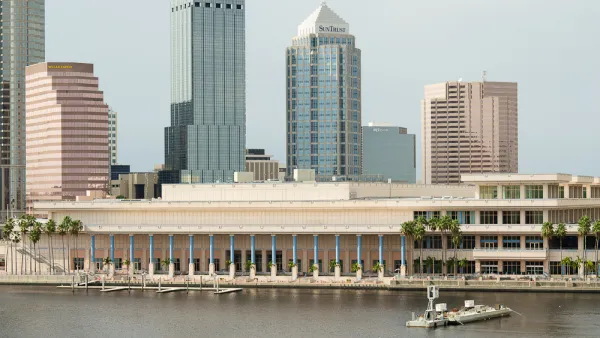
Tampa Bay's New Cookie Cutter High Rises
With more than ten new residential towers rising around Tampa Bay, development is booming, but why aren't the new buildings more reflective of the community and environment?

Planetizen Federal Action Tracker
A weekly monitor of how Trump’s orders and actions are impacting planners and planning in America.

California plans to bury El Niño’s downpour
If the state plays its cards right, it may be able to store a billion acre-feet of El Niño’s water in aquifers.

Desperate measures: Advocates weigh draining Lake Powell to fill Colorado River
Draining the reservoir could reduce evaporation losses by a couple hundred thousand acre-feet.

Los Angeles just elected an urban planner as its mayor
Transportation analysts are optimistic that Raman will be more aggressive in addressing transit issues than Bass.

Mamdani’s pied-à-terre tax survives legal challenge
A panel of judges found that the plaintiffs failed to demonstrate injury as a result of New York City's implementation of the tax.

Eastern Nebraska is running out of electricity
Data centers and electrification are straining eastern Nebraska’s grid, throttling economic development.

FREE Course: Walkable City 1: Why Walkability?
After describing his path towards focusing on walkability as the essence of good planning, Jeff Speck marches through his five principal reasons for making more walkable places.
Reinventing Malls: Planning Alchemy—Turning Gray Fields Into Gold
The course focuses on the opportunities and imperatives that shape reinvention of mall sites.

City of Rosemead
Rutgers University, Edward J. Bloustein School of Planning and Public Policy
One Hundred Miles
University of Michigan School for Environment and Sustainability (SEAS)
Hunter College, City University of New York (CUNY)
The Architects Foundation
City of Cambridge
Montrose County
The Pocatello Development Authority