With more than ten new residential towers rising around Tampa Bay, development is booming, but why aren't the new buildings more reflective of the community and environment?


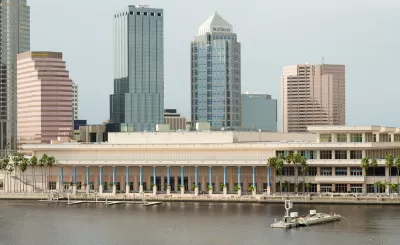
"After a drought of development, high-rises are again blooming in Tampa Bay. Nurtured by the richness of flowing capital and investor optimism, more than 10 new residential towers are rising on both sides of the bay, from Tampa’s Channel District to downtown St. Pete," reports Linda Saul-Sena.
"None is likely to grace the cover of Architectural Record, but all will bring vitality to the city centers. Most of the buildings will cater to renters rather than condo owners, and both ends of the demographic scale will be well-represented — from young urbanites in their late 20s to empty-nesters and snowbirds."
The article goes on to make a subtle criticism of recent wave of development's cookie cutter designs, which, according to Saul-Sena, "have little relevance to the region's subtropical setting."
"The context of the structures, their relationship to a body of water or downtown streetscape, do not appreciably alter their designs. Visit Atlanta or Charlotte to see what these developers have created there and you’ll find buildings that are identical."
Read the full story: Transforming Tampa Bay: Aim higher
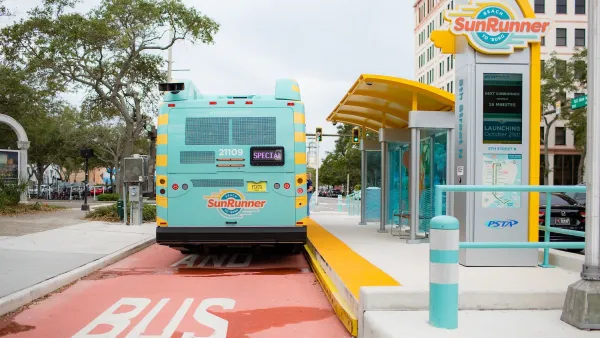
Lawsuit Claims Florida Bus Lane Removal was Illegal
The state cites an increase in crashes and congestion as reasons for eliminating a dedicated bus lane on the SunRunner BRT line, but city data tells a different story.
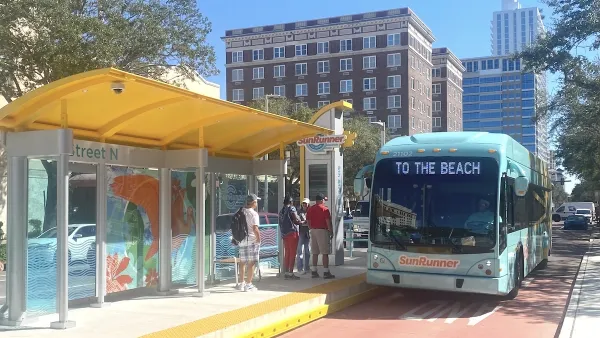
Florida Law Could Eliminate Dedicated Bus Lanes
A new law calls for a minimum ridership of 6,000 passengers in the first year for new bus rapid transit lines. To date, no bus lines in the Tampa Bay region come close.
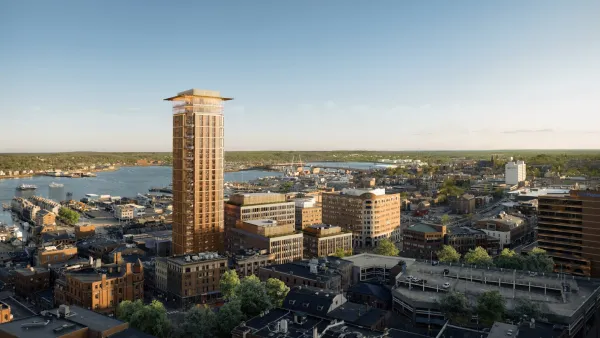
Downtown Portland Ready for Maine's Tallest Building
The city of Portland anticipates a major new urban development addition called the “Old Port Square” project.

Planetizen Federal Action Tracker
A weekly monitor of how Trump’s orders and actions are impacting planners and planning in America.

California plans to bury El Niño’s downpour
If the state plays its cards right, it may be able to store a billion acre-feet of El Niño’s water in aquifers.

Desperate measures: Advocates weigh draining Lake Powell to fill Colorado River
Draining the reservoir could reduce evaporation losses by a couple hundred thousand acre-feet.

Chicago voters approve permanent festival grounds, penalty for vacant property owners
Currently, major summer and fall festivals take over public parks for weeks at a time, drawing criticism from nearby residents

NYC votes to cut outdoor dining red tape, speed up permitting
New York City also voted to allow the Department of Transportation to begin work on urgent projects before notifying elected officials.

California appears to reject Prop. 45
The proposition would have expanded the projects that qualify for a streamlined environmental review, effectively paring down the California Environmental Quality Act.

FREE Course: Walkable City 1: Why Walkability?
After describing his path towards focusing on walkability as the essence of good planning, Jeff Speck marches through his five principal reasons for making more walkable places.
Reinventing Malls: Planning Alchemy—Turning Gray Fields Into Gold
The course focuses on the opportunities and imperatives that shape reinvention of mall sites.

City of Rosemead
Rutgers University, Edward J. Bloustein School of Planning and Public Policy
One Hundred Miles
Hunter College, City University of New York (CUNY)
The Architects Foundation
University of Cincinnati Online
City of Cambridge
Montrose County
The Pocatello Development Authority