Petroleum products are defined as refinery products, such as fuel. The U.S. passed a threshold in November. The EIA recorded 689.4 million barrels of oil refinery products imported and 753.4 million barrels exported in the first 9 months of 2011.


The U.S. Energy Information Administration is the source for "independent and impartial energy information" in the U.S. Petroleum products includes all refinery products, particularly gasoline, diesel, and jet fuels and "petroleum coke, which is used to make steel".
"The nation is now on track to be a net exporter of petroleum products in 2011 for the first time in 62 years. As recently as 2005, the U.S. imported nearly 900 million barrels more of petroleum products than it exported."
This 'petroleum surplus' should not be misinterpreted. "So long as the U.S. remains the world's biggest net importer of crude oil, currently taking in nine million barrels per day, it isn't likely to become energy independent anytime soon."
Contributor's note: The Wall Street Journal link may provide a limited version of the article - subscription ensures full access.
Thanks to Energy & Environment Daily
Read the full story: U.S. Nears Milestone: Net Fuel Exporter
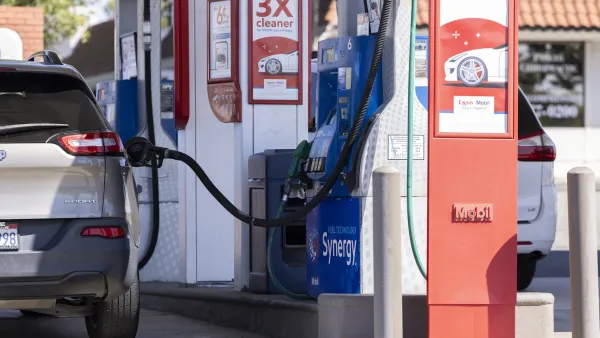
Analysis: Suspending the gas tax wouldn't save Americans much on gas this summer
Even if Congress approves a proposal to temporarily lift the federal gas tax, a variety of other factors and transportation and processing delays would mean American consumers would see little difference at the pump.

Do Environmentalists Confuse Oil Production With Oil Demand?
Samantha Gross, the director of the Energy Security and Climate Initiative at the Brookings Institution, argues that the key to reducing emissions is to do the hard work of reducing oil demand rather than focusing on ending U.S. oil drilling.
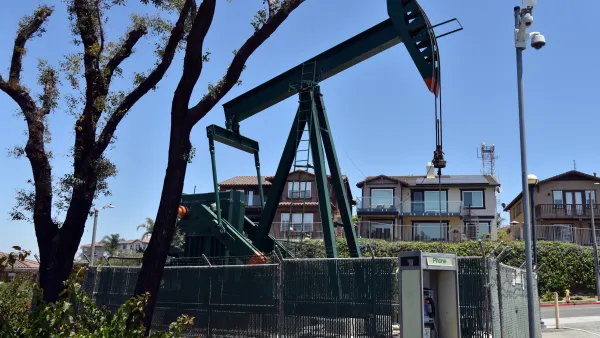
Election 2024: California Oil Drilling Referendum
Environmentalists gear up for battle to reject a referendum funded by Big Oil on a law passed last year that would ban oil and gas drilling within 3,200 feet of homes, schools, nursing homes, and hospitals.

Planetizen Federal Action Tracker
A weekly monitor of how Trump’s orders and actions are impacting planners and planning in America.

California plans to bury El Niño’s downpour
If the state plays its cards right, it may be able to store a billion acre-feet of El Niño’s water in aquifers.

Desperate measures: Advocates weigh draining Lake Powell to fill Colorado River
Draining the reservoir could reduce evaporation losses by a couple hundred thousand acre-feet.

Chicago voters approve permanent festival grounds, penalty for vacant property owners
Currently, major summer and fall festivals take over public parks for weeks at a time, drawing criticism from nearby residents

NYC votes to cut outdoor dining red tape, speed up permitting
New York City also voted to allow the Department of Transportation to begin work on urgent projects before notifying elected officials.

California appears to reject Prop. 45
The proposition would have expanded the projects that qualify for a streamlined environmental review, effectively paring down the California Environmental Quality Act.

FREE Course: Walkable City 1: Why Walkability?
After describing his path towards focusing on walkability as the essence of good planning, Jeff Speck marches through his five principal reasons for making more walkable places.
Reinventing Malls: Planning Alchemy—Turning Gray Fields Into Gold
The course focuses on the opportunities and imperatives that shape reinvention of mall sites.

City of Rosemead
Rutgers University, Edward J. Bloustein School of Planning and Public Policy
One Hundred Miles
Hunter College, City University of New York (CUNY)
The Architects Foundation
University of Cincinnati Online
City of Cambridge
Montrose County
The Pocatello Development Authority