In San Francisco, a performance parking pilot program has not had as big an impact as many thought it would. According to Michael Perkins, "Even with high rates, popular blocks still fill up, and other blocks remain under-filled even at low prices."


SFPark, the federally supported performance parking program, has been active since 2010, adjusting prices at parking meters around the city to try to influence drivers' behavior. So far, the effect has been less than anticipated:
According to Perkins, "This performance parking experiment is demonstrating that on high-demand blocks, drivers are very insensitive to price increases. The experiment is also showing that parking demand is highly localized, with price differences of as much as 100% continuing even through two adjustment cycles."
Read the full story: San Francisco finds performance parking less responsive than expected

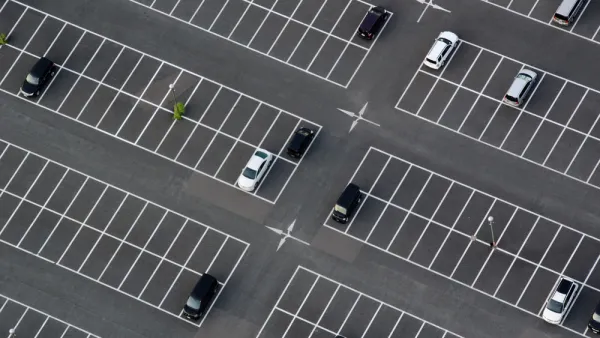
How Cities Are Slimming Down on Parking
Cities around the world are finding ways to go on a parking diet, freeing up unused space. San Francisco and Philadelphia are two U.S. leaders, while cities like Paris, Copenhagen, and Zurich pursue even more aggressive measures.
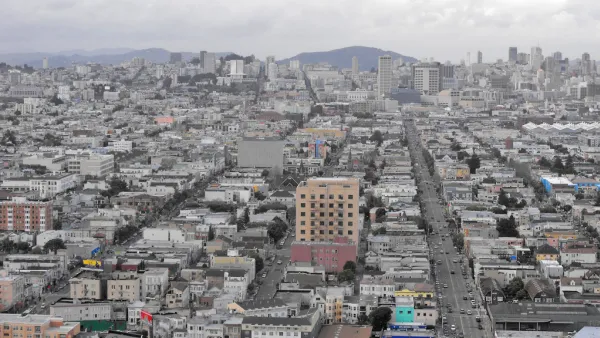
San Francisco's Running Out of Room for Cars
In terms of land area, San Francisco’s a small city. Yet if current policies persist, the city will build 92,000 parking spots for residents by 2040, on just 49 square miles of land.
San Francisco Aims To Give Parking A Technological Makeover
Variable parking rates and online parking availability are features of a pilot program meant to increase convenience and cut congestion on the road.

Planetizen Federal Action Tracker
A weekly monitor of how Trump’s orders and actions are impacting planners and planning in America.

Amtrak, CN end decades-long dispute with eight-year agreement
The new operating agreement establishes an updated framework for the companies to work together, including processes to resolve disputes.

Judges permit Denver to divert 77,000 acre feet from the Colorado River for reservoir expansion
Overuse and climate change have caused the Colorado River’s water levels to plummet.

Philadelphia to invest $2 billion into upgrading city airports as PHL places last in customer satisfaction
Modernizations to Philadelphia's airports will include baggage system upgrades and a new automated parking garage guidance system.

The LA housing policies making developers turn away from the city
Despite LA’s housing shortage, developers say the city’s "mansion-tax" and pandemic-era policies make it an unappealing place to build housing.

New density bill would require 7 California cities to establish regional transit hubs
The bill would also require major cities in California to permit high-rise residential buildings.

FREE Course: Walkable City 1: Why Walkability?
After describing his path towards focusing on walkability as the essence of good planning, Jeff Speck marches through his five principal reasons for making more walkable places.
Reinventing Malls: Planning Alchemy—Turning Gray Fields Into Gold
The course focuses on the opportunities and imperatives that shape reinvention of mall sites.

City of Wisconsin Rapids
Harvard University Graduate School of Design
KFH Group Inc.
The Architects Foundation
University of Cincinnati Online
The Pocatello Development Authority
The Urban Renewal Agency of the City of Pocatello