Chicago Mayor Rahm Emanuel's plan to tax parking downtown is not the solution to a regional problem primarily affecting highways, the industry says.


Reports Jon Hilkevich:
"InterPark and other members of the Parking Industry Labor Management Committee have posted placards in their facilities showing the current taxes and how the top tax would increase 67 percent, from $3 to $5, under Emanuel's plan. The companies are also distributing fliers to their customers encouraging city residents to tell their aldermen to vote against the proposed new fee.
The parking committee contended the new parking tax would create an additional tax burden on workers and businesses and potentially drive companies to relocate to the suburbs or to another metropolitan area.
The committee also said the CTA and Metra could not handle 'any ridership increases the parking tax hike may create' by pushing some drivers to switch to mass transit."
Read the full story: Parking industry working to defeat congestion tax
"Over the Top": Downtown Chicago Considers Congestion Fee
While some may grudgingly eat the extra fee to park downtown on weekdays, others may look toward more reliance on the El--the desired response. But is a flat congestion fee on top of already existing parking rates the best way to go?
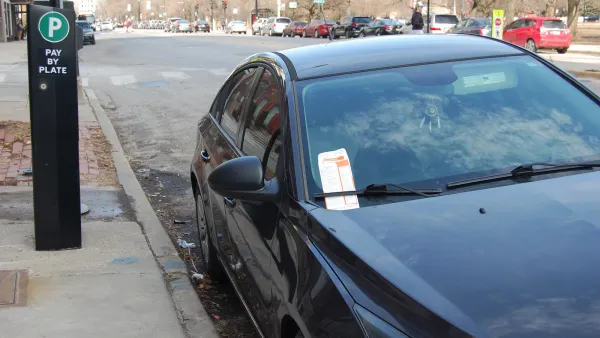
Chicago mayor secretly bid over $3B to buy back city's parking meters
Mayor Brandon Johnson revoked an offer to pay more than $800 million above the next-highest bidder to regain control of the city's parking meters.
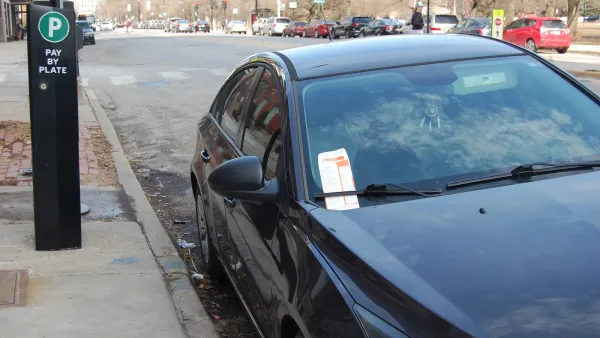
Chicago parking meters are for sale once again
Chicago's 75-year lease of its parking meters to an LLC puts revenue decisions in the hands of private investors.

Planetizen Federal Action Tracker
A weekly monitor of how Trump’s orders and actions are impacting planners and planning in America.

California plans to bury El Niño’s downpour
If the state plays its cards right, it may be able to store a billion acre-feet of El Niño’s water in aquifers.

Desperate measures: Advocates weigh draining Lake Powell to fill Colorado River
Draining the reservoir could reduce evaporation losses by a couple hundred thousand acre-feet.

Mamdani’s pied-à-terre tax survives legal challenge
A panel of judges found that the plaintiffs failed to demonstrate injury as a result of New York City's implementation of the tax.

Eastern Nebraska is running out of electricity
Data centers and electrification are straining eastern Nebraska’s grid, throttling economic development.

Seattle passes record-breaking transit services expansion
Proposition 1 will double the city’s transit tax to add 95,000 more bus trips and preserve 180,000 bus trips annually.

FREE Course: Walkable City 1: Why Walkability?
After describing his path towards focusing on walkability as the essence of good planning, Jeff Speck marches through his five principal reasons for making more walkable places.
Reinventing Malls: Planning Alchemy—Turning Gray Fields Into Gold
The course focuses on the opportunities and imperatives that shape reinvention of mall sites.

City of Rosemead
Rutgers University, Edward J. Bloustein School of Planning and Public Policy
One Hundred Miles
University of Michigan School for Environment and Sustainability (SEAS)
Hunter College, City University of New York (CUNY)
The Architects Foundation
City of Cambridge
Montrose County
The Pocatello Development Authority