While some may grudgingly eat the extra fee to park downtown on weekdays, others may look toward more reliance on the El--the desired response. But is a flat congestion fee on top of already existing parking rates the best way to go?


Reports David Schaper:
"[Urban planning professor Donald] Shoup says a $2 increase may not be enough to get many commuters to leave their cars at home, especially if their employers cover all or part of the parking cost. Also, he says, raising prices in parking lots and garages might only increase the number of drivers circling around in search of street parking, adding to congestion.
"I think the most important thing to do for any city is to get the price of curb parking right," Shoup says.
That's the approach some other cities are taking. San Francisco, for example, is experimenting with parking meters that change prices block to block and at different times of day, based on supply and demand."
Read the full story: Chicago's 'Congestion Fee' Gets Chilly Reception

Parking Companies Fight Back Against Congestion Tax
Chicago Mayor Rahm Emanuel's plan to tax parking downtown is not the solution to a regional problem primarily affecting highways, the industry says.
$2 Congestion Fee When Parking In Downtown Chicago
Chicago Mayor Rahm Emanuel wants to use congestion fees to help fund a new rail station and the city's first bus rapid transit line. Anyone parking in a downtown lot will be required to pay an additional $2 on top of the existing parking fee.
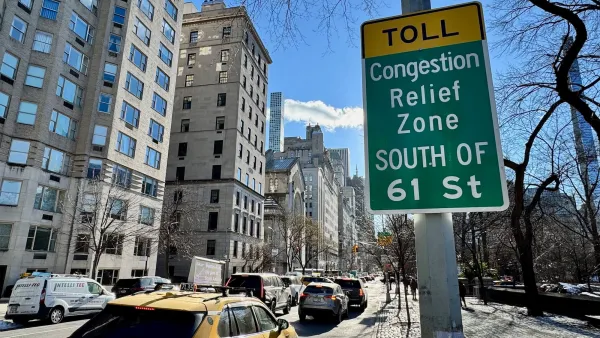
Study: NYC congestion pricing didn't impact parking demand
A city report shows that free parking, not congestion pricing, is the main driver of limited parking demand in the city.

Planetizen Federal Action Tracker
A weekly monitor of how Trump’s orders and actions are impacting planners and planning in America.

Amtrak, CN end decades-long dispute with eight-year agreement
The new operating agreement establishes an updated framework for the companies to work together, including processes to resolve disputes.

Judges permit Denver to divert 77,000 acre feet from the Colorado River for reservoir expansion
Overuse and climate change have caused the Colorado River’s water levels to plummet.

NYC DOT wants faster, more permanent street upgrades
The city is examining ways to build more concrete infrastructure without getting entangled in 'decades-long' projects.

'Something we’ve never seen before:' rising utility rates could strain city finances nationwide
Data centers, climate change and other factors have caused utility rates in the United States to increase by 38% since 2020.

Trump to overrule local leaders, lease millions of acres of America’s Pacific Island territories’ seafloors to mining companies
International law says that the Indigenous people of America’s territories have a right to prior and informed consent regarding projects that impact their countries.

FREE Course: Walkable City 1: Why Walkability?
After describing his path towards focusing on walkability as the essence of good planning, Jeff Speck marches through his five principal reasons for making more walkable places.
Reinventing Malls: Planning Alchemy—Turning Gray Fields Into Gold
The course focuses on the opportunities and imperatives that shape reinvention of mall sites.

Harvard University Graduate School of Design
KFH Group Inc.
Greater Baltimore Committee
The Architects Foundation
University of Cincinnati Online
The Pocatello Development Authority
The Urban Renewal Agency of the City of Pocatello