Today's war on drugs isn't all that different from Prohibition, writes Stephen Smith, at least in terms of the urban-suburban divide that underlies policy. As cities' reputations clean up, maybe drug policy will evolve accordingly, too.


"As with alcohol in the 1920s, when Prohibition was foisted on cities by small towns, today's anti-drug policies are most popular among white suburban and rural conservatives. Urban voters, who bear the brunt of the damage of America's misguided drug policies, are more liberal and likely to favor reforms like marijuana legalization and needle exchanges, but just like their predecessors who opposed Prohibition, they are forced to acquiesce to the federal war on drugs. We can even see the same pattern in ultra-liberal Netherlands, where the national government wants to restrict the sale of cannabis to foreigners, against the wishes of Amsterdam (although Rotterdam has not been so tolerant)."
Read the full story: The War on Drugs Is a War on Cities


Public Drinking in America
Regulating alcohol in the public realm.

DUIDs Surpass DUIs as Cause of Fatal Vehicle Crashes
2015 was the first year that driving under the influence of drugs (DUID) surpassed those killed while driving under the influence of alcohol. Increased legal access to marijuana is correlated with the surge. Amphetamine use is also a factor.
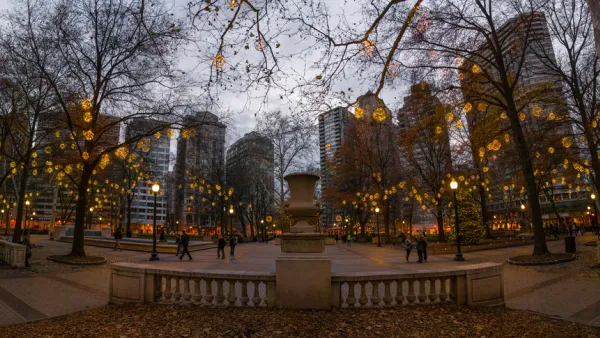
Sitting on the Walls Prohibited in Philadelphia's Rittenhouse Square
The list of prohibitions for the use of public spaces grows—this time to the seemingly innocuous and park-perfect activity of sitting.

Planetizen Federal Action Tracker
A weekly monitor of how Trump’s orders and actions are impacting planners and planning in America.

Chicago breaks ground on $3 billion megadevelopment
The new neighborhood, titled Foundry Park, will one day host 3,700 residences.

This MA town is drowning in its own sewage — and residents like it that way
Susan Murcott, a waste water expert, said if Carlisle didn't address their leaking sewage, the problem could turn “deadly.”

Feds to more closely scrutinize proposed Amtrak facility’s environmental impact
The Federal Railroad Administration had initially said the facility qualified for a less extensive environmental review.

Boston is hard to build housing in: its chief of planning wants to keep it that way
Chief of Planning Kairos Shen said she would not make changes to Boston’s affordability requirements for new housing, which critics say have slowed down development.

California plans to bury El Niño’s downpour
If the state plays its cards right, it may be able to store a billion acre-feet of El Niño’s water in aquifers.

FREE Course: Walkable City 1: Why Walkability?
After describing his path towards focusing on walkability as the essence of good planning, Jeff Speck marches through his five principal reasons for making more walkable places.
Reinventing Malls: Planning Alchemy—Turning Gray Fields Into Gold
The course focuses on the opportunities and imperatives that shape reinvention of mall sites.

City of Rosemead
Rutgers University, Edward J. Bloustein School of Planning and Public Policy
One Hundred Miles
Hunter College, City University of New York (CUNY)
The Architects Foundation
University of Cincinnati Online
Montrose County
The Pocatello Development Authority
The Urban Renewal Agency of the City of Pocatello