The list of prohibitions for the use of public spaces grows—this time to the seemingly innocuous and park-perfect activity of sitting.


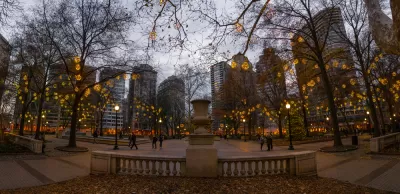
"Sitting on the walls is now banned in Rittenhouse Square," according to an article by Julia Terruso.
"The Department of Parks and Recreation authorized the new rule and the signs' installation in conjunction with police and the Friends of Rittenhouse Square group," adds Terruso.
A statement on the decision from the Department of Parks and Recreation put the onus for the decision on "a recent uptick in vandalism on the historic balustrades" and a desire to "protect the structural integrity of these iconic park features."
"The Friends of Rittenhouse Square have argued that the 3-foot-high walls, which often draw large groups of people, promote drug use," writes Terruso.
Regardless of those explanations, it wasn't easy for Terruso to find people in Rittenhouse Square sitting on the walls, excoriating the new signs that prohibit sitting.
Corey Griffith, of South Philadelphia is quoted in the article expressing his feelings about the prohibition. "Sitting in Rittenhouse Square is Rittenhouse Square," he said. "I saw that sign, and I was like [expletive] that sign. It's preposterous."
FULL STORY: After loitering complaints, city bans wall sitting in Rittenhouse Square


Planetizen Federal Action Tracker
A weekly monitor of how Trump’s orders and actions are impacting planners and planning in America.

The state-sanctioned urbicide of Austin
People don’t kill cities. Freeways do.

US to reduce Colorado River water deliveries to Mexico
A new Colorado Treaty amendment reduces Mexico’s Colorado River water allocation by 250,000 acre feet.

5 New England states march closer to 800 megawatt wind energy project
Securing federal approval for the project may be complicated under the Trump administration, which has historically been hostile towards domestic wind power.

Baltimore to break ground on $50 million Transit Priority Project
The project will bring faster bus trips, safer streets and better bike connections to Baltimore.

Airbnb launches $250 million 'last-dollar financing' housing accelerator, makes first investment in Austin
The company will put $6.4 million towards affordable housing development in Texas’ capital.

FREE Course: Walkable City 1: Why Walkability?
After describing his path towards focusing on walkability as the essence of good planning, Jeff Speck marches through his five principal reasons for making more walkable places.
Reinventing Malls: Planning Alchemy—Turning Gray Fields Into Gold
The course focuses on the opportunities and imperatives that shape reinvention of mall sites.

Eagle County Government
Harvard University Graduate School of Design
Nashville Planning Department
The Architects Foundation
University of Cincinnati Online
The Pocatello Development Authority
The Urban Renewal Agency of the City of Pocatello
Journal of the American Planning Association