Chicago's flat topography makes it ideal for bike riding. Now Rahm Emanuel and Gabe Klein's new public policies aim to grow their use. The city consistently scores as highly in bike-friendly rankings as New York, Austin, or Denver.


In july, CDOT announced a second protected bike lane, which will move Emanuel closer to his promise of 100 protected miles within four years. In September, an extension of the B-Roll sharing program announced the addition of 5,000 and 500 stations by the end of summer 2012.
"These pro-bicycle planning and policy initiatives announced this past summer are the first of bicycle-minded transportation changes for Chincago," writes Renee Patten. "With these initiatives, Chicago will enhance the design of streets and mold urban transportation for all users of the road; pedestrians, cyclists and pedestrians alike, enhancing the sustainability of our transportation options."
Read the full story: A Summer of Bicycle-Focused Transportation Policy For Chicagoans

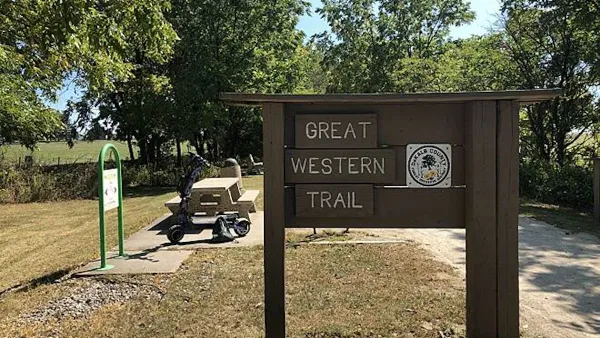
Advocates Champion the Great Western Trail
A Chicago walking and biking trail along a former railroad right-of-way has been a labor of love for local residents.
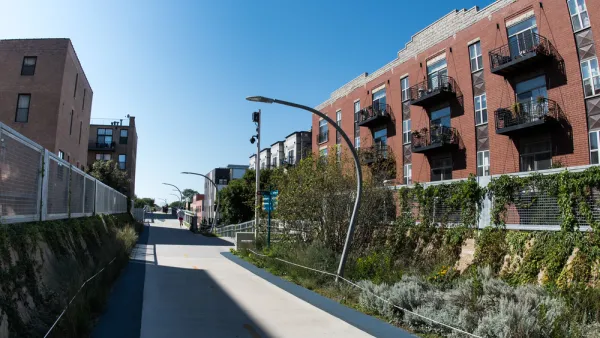
Chicago's 606 Bike Path Made Gentrification Inevitable, Expert Claims
Because the rails to trails project left housing up to the market, rising rents were inevitable, claims a new report.
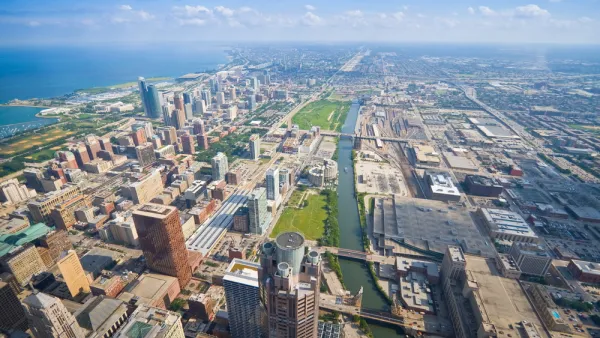
A Plan to Bike the Length of the Chicago River by 2030
The Chicago River is attracting some of the city's most creative visions for the future. The second plan in recent months proves the potential of the river as an open space asset.

Planetizen Federal Action Tracker
A weekly monitor of how Trump’s orders and actions are impacting planners and planning in America.

Amtrak, CN end decades-long dispute with eight-year agreement
The new operating agreement establishes an updated framework for the companies to work together, including processes to resolve disputes.

Judges permit Denver to divert 77,000 acre feet from the Colorado River for reservoir expansion
Overuse and climate change have caused the Colorado River’s water levels to plummet.

NYC DOT wants faster, more permanent street upgrades
The city is examining ways to build more concrete infrastructure without getting entangled in 'decades-long' projects.

'Something we’ve never seen before:' rising utility rates could strain city finances nationwide
Data centers, climate change and other factors have caused utility rates in the United States to increase by 38% since 2020.

Trump to overrule local leaders, lease millions of acres of America’s Pacific Island territories’ seafloors to mining companies
International law says that the Indigenous people of America’s territories have a right to prior and informed consent regarding projects that impact their countries.

FREE Course: Walkable City 1: Why Walkability?
After describing his path towards focusing on walkability as the essence of good planning, Jeff Speck marches through his five principal reasons for making more walkable places.
Reinventing Malls: Planning Alchemy—Turning Gray Fields Into Gold
The course focuses on the opportunities and imperatives that shape reinvention of mall sites.

Harvard University Graduate School of Design
KFH Group Inc.
Greater Baltimore Committee
The Architects Foundation
University of Cincinnati Online
The Pocatello Development Authority
The Urban Renewal Agency of the City of Pocatello