Andres Sevstuk, lecturer at MIT and head of the City Form Research Group describes how the new Urban Network Analysis toolbox is "taking a much more rigorous approach to look at the work of urban design."


Sevstuk claims that his new data analysis package examines how the form of a city affects the life that goes on in it. The software analyzes attributes of various locations to measure their "reach," how many jobs, or residences are accessible when traveling by the street network; or "betweeness," a measure that can estimate the volume of foot traffic an area receives.
The program has already provided some counter intuitive insights. In a restaurant-dense area like Inman Square, the presence of competitors works to businesses' advantage: "The idea there is by forming a cluster, they manage to attract a much larger clientele than the sum of each one alone,'' he said.
Such tools can also give planners a better handle on how to rationally fix cities.
Read the full story: Urban Analysis

New MIT Data Analysis Tool Aims To Rationalize Planning
Andres Sevstuk, lecturer at MIT and head of the City Form Research Group describes how the new Urban Network Analysis Toolbox is, "taking a much more rigorous approach to look at the work of urban design."
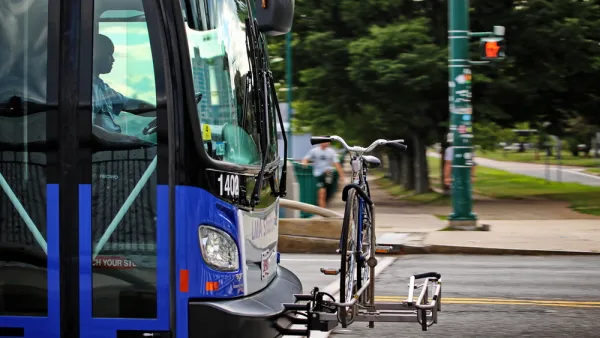
Boston's Data-Driven Bus System Makeover
MIT's Transit Lab created a ridership model called Origin Destination Transfer (ODX) that the Massachusetts Bay Transportation Authority is using to make incremental changes to the region's bus system.
What Makes Boston One of the Smartest Cities in the World?
Having two of the top universities in the world within a couple of miles of each other doesn't hurt. But Boyd Cohen looks at Boston's cutting-edge efforts to foster innovation within and outside of its universities, that make it a global leader.

Planetizen Federal Action Tracker
A weekly monitor of how Trump’s orders and actions are impacting planners and planning in America.

Amtrak, CN end decades-long dispute with eight-year agreement
The new operating agreement establishes an updated framework for the companies to work together, including processes to resolve disputes.

Northwest rail fans eager for Sept. 30 debut of Amtrak’s Airo fleet
Get ready for that new train smell and more seats. But they won’t go faster or run more frequently on the Cascades route in Washington and Oregon.

Trump administration unlawfully slashed $7 billion in clean energy grants, judge rules
The Environmental Protection Agency ended the Solar For All program, which provided the grants, after President Donald Trump’s inauguration.

Record-breaking wildlife overpass in Colorado brings 91% reduction in animal collisions
Prior to the overpass, vehicles were hitting one deer per day on Colorado’s Interstate 25.

California lawmakers approve just 5% of much-needed LA28 transportation funding
State legislators appear just as unwilling as Trump to pay for Olympics-related transportation projects.

FREE Course: Walkable City 1: Why Walkability?
After describing his path towards focusing on walkability as the essence of good planning, Jeff Speck marches through his five principal reasons for making more walkable places.
Reinventing Malls: Planning Alchemy—Turning Gray Fields Into Gold
The course focuses on the opportunities and imperatives that shape reinvention of mall sites.

City of Thousand Oaks
City of Wisconsin Rapids
Harvard University Graduate School of Design
The Architects Foundation
University of Cincinnati Online
The Pocatello Development Authority
The Urban Renewal Agency of the City of Pocatello