MIT's Transit Lab created a ridership model called Origin Destination Transfer (ODX) that the Massachusetts Bay Transportation Authority is using to make incremental changes to the region's bus system.


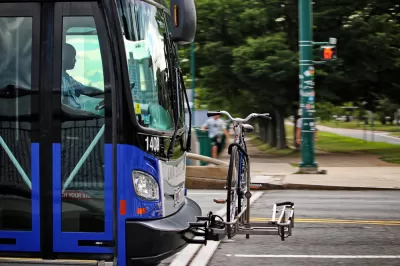
Stephen Miller reports on ongoing efforts in and around Boston to improve bus service on the Massachusetts Bay Transportation Authority transit system. Boston is the latest city to revamp its bus network, but its approach to the process differs from that of famous examples like that of Houston, in its use of data collection.
"Instead of following the lead of Houston, which completely redrew bus routes across its sprawling grid all at once, the T will be using ODX data as part of a piece-by-piece approach on Boston’s winding roads," explains Miller.
ODX stands for Origin Destination Transfer—a ridership model developed by MIT’s Transit Lab for use in London, called. According to Miller, "MIT and the MBTA have begun breaking down the barriers between different fare payment and ridership data sets to estimate when people are traveling, where they are getting on trains and buses, where they are transferring and, using the origin of their subsequent trip, inferring where they are ending their journeys." That data is thus enabling the MBTA to make informed decisions about route alignment, stop spacing, frequency, and hours of service.
Read the full story: Inside Boston's Bus Revamp
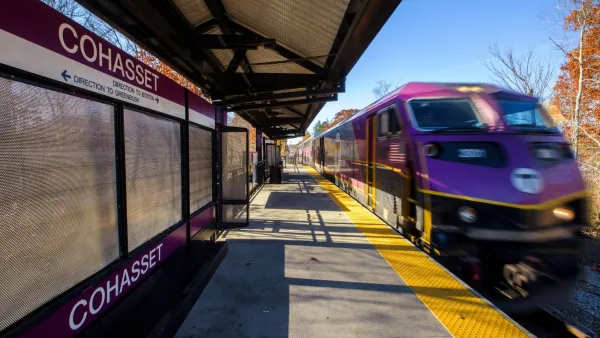
MBTA extends commuter rail discounts and lowers express bus fare to keep passengers riding into the fall
Boston-area commuters can access half-price monthly passes through November.
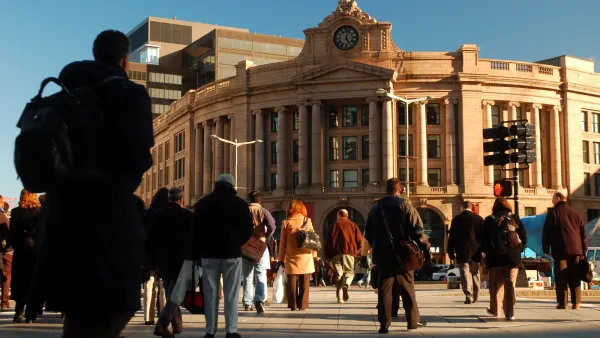
MBTA threatens to use eminent domain to pedestrianize Boston streets during World Cup
Boston city hall has been unusually reluctant to align with MassDOT and MBTA's proposed crowd management plans.
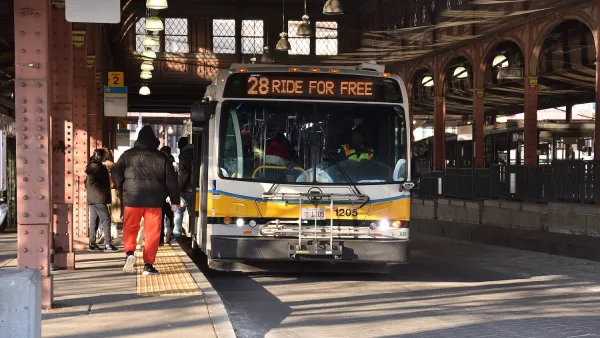
Boston’s Free Buses are Also its Slowest
Two fare-free bus lines have seen a sharp increase in travel times.

Planetizen Federal Action Tracker
A weekly monitor of how Trump’s orders and actions are impacting planners and planning in America.

California plans to bury El Niño’s downpour
If the state plays its cards right, it may be able to store a billion acre-feet of El Niño’s water in aquifers.

Desperate measures: Advocates weigh draining Lake Powell to fill Colorado River
Draining the reservoir could reduce evaporation losses by a couple hundred thousand acre-feet.

Los Angeles just elected an urban planner as its mayor
Transportation analysts are optimistic that Raman will be more aggressive in addressing transit issues than Bass.

Mamdani’s pied-à-terre tax survives legal challenge
A panel of judges found that the plaintiffs failed to demonstrate injury as a result of New York City's implementation of the tax.

Eastern Nebraska is running out of electricity
Data centers and electrification are straining eastern Nebraska’s grid, throttling economic development.

FREE Course: Walkable City 1: Why Walkability?
After describing his path towards focusing on walkability as the essence of good planning, Jeff Speck marches through his five principal reasons for making more walkable places.
Reinventing Malls: Planning Alchemy—Turning Gray Fields Into Gold
The course focuses on the opportunities and imperatives that shape reinvention of mall sites.

City of Rosemead
Rutgers University, Edward J. Bloustein School of Planning and Public Policy
One Hundred Miles
University of Michigan School for Environment and Sustainability (SEAS)
Hunter College, City University of New York (CUNY)
The Architects Foundation
City of Cambridge
Montrose County
The Pocatello Development Authority