Andres Sevstuk, lecturer at MIT and head of the City Form Research Group describes how the new Urban Network Analysis Toolbox is, "taking a much more rigorous approach to look at the work of urban design."


Sevstuk claims that his new data analysis package examines how the form of a city affects the life that goes on in it. The software analyzes attributes of various locations to measure their "reach," how many jobs, or residences are accessible when traveling by the street network; or "betweeness," a measure that can estimate the volume of foot traffic an area receives.
The program has already provided some counter intuitive insights. In a restaurant-dense area like Inman Square, the presence of competitors works to businesses' advantage: "The idea there is by forming a cluster, they manage to attract a much larger clientele than the sum of each one alone,'' he said.
Such tools can also give planners a better handle on how to rationally fix cities.
Read the full story: Urban Analysis
New MIT Data Analysis Tool Aims To Rationalize Planning
Andres Sevstuk, lecturer at MIT and head of the City Form Research Group describes how the new Urban Network Analysis toolbox is "taking a much more rigorous approach to look at the work of urban design."
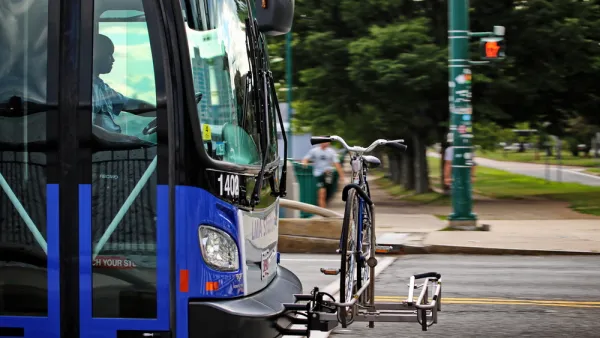
Boston's Data-Driven Bus System Makeover
MIT's Transit Lab created a ridership model called Origin Destination Transfer (ODX) that the Massachusetts Bay Transportation Authority is using to make incremental changes to the region's bus system.
What Makes Boston One of the Smartest Cities in the World?
Having two of the top universities in the world within a couple of miles of each other doesn't hurt. But Boyd Cohen looks at Boston's cutting-edge efforts to foster innovation within and outside of its universities, that make it a global leader.

Planetizen Federal Action Tracker
A weekly monitor of how Trump’s orders and actions are impacting planners and planning in America.

Eastern Nebraska is running out of electricity
Data centers and electrification are straining eastern Nebraska’s grid, throttling economic development.

Washington state to charge fee to drivers with fuel-efficient cars
Revenue from the fee will go towards supporting the state’s highways.

Instead of building new housing, LA developers are turning mansions into mega-mansions
In the richest areas, the number of houses valued at $30 million with demolition permits has skyrocketed since 2018.

Illinois considers spending $1 billion in taxpayer money on data center
A quantum computing campus and data center are currently under construction in Chicago.

As development costs rise, Boston moves to lessen affordable housing requirements
The Boston Zoning Commission and the City Council still need to approve Boston Mayor Michelle Wu’s proposed changes

FREE Course: Walkable City 1: Why Walkability?
After describing his path towards focusing on walkability as the essence of good planning, Jeff Speck marches through his five principal reasons for making more walkable places.
Reinventing Malls: Planning Alchemy—Turning Gray Fields Into Gold
The course focuses on the opportunities and imperatives that shape reinvention of mall sites.

City of Charlotte
City of Rosemead
Rutgers University, Edward J. Bloustein School of Planning and Public Policy
University of Michigan School for Environment and Sustainability (SEAS)
Hunter College, City University of New York (CUNY)
The Architects Foundation
University District Partnership
City of Cambridge
The Pocatello Development Authority