When the rest of the world is campaigning relentlessly for people to even consider using bicycles, the model city that started the movement is facing a unique problem of its own. Too many bikes during rush hour renders the activity dangerous to some.


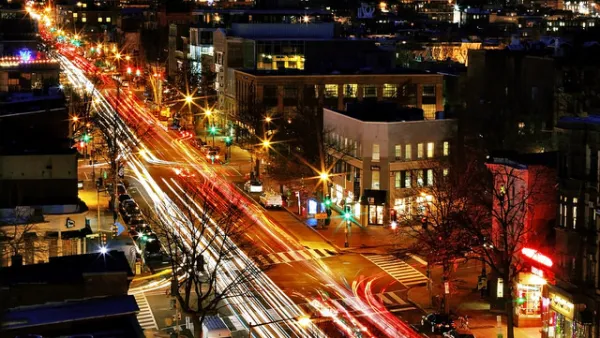
It is astonishing that nearly 40% of people in Copenhagen cycle to work, and the number is expected to break even by 2015. But "the sheer success of the drive to get more locals and tourists on bikes is creating a dangerous, intimidating and unpleasant climate for cyclists in the city," reports Amelia Hill for The Guardian.
She adds, "Even to an untrained eye, it is immediately obvious that the city is struggling to cater for its growing number of cyclists. It is already near-impossible to find cycling parking places near main stations, while cycling lanes that seem gargantuan to British eyes – three to four meters wide compared to our 1.5 meters – are buried at certain times of day beneath the scrum of cyclists traversing the city."
Read the full story: Copenhagen's novel problem: too many cyclists

Open Letter to D.C. Mayor Calls for End to Traffic Violence
After a driver fatally struck a toddler, D.C.-area pedestrian and cycling advocates ask the District to take stronger action to prevent traffic fatalities.

Bike and Pedestrian Infrastructure Financing Bill Introduced in Congress
Rep. Albert Sires (D-N.J.) introduced the New Opportunities for Bicycle and Pedestrian Infrastructure Financing Act of 2014 (H.R. 3978), modeled on TIFIA, to promote investment in bike and pedestrian facilities to make streets safer for all modes.
Neither Snow Nor Rain Can Keep D.C. Bicyclists off the Roads
As colder temperatures and adverse weather descend on the District of Columbia, Ashley Halsey III finds that the city's emerging bicycling culture endures.

Planetizen Federal Action Tracker
A weekly monitor of how Trump’s orders and actions are impacting planners and planning in America.

Amtrak, CN end decades-long dispute with eight-year agreement
The new operating agreement establishes an updated framework for the companies to work together, including processes to resolve disputes.

Judges permit Denver to divert 77,000 acre feet from the Colorado River for reservoir expansion
Overuse and climate change have caused the Colorado River’s water levels to plummet.

NYC DOT wants faster, more permanent street upgrades
The city is examining ways to build more concrete infrastructure without getting entangled in 'decades-long' projects.

'Something we’ve never seen before:' rising utility rates could strain city finances nationwide
Data centers, climate change and other factors have caused utility rates in the United States to increase by 38% since 2020.

Trump to overrule local leaders, lease millions of acres of America’s Pacific Island territories’ seafloors to mining companies
International law says that the Indigenous people of America’s territories have a right to prior and informed consent regarding projects that impact their countries.

FREE Course: Walkable City 1: Why Walkability?
After describing his path towards focusing on walkability as the essence of good planning, Jeff Speck marches through his five principal reasons for making more walkable places.
Reinventing Malls: Planning Alchemy—Turning Gray Fields Into Gold
The course focuses on the opportunities and imperatives that shape reinvention of mall sites.

Harvard University Graduate School of Design
KFH Group Inc.
Greater Baltimore Committee
The Architects Foundation
University of Cincinnati Online
The Pocatello Development Authority
The Urban Renewal Agency of the City of Pocatello