After a driver fatally struck a toddler, D.C.-area pedestrian and cycling advocates ask the District to take stronger action to prevent traffic fatalities.


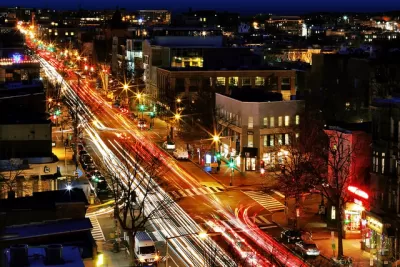
In a letter to the office of Washington, D.C. Mayor Muriel Bowser, the Washington Area Bicyclist Association (WABA), Greater Greater Washington, and DC Families for Safe Streets call for action against traffic violence, saying "[t]he District has the resources, the tools, and the expertise to make every intersection in this city safe for people—regardless of race, income, age, gender, or ability—to cross on foot, on a bike, in a stroller, or in a wheelchair."
The letter accuses the city of "a feeble, 'tactical' response" to traffic deaths: "some marginal infrastructure changes at the site of the crash, with no plan to address thousands of other similarly unsafe streets and intersections across the District with the urgency that a five-year-old’s death demands."
According to the letter, the District has seen 185 traffic deaths in the last six years, yet "on street after street, project after project, the District drags its feet, implementing proven safety measures only reluctantly and after aggressive compromise."
The authors conclude that "[t]he District can do better. We can and should interpret the right to freedom of movement to mean that people have what they need to protect and preserve their wellbeing as they move through the city." They "are asking for an ideology of safety" that "will lead the District to do everything in its power to slow traffic through the reallocation of parking and driving lanes to multimodal infrastructure, increase investments in transit to ensure every resident has a reliable alternative to driving, advance automated enforcement, and, overall, to shift its culture to one in which lazy, reckless, and unsafe driving is not tolerated."
Read the full story: Traffic violence wreaks havoc on our city and its residents. But it doesn’t have to.


Vision Zero Success Story: Fremont, California
While traffic fatalities continue to rise nationwide, Fremont has drastically reduced its crash rates in the five years since it launched its Vision Zero project.

Opinion: U.S. Traffic Deaths are a Regulatory Failure
One writer argues that rules that prioritize driver safety and ignore pedestrian infrastructure have led to a sharp increase in fatalities on U.S. roads.
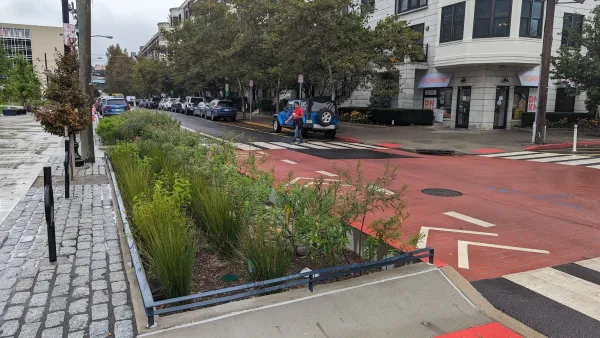
Hoboken's $20 Vision Zero fix
The New Jersey city eliminated traffic deaths for the last nine years in a row.

Planetizen Federal Action Tracker
A weekly monitor of how Trump’s orders and actions are impacting planners and planning in America.

The state-sanctioned urbicide of Austin
People don’t kill cities. Freeways do.

Colorado’s Largest Data Center Could Rise Next to Homes — Without a Public Hearing
The proposed campus would consume 11 times the power of Denver International Airport; as it has across the country, opposition mounts.

Judges permit Denver to divert 77,000 acre feet from the Colorado River for reservoir expansion
Overuse and climate change have caused the Colorado River’s water levels to plummet.
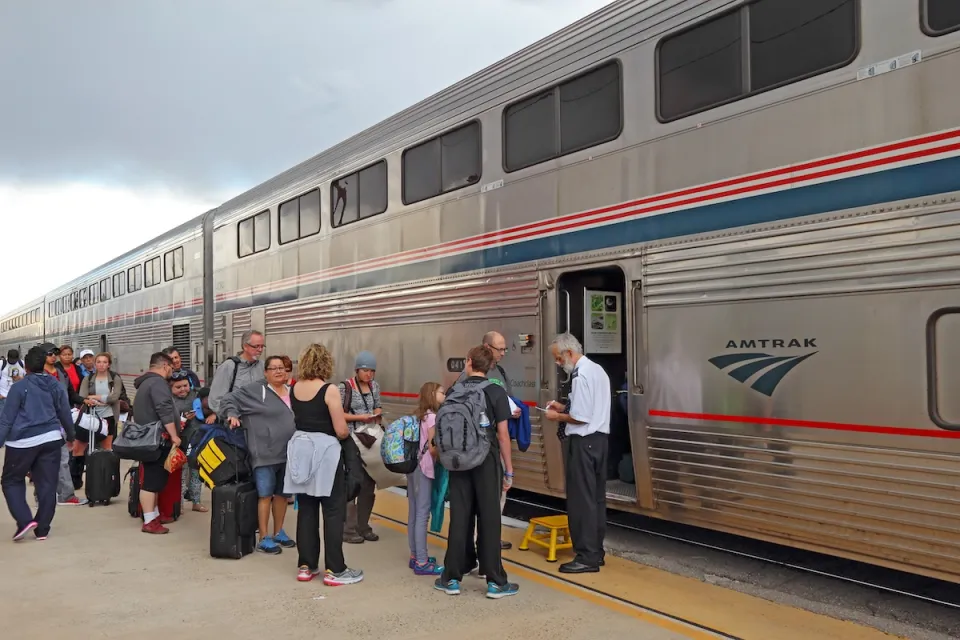
Amtrak, CN end decades-long dispute with eight-year agreement
The new operating agreement establishes an updated framework for the companies to work together, including processes to resolve disputes.
Raised interest rates may kill financially vulnerable construction projects
The chief economist at ConstructConnect warns that if construction project owners are negatively impacted by the raised rates, it could result in delayed payments to contractors.

FREE Course: Walkable City 1: Why Walkability?
After describing his path towards focusing on walkability as the essence of good planning, Jeff Speck marches through his five principal reasons for making more walkable places.
Reinventing Malls: Planning Alchemy—Turning Gray Fields Into Gold
The course focuses on the opportunities and imperatives that shape reinvention of mall sites.

Greater Baltimore Committee
Eagle County Government
Harvard University Graduate School of Design
The Architects Foundation
University of Cincinnati Online
The Pocatello Development Authority
The Urban Renewal Agency of the City of Pocatello
Journal of the American Planning Association