Last week, the Federal Highway Administration awarded discretionary highway grants in what could be among the last expenditures before the Sept. 30 expiration of the gas tax. Included were $8m for Value Pricing Pilot Program projects in 5 states.


The awards were announced August 17.
From the press release:
"Congress created the discretionary grant programs to give the Federal Highway Administration (FWHA) latitude to support projects that maintain the nation's roads and bridges, improve roadway safety and make communities more livable." Unlike prior years when Congress chose some of the projects, this year all were awarded through a competitive process.
The largest winners of the Value Pricing Pilot Program were:
*$3,200,000 study to evaluate cordon pricing for downtown Los Angeles.
*$1.22 million to introduce peak-pricing on the 183A Turnpike in Austin, TX and "studying the influence on driving patterns, including dynamic ridesharing and HOV.
*$1.12 million to study pricing strategies for the I-95 corridor from New Haven to New York.
See state-by-state list of the FY11 grants.
Thanks to Richard Mudge
Read the full story: U.S. Transportation Secretary Ray LaHood Announces $417.3 Million in Grants for State Highway Projects


Why does Maryland's gas tax change every year?
The state's annual gas tax update may still not be enough to keep up with changes in the transportation sector and rising project costs.

New Idaho Laws Block Three Boise Complete Streets Projects
State law now bars highway districts from reducing road widths or and limits where they can eliminate traffic lanes in favor of multimodal infrastructure.
7% of USDOT Workforce Accept ‘Deferred Resignation’ Offer
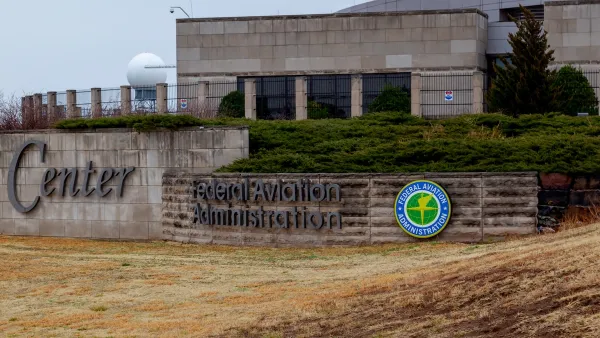
Close to half of the 4,127 employees leaving federal agencies will come from the Federal Aviation Administration.

Planetizen Federal Action Tracker
A weekly monitor of how Trump’s orders and actions are impacting planners and planning in America.

California plans to bury El Niño’s downpour
If the state plays its cards right, it may be able to store a billion acre-feet of El Niño’s water in aquifers.

Chicago breaks ground on $3 billion megadevelopment
The new neighborhood, titled Foundry Park, will one day host 3,700 residences.

Desperate measures: Advocates weigh draining Lake Powell to fill Colorado River
Draining the reservoir could reduce evaporation losses by a couple hundred thousand acre-feet.

This road in NYC is infamously dangerous — and Mamdani can't fix it
New York City's Ocean Parkway is known for reckless driving, but the power to implement safety measures lies with the state rather than the city.

One of Denver’s busiest corridors to gain BRT
The project will span 18 miles and contain 74 bus rapid transit stations.

FREE Course: Walkable City 1: Why Walkability?
After describing his path towards focusing on walkability as the essence of good planning, Jeff Speck marches through his five principal reasons for making more walkable places.
Reinventing Malls: Planning Alchemy—Turning Gray Fields Into Gold
The course focuses on the opportunities and imperatives that shape reinvention of mall sites.

City of Rosemead
Rutgers University, Edward J. Bloustein School of Planning and Public Policy
One Hundred Miles
Hunter College, City University of New York (CUNY)
The Architects Foundation
University of Cincinnati Online
City of Cambridge
Montrose County
The Pocatello Development Authority