Toronto's lack of focus on transportation planning and the absence of a national strategy for mobility is turning the city into a messy gridlock, according to this column.


Writing for the Globe and Mail, Lisa Rochon argues that mobility is key to the city's beauty, and not enough attention has been paid to making the city move better.
"Beauty in a city has as much to do with ease of transportation as it does with the aesthetics of a particular building. The truth is that the postwar road is dead. We need to unpark our brains, so we can reclaim the thousands of kilometres of roads criss-crossing our cities and convert them from economic dead zones to places designed to attract people and revenue.
Consider that Hong Kong has consistently invested an amount equal to 1 per cent of the country's gross domestic product in that city's public transit over the last 20 years. Singapore, too, has invested heavily. Despite a multibillion-dollar price tag, the City of London remains firmly committed to building subways and regional rail lines, public-private partnerships that provide new linkages from north to south and east to west allowing passengers to travel fluidly from Heathrow to Canary Wharf in about 15 minutes."
Read the full story: Toronto’s gridlock is never going to be beautiful

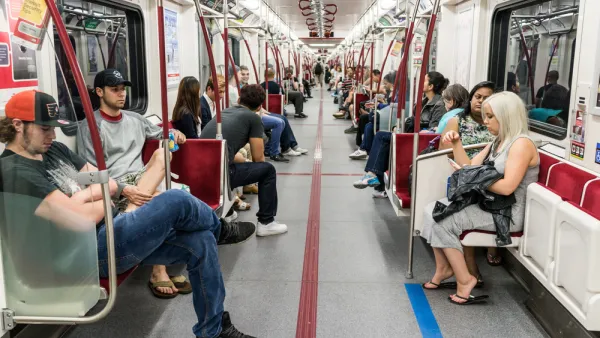
As Canada Grows, Transit a Key Component of Success
The population in Canada will increase substantially in the future, and transit planning is crucial to ensuring that cities thrive.
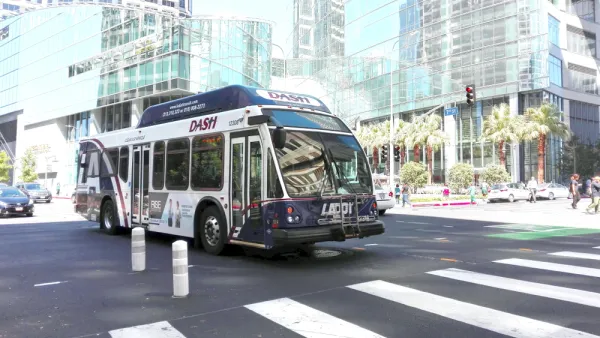
L.A.'s Strategy for 'Universal Basic Mobility'
Los Angeles Department of Transportation General Manager Seleta Reynolds emphasizes the importance of riders' perspective on access when redesigning the transit system.

How to Improve Buses, the Overlooked but Essential Part of Urban Mobility
A new book argues that buses are an integral part of successful mobility networks and that better bus systems improve cities in ways benefiting all residents.

Planetizen Federal Action Tracker
A weekly monitor of how Trump’s orders and actions are impacting planners and planning in America.

California plans to bury El Niño’s downpour
If the state plays its cards right, it may be able to store a billion acre-feet of El Niño’s water in aquifers.

Chicago breaks ground on $3 billion megadevelopment
The new neighborhood, titled Foundry Park, will one day host 3,700 residences.

Satanic Place Names
From streams and lakes to valleys and canyons, I mapped more than 1,000 places named after the Devil.

California High-Speed Rail Authority CEO resigns after $600,000 scandal
Under Ian Choudri, the authority used taxpayer dollars to fund first class flights and trips to nightclubs.

Want to study the Missouri River? Soon, you may need unanimous approval from 10 states
Legislation would require 10 governors’ permission to study or build projects moving water outside the basin.

FREE Course: Walkable City 1: Why Walkability?
After describing his path towards focusing on walkability as the essence of good planning, Jeff Speck marches through his five principal reasons for making more walkable places.
Reinventing Malls: Planning Alchemy—Turning Gray Fields Into Gold
The course focuses on the opportunities and imperatives that shape reinvention of mall sites.

City of Rosemead
Rutgers University, Edward J. Bloustein School of Planning and Public Policy
One Hundred Miles
Hunter College, City University of New York (CUNY)
The Architects Foundation
University of Cincinnati Online
City of Cambridge
Montrose County
The Pocatello Development Authority