The small town of Perugia, Italy has left its traffic worries behind by implementing various driving restrictions and transportation solutions like escalators and a "minimetro".


Traffic jams and parking hassles are now a thing of the past in this small town.
"As cities around the world grapple with issues of traffic and congestion that degrade the quality of urban life, it is worth taking a look at how Perugia turned its story around.
Although it is hardly the only European city to put strict limits on motor traffic (Venice to the north boasts it is the world's largest car-free city), Perugia shows how even a small city can reap benefits from investment in pedestrian-friendly infrastructure. All it took was a succession of progressive-minded city officials, urban planners, and resident-dreamers who saw how Perugia's geographic and historical preservation challenges could be used to its advantage."
Read the full story: With a Deep Dig Into Its Past, Perugia Built an Energy-Saving Future

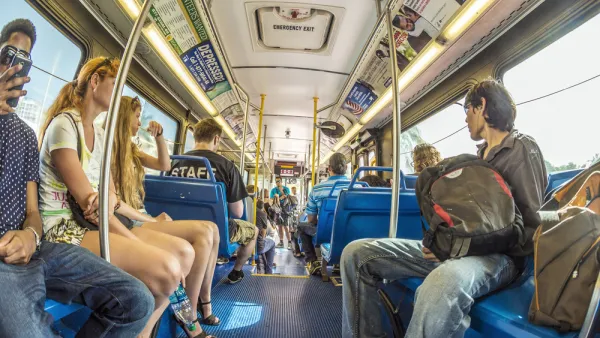
To Fight Climate Change, Support Public Transit
Electric cars may garner a lot of attention these days, but significantly reducing carbon emissions and urban congestion means investing in high-quality mass transit.
Students Give Up Wheels for Their Own Two Feet
This piece from the New York Times looks at a program in Italy the encourages children to walk to school.
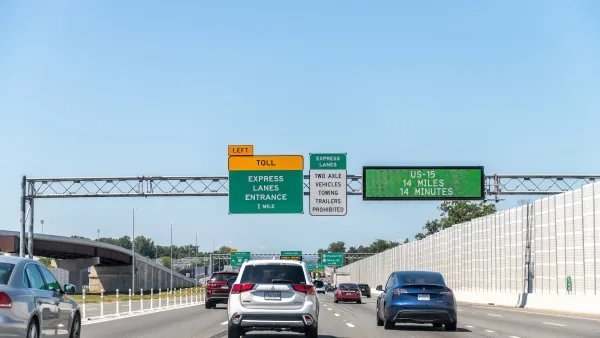
Congestion Costing Reality Check, Part 2: A congestion costing critique
There are good reasons to be skeptical of highway industry claims that traffic congestion is a growing problem. Their analysis is often incomplete and biased. Let’s pull back the curtain on some major congestion cost studies.

Amtrak, CN end decades-long dispute with eight-year agreement
The new operating agreement establishes an updated framework for the companies to work together, including processes to resolve disputes.

Northwest rail fans eager for Sept. 30 debut of Amtrak’s Airo fleet
Get ready for that new train smell and more seats. But they won’t go faster or run more frequently on the Cascades route in Washington and Oregon.

Judges permit Denver to divert 77,000 acre feet from the Colorado River for reservoir expansion
Overuse and climate change have caused the Colorado River’s water levels to plummet.

NYC to turn city-owned property into thousands of homes
The city has scheduled a public hearing regarding the development for October.

Buses travel at 5mph along this route in NYC. The Bronx's first-ever busway looks to change that
Prior to the busway, buses on the Bx36 route traveled as slowly as 5 miles per hour.

Pittsburg launches 'EZ permits,' aims for one-day turnaround for low-risk permits
The pilot ‘fast lane’ for permits is part of a bundle of modernization efforts for Pittsburg’s permitting process.

FREE Course: Walkable City 1: Why Walkability?
After describing his path towards focusing on walkability as the essence of good planning, Jeff Speck marches through his five principal reasons for making more walkable places.
Reinventing Malls: Planning Alchemy—Turning Gray Fields Into Gold
The course focuses on the opportunities and imperatives that shape reinvention of mall sites.

City of Thousand Oaks
City of Wisconsin Rapids
Harvard University Graduate School of Design
The Architects Foundation
University of Cincinnati Online
The Pocatello Development Authority
The Urban Renewal Agency of the City of Pocatello