Just as failing industries marked the decline of the Midwest after WWII (hence the name 'Rust Belt'), the new declining cities will be denoted by their percentage of foreclosures, found particularly in California, the Southwest, and Florida.


Can neighborhoods affected by high rates of foreclosure and declining prices recover? That is the topic of a new report published by the Research Institute for Housing America that concludes that "a new kind of 'declining city' will emerge in the U.S. that will witness neighborhoods with high rates of vacancies and a sustained drop in population."
"Indeed, certain urban and suburban areas in California, Nevada and Arizona will become like the fading old post-industrial cities in the East like Cleveland, Buffalo and Detroit."
Of particular focus is Stockton, CA, a city that saw rapid growth after 1980 but has one of the highest foreclosure rates in the country, with housing values comparable to Detroit.
From A Study of Real Estate Markets in Declining Cities: "What is a declining city? Simply put, a declining city is one in which the people have left, but the houses, apartment buildings, offices and storefronts remain. (T)here are certainly neighborhoods and submarkets within metro areas that have passed a tipping point, and have little prospect of returning to anything close to their previous peaks."
Thanks to Loren Spiekerman
Read the full story: Ghost Towns: Housing collapse will result in new types of 'declining cities'

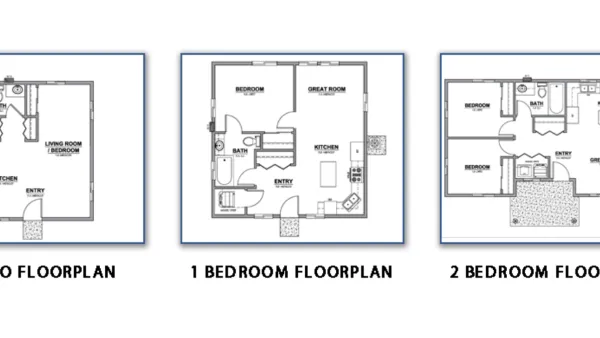
'Permit Ready Plans' for ADUs Published in Stockton, California
Cities looking to provide incentive for the construction of accessory dwelling units are increasingly released "permit ready plans" to help the cause.
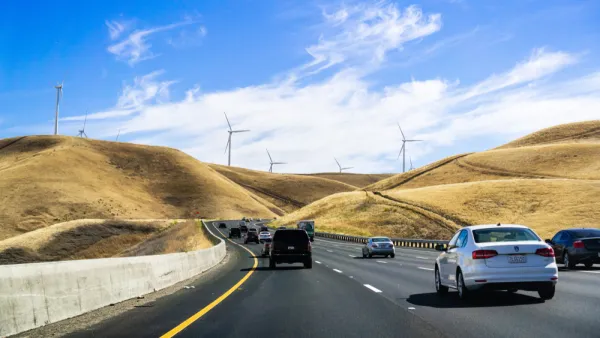
Counties Outside of Bay Area Eye Transportation Mega Measure in 2020
Northern San Joaquin Valley transit officials are eying a $100 billion Bay Area transportation measure to potentially fund a $1 billion rail tunnel for two commuter railroads to bring workers to the East Bay and Silicon Valley.
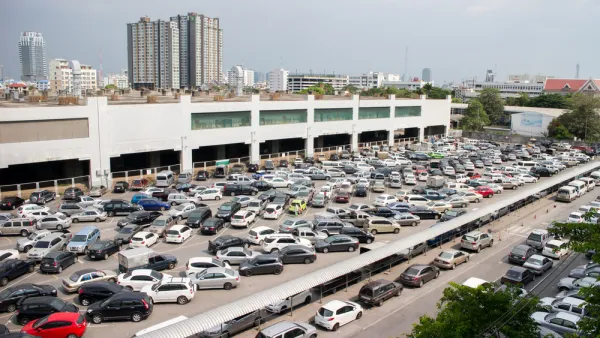
Parking Inventories for Five Cities
A new report providing credible estimates of five cities of differing size and geographic location reveals one truth about the United States: parking is the dominant land use in cities.

Planetizen Federal Action Tracker
A weekly monitor of how Trump’s orders and actions are impacting planners and planning in America.

Amtrak, CN end decades-long dispute with eight-year agreement
The new operating agreement establishes an updated framework for the companies to work together, including processes to resolve disputes.

Judges permit Denver to divert 77,000 acre feet from the Colorado River for reservoir expansion
Overuse and climate change have caused the Colorado River’s water levels to plummet.

NYC DOT wants faster, more permanent street upgrades
The city is examining ways to build more concrete infrastructure without getting entangled in 'decades-long' projects.

'Something we’ve never seen before:' rising utility rates could strain city finances nationwide
Data centers, climate change and other factors have caused utility rates in the United States to increase by 38% since 2020.

Trump to overrule local leaders, lease millions of acres of America’s Pacific Island territories’ seafloors to mining companies
International law says that the Indigenous people of America’s territories have a right to prior and informed consent regarding projects that impact their countries.

FREE Course: Walkable City 1: Why Walkability?
After describing his path towards focusing on walkability as the essence of good planning, Jeff Speck marches through his five principal reasons for making more walkable places.
Reinventing Malls: Planning Alchemy—Turning Gray Fields Into Gold
The course focuses on the opportunities and imperatives that shape reinvention of mall sites.

Harvard University Graduate School of Design
KFH Group Inc.
Greater Baltimore Committee
The Architects Foundation
University of Cincinnati Online
The Pocatello Development Authority
The Urban Renewal Agency of the City of Pocatello