Austin, Texas and Baltimore, Maryland have the right stuff to woo the high-tech industry despite their modest size, says Monique Wassenaar Silverio.


Silverio lists the factors that she says draw technology companies to cities, including a major research institution, venture capital, and at least one major success story:
"Baltimore may be nestled in the shadow of the nation's capital, but it is emerging as a technological tour de force, particularly in the biotech field. 'Baltimore is a great place for a life science company due to the highly educated work force that is heavily skewed toward biotechnology,' says Richard Hughen, vice president of sales, marketing, and business development for CSA Medical, which has been in Baltimore since 2005. The company produces a therapeutic medical device that freezes and kills cancer and pre-cancerous tissue inside the body. Hughen also notes that Baltimore's 'business and political community strongly supports start-up companies.'"
FULL STORY: Smaller Cities Becoming Hotbeds for High-Tech Growth


Austin Scores Highest on Pandemic Recovery; Bay Area and Baltimore Lowest
The Bay Area Council and CBRE created an economic tracker to measure how well the nation's 25 largest metropolitan areas have recovered from the public health restrictions imposed on their regions at the onset of the pandemic.
2020 Population Growth Rates for the 50 Biggest U.S. Cities
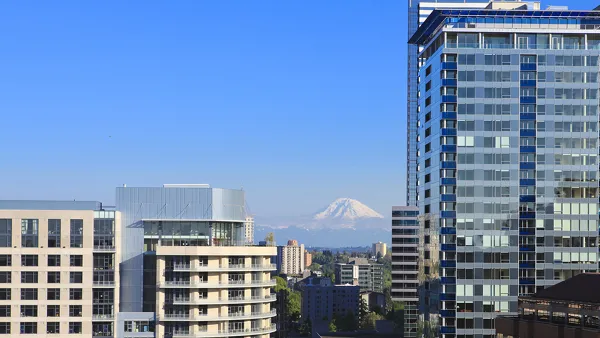
The Census Bureau released new data on May 27 that includes the first four months of the pandemic. Seattle tops the growth rate at 2.2% from July 1, 2019, to July 1, 2020, while Baltimore and San Francisco land at the bottom with -1.4%.
Will Plummeting Gas Prices Threaten Recent Transit Ridership Gains?
As gas prices have fallen, driving has increased. October driving mileage figures show an increase of 3 percent from a year earlier. A shift away from public transit may cause transit providers to rethink expansion plans.

Planetizen Federal Action Tracker
A weekly monitor of how Trump’s orders and actions are impacting planners and planning in America.

The state-sanctioned urbicide of Austin
People don’t kill cities. Freeways do.

US to reduce Colorado River water deliveries to Mexico
A new Colorado Treaty amendment reduces Mexico’s Colorado River water allocation by 250,000 acre feet.

5 New England states march closer to 800 megawatt wind energy project
Securing federal approval for the project may be complicated under the Trump administration, which has historically been hostile towards domestic wind power.

Baltimore to break ground on $50 million Transit Priority Project
The project will bring faster bus trips, safer streets and better bike connections to Baltimore.

Airbnb launches $250 million 'last-dollar financing' housing accelerator, makes first investment in Austin
The company will put $6.4 million towards affordable housing development in Texas’ capital.

FREE Course: Walkable City 1: Why Walkability?
After describing his path towards focusing on walkability as the essence of good planning, Jeff Speck marches through his five principal reasons for making more walkable places.
Reinventing Malls: Planning Alchemy—Turning Gray Fields Into Gold
The course focuses on the opportunities and imperatives that shape reinvention of mall sites.

Eagle County Government
Harvard University Graduate School of Design
Nashville Planning Department
The Architects Foundation
University of Cincinnati Online
The Pocatello Development Authority
The Urban Renewal Agency of the City of Pocatello
Journal of the American Planning Association