A group of researchers and activists met recently to discuss the role of goods movement and logistics in and around ports, and how the industry contributes to local pollution problems and skews highway spending.


Mark Vallianatos discusses the impact of goods movement in this piece from Streetsblog.
"The logistics and freight industries are also among the most powerful advocates for new and expanded highways in and beyond Southern California. The infrastructure used to move goods – mega warehouses, distribution centers and rail yards – and the road configurations to direct trucks between these transshipment points, are about as far as one can get from a human-scaled street.
THE (Trade, Health, Environment) Impact project organized the conference to link impacted communities from throughout the region and to network with representatives from 15 states and 5 countries. We knew that since corporations and governments were promoting policies and investments to massively expand trade and goods movement, we needed to connect to partners at each link in the global freight system chain. Otherwise, we risked winning some battles to clean up the industry locally, only to have trade shift routes and poison communities across the county or around the world who were less aware of the harms involved in moving products."
FULL STORY: Too Big to Miss: Confronting the Costs of Freight Transport at the Moving Forward Together Conference

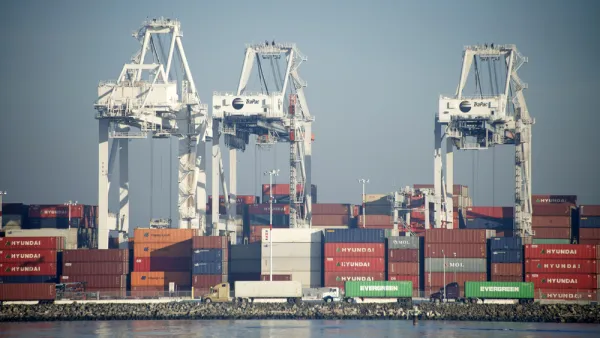
Port Industry Stresses Need for Rail Access
A new report by the American Association of Port Authorities makes the case for more funding toward port access infrastructure projects.
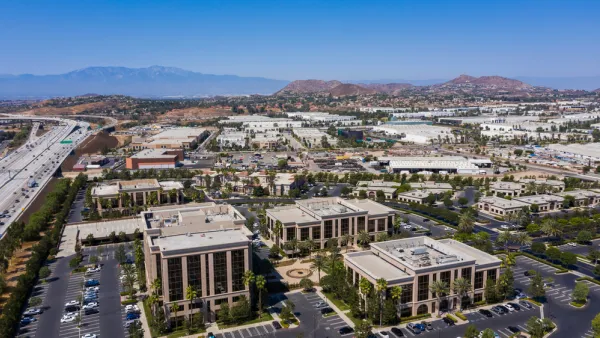
'Indirect Source Rule' Would Clean Up Warehouses in Southern California
Dr. Joe Lyou, CEO of the Coalition for Clean Air, walks through the legal necessity of South Coast AQMD's proposed Indirect Source Rule, which aims to accelerate the transition to zero-emission technologies and fleet electrification.
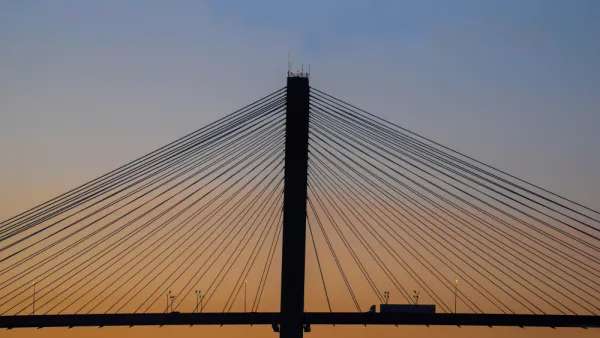
Warehouse Moratorium Sought in Suburban Georgia to Slow Road Damage
Traffic from the area's booming distribution centers is damaging local roads and causing concern among residents.

The state-sanctioned urbicide of Austin
People don’t kill cities. Freeways do.

US to reduce Colorado River water deliveries to Mexico
A new Colorado Treaty amendment reduces Mexico’s Colorado River water allocation by 250,000 acre feet.

New Jersey’s second-largest city bans standalone data centers
Jersey City will continue to allow co-location facilities, such as those meant for research institutions that store their own data.

Amtrak not solely to blame for New Jersey commuter rail's unreliability, report finds
A new study from the Garden State Initiative found that NJ Transit’s budget grew 20% across a 4 year period, but reliability declined significantly over the same period.

EPA erases limits on planet-warming pollution from power plants
Under Monday’s plan, power plants would still have some limits on how much mercury, arsenic and other contaminants they can emit.

Phoenix announces new on-demand transit service, more frequent RAPID buses
Both new services will launch in October, and are part of Phoenix's Project Effective Access Solutions for Easing Congestion.

FREE Course: Walkable City 1: Why Walkability?
After describing his path towards focusing on walkability as the essence of good planning, Jeff Speck marches through his five principal reasons for making more walkable places.
Reinventing Malls: Planning Alchemy—Turning Gray Fields Into Gold
The course focuses on the opportunities and imperatives that shape reinvention of mall sites.

Eagle County Government
Harvard University Graduate School of Design
Nashville Planning Department
The Architects Foundation
University of Cincinnati Online
The Pocatello Development Authority
The Urban Renewal Agency of the City of Pocatello
Journal of the American Planning Association