Mary Newsom reviews a new book on New York City by Roberta Brandez Gratz, and finds lessons that cross borders even into her very different city of Charlotte.


"Her book is partly urban observation and partly memoir of her life in the city. But the insight she offers that has resonance for Charlotte and other U.S. cities is this:
The post-World War II distress that afflicted New York and many cities - which began easing in the 1980s - relates to the start and end of urban renewal. New York began healing, she writes, only when urban renewal money dried up.
Gratz' observations - as well as Jacobs' - convince her that small businesses, and particularly small manufacturing, form the overlooked and underappreciated backbone of cities' economic vitality."
The book, "The Battle for Gotham: New York in the Shadow of Robert Moses and Jane Jacobs", looks at the legacy of urban renewal projects, and how even in their wake, cities are still inadvertently destroying the small businesses that help them survive.
Read the full story: What urban 'renewal' didn't renew

Learning loss and urban schools, part 2
Did test scores in progressive cities drop more post-COVID than test scores in moderate ones?
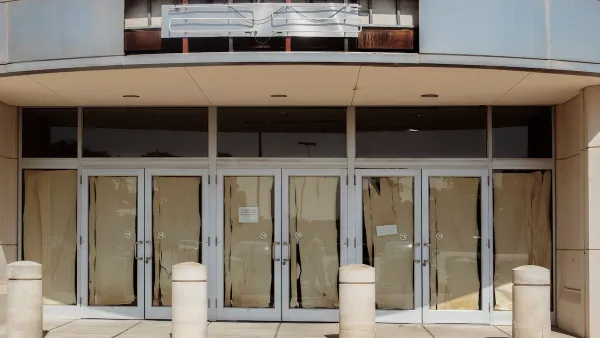
How to Repurpose Vacant Storefronts
Loosening restrictions on clean light manufacturing can revive dormant storefronts and revitalize communities.
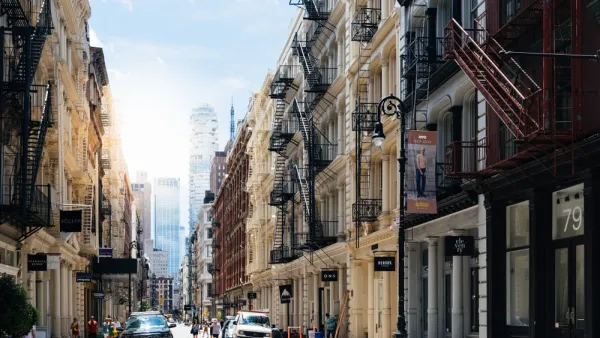
Op-Ed: SoHo and NoHo Need a Zoning Overhaul
Two SoHo residents argue that outdated zoning holds the Manhattan neighborhoods back, requiring special permits or variances for many current residential and commercial uses.

Planetizen Federal Action Tracker
A weekly monitor of how Trump’s orders and actions are impacting planners and planning in America.

Eastern Nebraska is running out of electricity
Data centers and electrification are straining eastern Nebraska’s grid, throttling economic development.

Study reveals best places in the U.S. for cycling, walking
New research from Streetlight Data examines bicycle and pedestrian miles per capita in the 100 largest U.S. cities by population.

Federal government nominates new FTA administrator
Mark Aesch is currently the founder and CEO of a transportation management consulting firm.

Developers reveal $10 billion stadium plan as ‘Hail Mary’ to keep Bears in Chicago
The plan would also boast a public park, high- and mid-rise buildings and a youth sports complex.

As Texas embraces carbon storage, a Black community questions the risks
Texas now issues permits for companies to store carbon dioxide underground. East Texas residents fear safety risks, and skeptics doubt the climate benefits.

FREE Course: Walkable City 1: Why Walkability?
After describing his path towards focusing on walkability as the essence of good planning, Jeff Speck marches through his five principal reasons for making more walkable places.
Reinventing Malls: Planning Alchemy—Turning Gray Fields Into Gold
The course focuses on the opportunities and imperatives that shape reinvention of mall sites.

City of Rosemead
Rutgers University, Edward J. Bloustein School of Planning and Public Policy
One Hundred Miles
University of Michigan School for Environment and Sustainability (SEAS)
Hunter College, City University of New York (CUNY)
The Architects Foundation
City of Cambridge
The Pocatello Development Authority
The Urban Renewal Agency of the City of Pocatello