Rather than being part of a car liberation or permeable pavement movement, poorly maintained county roads are having their asphalt ground into gravel as a cost-cutting measure to avoid costly road reconstruction. Lack of funding is the cause.


Imagine a huge Catepillar machine that pulverizes asphalt and spits out gravel in its wake. This and similar 'downgrading' processes has occurred on roads in "at least 38 of the 83 counties in Michigan" and at least 100 road miles in South Dakota.
"Paved roads, historical emblems of American achievement, are being torn up across rural America and replaced with gravel or other rough surfaces as counties struggle with tight budgets and dwindling state and federal revenue.
Rebuilding an asphalt road today is particularly expensive because the price of asphalt cement, a petroleum-based material mixed with rocks to make asphalt, has more than doubled over the past 10 years. Gravel becomes a cheaper option once an asphalt road has been neglected for so long that major rehabilitation is necessary."
However, as one pavement expert noted, "we're leaving an awful legacy for future generations."
Thanks to Mark Boshnack
Read the full story: Roads to Ruin: Towns Rip Up the Pavement
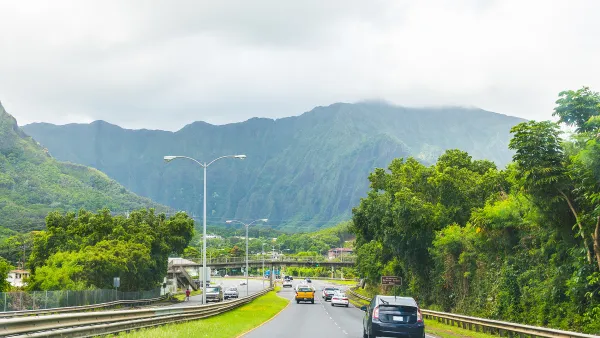
Hawaii Could Implement Road Usage Charge
The tax would apply to electric vehicles, which avoid the state’s gas tax and are a growing percentage of cars on the road.

Constitutional Amendment Would Shift Some Gas Tax Revenue to Transit Spending in Nevada
Democratic legislators in Nevada are considering a constitutional amendment that would allow the state to use gas tax revenues for transportation projects other than road construction, maintenance, and repair.
The 1989 Roots of Louisiana's Transportation Funding Mess
Incomplete projects proposed in the Transportation Infrastructure Model for Economic Development plan have saddled Louisiana with increasing debt and less money for maintenance.

Planetizen Federal Action Tracker
A weekly monitor of how Trump’s orders and actions are impacting planners and planning in America.

Eastern Nebraska is running out of electricity
Data centers and electrification are straining eastern Nebraska’s grid, throttling economic development.

Washington state to charge fee to drivers with fuel-efficient cars
Revenue from the fee will go towards supporting the state’s highways.

Instead of building new housing, LA developers are turning mansions into mega-mansions
In the richest areas, the number of houses valued at $30 million with demolition permits has skyrocketed since 2018.

Illinois considers spending $1 billion in taxpayer money on data center
A quantum computing campus and data center are currently under construction in Chicago.

As development costs rise, Boston moves to lessen affordable housing requirements
The Boston Zoning Commission and the City Council still need to approve Boston Mayor Michelle Wu’s proposed changes

FREE Course: Walkable City 1: Why Walkability?
After describing his path towards focusing on walkability as the essence of good planning, Jeff Speck marches through his five principal reasons for making more walkable places.
Reinventing Malls: Planning Alchemy—Turning Gray Fields Into Gold
The course focuses on the opportunities and imperatives that shape reinvention of mall sites.

City of Charlotte
City of Rosemead
Rutgers University, Edward J. Bloustein School of Planning and Public Policy
University of Michigan School for Environment and Sustainability (SEAS)
Hunter College, City University of New York (CUNY)
The Architects Foundation
University District Partnership
City of Cambridge
The Pocatello Development Authority