In this Newshour video (with transcript), spokesmen from a liberal and conservation think tank debate each other on the feasibility of transitioning to clean, green energy from the current fossil fuel powered economy in light of the Gulf disaster.


"In his address to the nation Tuesday (6/15) night, President Obama urged Americans that "the time to embrace a clean energy future is now."
(The NewsHour's) "Jeffrey Brown sits down with guests Daniel Weiss, senior fellow and director of climate strategy at the Center for American Progress, a liberal think tank, and Kenneth Green, resident scholar at the American Enterprise Institute, a conservative policy research group, for two starkly different perspectives on the President's goal of clean energy."
"DANIEL WEISS: (The spill) dramatically increases the urgency. For the first time in a long time, energy policy and oil is a watercooler conversation. People are talking about it every day. This is the time to act."
Weiss and Green appear to share no beliefs. Green labels the latest technologies, e.g. electric cars, cellulosic energy, "failed technologies", and points out that there have been other 'clarion calls' to address energy independence such as the oil shocks of the 1970s. As for his own lifestyle, he notes "I got rid of my car five years ago. I live in an apartment. I take the metro into work."
Read the full story: Oil Spill Sparks National Conversation on Future of Energy
Has President Obama Turned the Corner on Climate Change?
Analysts have noted a change in the president on climate change in his second term. Call it a "message shift". Rather than addressing it in terms of the need for clean energy and renewables, he now speaks directly to the perils of climate change.
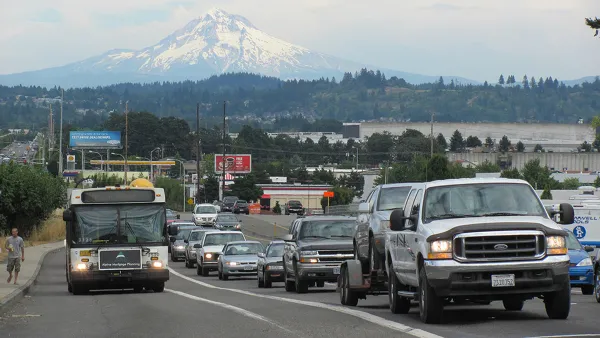
Carbon Emissions Back on the Rise—Along With Cleaner Energy
Climate-friendly government policies and recent investments by energy companies are accelerating the growth of renewables.
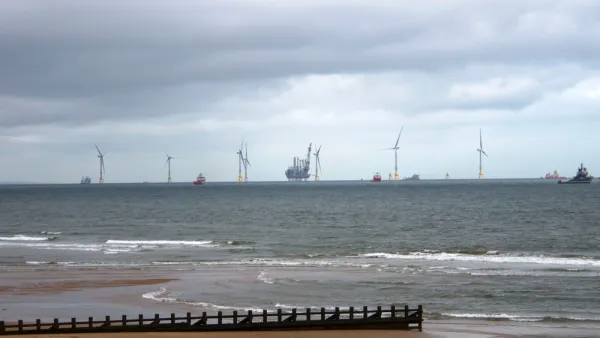
Majority of Power in the U.K. Generated by Wind for the First Time
Wind power generated 50.67 percent of the U.K.’s energy supply on one day in December, marking a major milestone in the history of renewable energy.

Planetizen Federal Action Tracker
A weekly monitor of how Trump’s orders and actions are impacting planners and planning in America.

California plans to bury El Niño’s downpour
If the state plays its cards right, it may be able to store a billion acre-feet of El Niño’s water in aquifers.

Desperate measures: Advocates weigh draining Lake Powell to fill Colorado River
Draining the reservoir could reduce evaporation losses by a couple hundred thousand acre-feet.

Los Angeles just elected an urban planner as its mayor
Transportation analysts are optimistic that Raman will be more aggressive in addressing transit issues than Bass.

Mamdani’s pied-à-terre tax survives legal challenge
A panel of judges found that the plaintiffs failed to demonstrate injury as a result of New York City's implementation of the tax.

Eastern Nebraska is running out of electricity
Data centers and electrification are straining eastern Nebraska’s grid, throttling economic development.

FREE Course: Walkable City 1: Why Walkability?
After describing his path towards focusing on walkability as the essence of good planning, Jeff Speck marches through his five principal reasons for making more walkable places.
Reinventing Malls: Planning Alchemy—Turning Gray Fields Into Gold
The course focuses on the opportunities and imperatives that shape reinvention of mall sites.

City of Rosemead
Rutgers University, Edward J. Bloustein School of Planning and Public Policy
One Hundred Miles
University of Michigan School for Environment and Sustainability (SEAS)
Hunter College, City University of New York (CUNY)
The Architects Foundation
City of Cambridge
Montrose County
The Pocatello Development Authority