Plans to build dense urban villages around the new Metro stations in Tysons Corner have some landowners on the fringes feeling left out.


The Washington Post reports on the proposed transformation of parts of Tysons Corner into vibrant "24/7" urban villages.
"One concern stood out, however, Wednesday night when developers and commercial property owners lined up with residents and environmental advocates at a Fairfax County Planning Commission hearing to have a final say on the 233-page draft plan: the fate of developers whose property isn't within walking distance of one of the four planned Metro stations. Most everyone agrees that Tysons ought to be transformed into a "24/7 urban center" as the plan suggests, but developers of property without immediate Metro proximity were still feeling stomped upon."
For those with land beyond the walkshed of these new urban villages, the taxes and costs to build in the new Tysons Corner may be too much to lure investment, according to some concerned landowners and developers.
Read the full story: Tysons plan worries developers with property not near planned Metro stations

California Bill Aims to Boost TOD
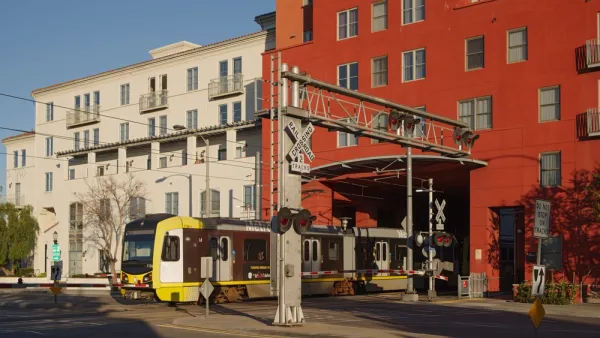
A bill proposed by Sen. Scott Wiener would exempt transit agencies from zoning rules near ‘high-quality’ transit stops and allow denser transit-oriented development.
Plan Approved to Un-Sprawl Tysons Corner
In an effort to recreate sprawling Tysons Corner into a dense urban environment, county supervisors have unanimously approved a plan to build higher, denser, more transit oriented and more walkable.
Survey: Americans want walkable amenities, but not dense housing
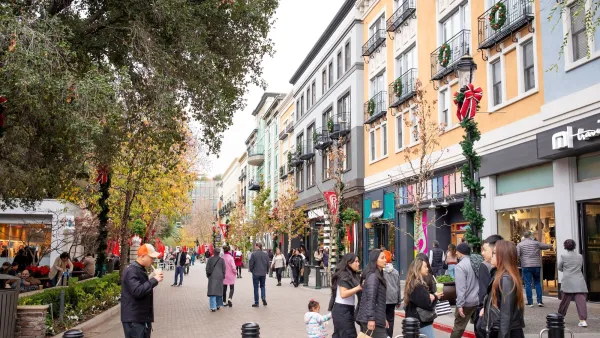
While 64% of Americans say they want walkable amenities, only 44% want to see apartments in their neighborhoods.

Planetizen Federal Action Tracker
A weekly monitor of how Trump’s orders and actions are impacting planners and planning in America.

Chicago breaks ground on $3 billion megadevelopment
The new neighborhood, titled Foundry Park, will one day host 3,700 residences.

Denver is solving homelessness. Why aren't the rest of us?
Since 2023, Denver's street homeless population has decreased by 64%, proving that effective tools exist to support those in need of housing.

MBTA is using AI to catch drivers who park illegally
The transit agency is working in partnership with Hayden AI, and hopes the technology will improve transit safety across its network.

LA to bring bus rapid transit to its busiest corridor
The Vermont BRT line will feature 12.4 miles of dedicated bus lanes along the Vermont corridor.

The road design trend that's killing Americans
“Stroads,” street-road hybrids that channel high-speed traffic through residential areas, are increasingly common and often deadly for pedestrians.

FREE Course: Walkable City 1: Why Walkability?
After describing his path towards focusing on walkability as the essence of good planning, Jeff Speck marches through his five principal reasons for making more walkable places.
Reinventing Malls: Planning Alchemy—Turning Gray Fields Into Gold
The course focuses on the opportunities and imperatives that shape reinvention of mall sites.

City of Rosemead
Rutgers University, Edward J. Bloustein School of Planning and Public Policy
One Hundred Miles
The Architects Foundation
University of Cincinnati Online
Montrose County
Northern Illinois Transit Authority (NITA)
The Pocatello Development Authority