When most people use their cars in urban settings, what sort of vehicle is optimal? MIT's Media Lab asks the question, in their quest to invent the next generation of personal mobility.


Metropolis interviews William J. Mitchell, director of the Smart Cities research group at MIT's Media Lab. Not surprisingly, the issues MIT discovered when attempting to redesign the car were related more to redesigning cities and streets.
In the interview, Mitchells says, "You also improve the quality of streets enormously. These vehicles are silent, so you get rid of traffic noise, which has huge architectural implications, because windows no longer have to be defensive barriers against traffic noise. We get rid of local tailpipe pollution. There are all kinds of urban and street-design opportunities in taking the released space and putting it to other uses, like trees, seats, cafés. Streets are now more supportive of these things, so they're much more pleasant places."
Read the full story: A Complete Rethink

Hybrid Nation?
My Toyota Prius just turned 100,000. That’s quite a milestone for a car and it may be a harbinger of things to come. Many planners are betting so-called “peak oil” will undermine our car culture because we won’t have the fuel to feed them. The history of my Prius suggests otherwise.
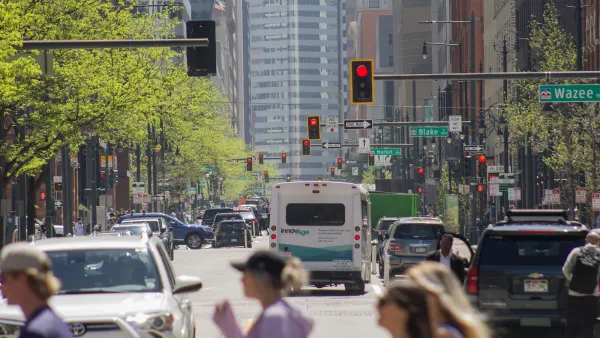
Congestion Costing Reality Check, Part 1: Congestion evaluation best practices
Widely cited studies claim that traffic congestion is a huge and growing problem. They exaggerate. Let’s examine how to correctly calculate congestion costs and roadway expansion benefits.
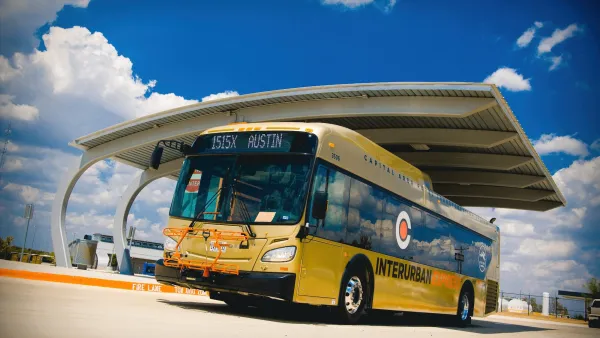
Rural Texas transit program is a 'lifeline' for seniors
A Central Texas program offers free transit to residents over 60.

Amtrak, CN end decades-long dispute with eight-year agreement
The new operating agreement establishes an updated framework for the companies to work together, including processes to resolve disputes.

Judges permit Denver to divert 77,000 acre feet from the Colorado River for reservoir expansion
Overuse and climate change have caused the Colorado River’s water levels to plummet.
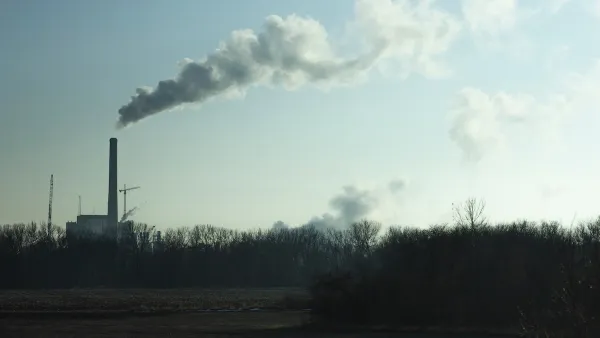
Nation's most wind-powered state turns to coal as data centers increase energy demand
For the first time in decades, Iowa has increased its generation of coal power.

Boston has spent millions making the Green Line more accessible — and there’s no end in sight
While the city has invested millions into expanding and adding platforms to the Green Line to make it more accessible, new train cars set to arrive next year will be too tall for disabled passengers to board without raising the current platforms.

Idaho may see an 18% drop in federal surface transit funding — the largest estimated cut in the US
Transit systems in rural communities are much more reliant on federal funding to provide their services.

How ‘post-disaster gentrification’ alters neighborhoods after natural calamities
After hurricanes, fires or other calamities, the original residents of a community are often replaced by younger, wealthier residents.

FREE Course: Walkable City 1: Why Walkability?
After describing his path towards focusing on walkability as the essence of good planning, Jeff Speck marches through his five principal reasons for making more walkable places.
Reinventing Malls: Planning Alchemy—Turning Gray Fields Into Gold
The course focuses on the opportunities and imperatives that shape reinvention of mall sites.

City of Wisconsin Rapids
Harvard University Graduate School of Design
KFH Group Inc.
The Architects Foundation
University of Cincinnati Online
The Pocatello Development Authority
The Urban Renewal Agency of the City of Pocatello