In the midst of a dangerous and crime-prone area, one small section of L.A.'s South central neighborhood has retained a lower-than-average homicide rate and higher-than-average property values.


The neighborhood's resilience is attributed to the high percentage of properties owned by occupants, and the fact that many of the properties are single-family homes. A neighborhood church also plays a part in the area's relative safety.
"[O]ther factors further separate the neighborhood from its more violent surroundings -- advantages that Harris-Dawson and others said cannot be easily repeated elsewhere.
The area is home, he said, to a generally older group of residents. The predominance of single-family homes instead of apartments means a less densely packed population and less turnover. And many in the neighborhood own their homes and have had roots in the area for generations.
The result is a place where people know each other, have an emotional and financial investment and don't take kindly to anything that might disturb the peace."
Read the full story: Within South L.A.'s killing zone, a haven from violence

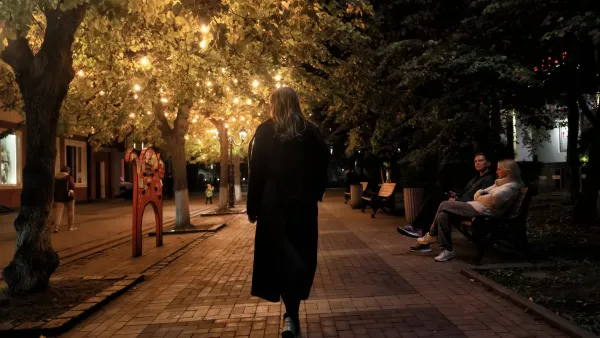
How urban design can deter crime
Well-designed public spaces and good lighting can prevent crime and make residents feel safer.
Red Cities, Blue Cities and (Property) Crime: A Sequel
Like urban violent crime, urban property crime is often a political football. Republicans claim that crime in Democrat-run cities is proof that Democrats are incapable of maintaining public order. Do they have a point?
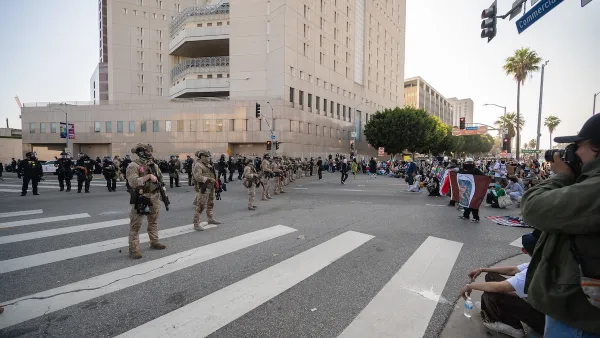
Opinion: Far From Cauldrons of Violence, Cities are Anti-Crime Innovators
Rather than funding the performative militarization of law enforcement, the federal government could instead support programs that prevent poverty and crime before it happens.

Planetizen Federal Action Tracker
A weekly monitor of how Trump’s orders and actions are impacting planners and planning in America.

California plans to bury El Niño’s downpour
If the state plays its cards right, it may be able to store a billion acre-feet of El Niño’s water in aquifers.

Chicago breaks ground on $3 billion megadevelopment
The new neighborhood, titled Foundry Park, will one day host 3,700 residences.

California High-Speed Rail Authority CEO resigns after $600,000 scandal
Under Ian Choudri, the authority used taxpayer dollars to fund first class flights and trips to nightclubs.

Want to study the Missouri River? Soon, you may need unanimous approval from 10 states
Legislation would require 10 governors’ permission to study or build projects moving water outside the basin.

Desperate measures: Advocates weigh draining Lake Powell to fill Colorado River
Draining the reservoir could reduce evaporation losses by a couple hundred thousand acre-feet.

FREE Course: Walkable City 1: Why Walkability?
After describing his path towards focusing on walkability as the essence of good planning, Jeff Speck marches through his five principal reasons for making more walkable places.
Reinventing Malls: Planning Alchemy—Turning Gray Fields Into Gold
The course focuses on the opportunities and imperatives that shape reinvention of mall sites.

City of Rosemead
Rutgers University, Edward J. Bloustein School of Planning and Public Policy
One Hundred Miles
Hunter College, City University of New York (CUNY)
The Architects Foundation
University of Cincinnati Online
City of Cambridge
Montrose County
The Pocatello Development Authority